Generic selectors
Exact matches only
Search in title
Search in content
Post Type Selectors
Search in posts
Search in pages
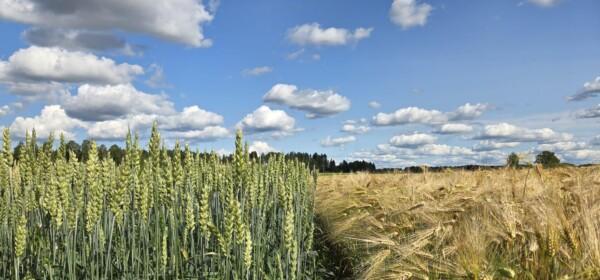
A cereal field in Rukii in August. On the left there is still green barley vegetation, on the right there is grain-colored oats. In the blue sky, small clouds of cotton float over the field.

Council of Oulu Region

Meeting materials

Agendas and minutes of the Regional Assembly of Oulu Region.

Regional Parliament of Northern Ostrobothnia 2-3 November 2026

Program and registration.

A Renewable and Skilled Finland 2021-2027

Regional Council of North Ostrobothnia 13. "Cities implementing the green transition" Application round for Structural Fund projects is open from 1 September to 30 October 2026

Bulletin board

news

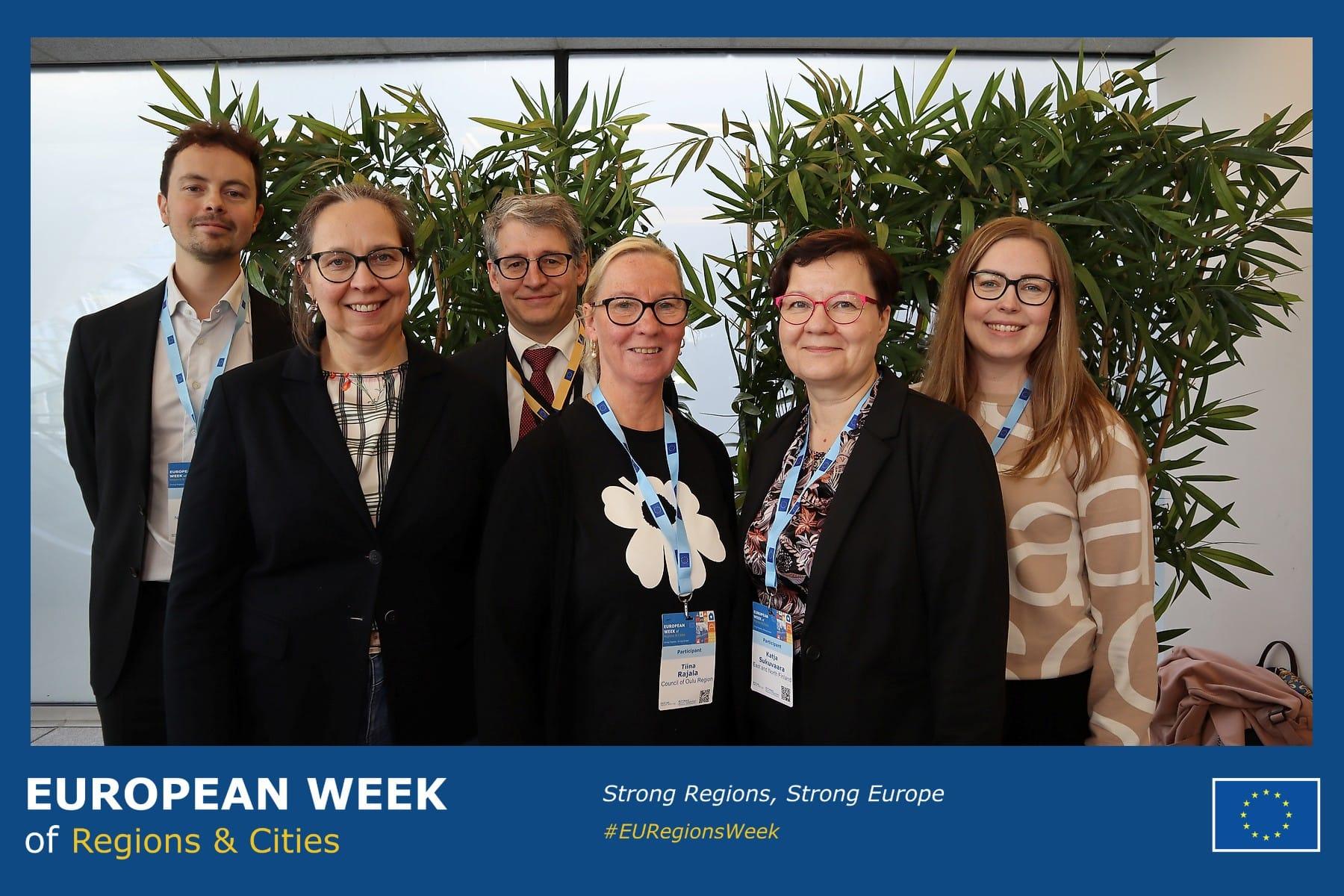
Group photo of six people in a row. Around the blue frame, which reads European week of regions and cities. Strong regions, strong europe.
23. October 2026
The Regional Council of Northern Ostrobothnia participated in the European Week of Regions and Cities in Brussels

Photo: Max Englund from left, Senior Adviser in European Affairs, North Sweden European Office, Hanna Honkamäkilä, Secretary General of NRPP Preparation for Eastern and Northern Finland, Dr Jorge Núñez Ferrer, Director for Cohesion Policy and EU Budget, CPMR, Tiina Rajala, Development Director, Katja Sukuvaara, Head of International Affairs and Laura Kelhä, Regional Development Manager at the Regional Council of Northern Ostrobothnia. Representatives of the Regional Council of Northern Ostrobothnia participated in the European Week of Regions and Cities 2026 in Brussels on 12-14 October. Organised by the European Commission's Directorate-General for Regional and Urban Policy and the European Committee of the Regions, the event is Europe's largest annual event on regional and urban policy. This year's theme was strong regions, a strong Europe. The key message of the event was that strong regions are the basis for the success of Europe as a whole. Different European regions face different challenges, ranging from geopolitical changes and demographic trends to skills shortages and securing services. Therefore, the solutions must also take into account the different starting points and needs of the regions. During the week, representatives of the Regional Council of Northern Ostrobothnia participated in several events that looked at the regions and their future from different perspectives. The discussions highlighted the importance of multilevel governance and the need for regional involvement in the preparation of the new programming period. Experiences of effective cooperation models at national and regional level were also heard. – European cooperation is a key building block of trust between regions and people. By participating, we make our voices heard when we meet European decision-makers, participate in debates, build relationships and promote interests. During the Week of Regions and Cities, we find and meet partners, learn from each other’s solutions and build joint projects that bring knowledge, investment and jobs to the regions. At the same time, we can explain how the strengths of the northern regions strengthen the competitiveness, security of supply and safety of Europe as a whole," says Development Director Tiina Rajala. In addition to the event programme itself, the Baltic Sea Region Directors Network met at the EU office in Eastern and Northern Finland on Wednesday 13 October 2026. The network brings together regional development leaders from Finland, Sweden, Poland, Estonia and Germany. The topic of discussion was smart specialisation and interregional cooperation to promote it. European networks offer North Ostrobothnia the opportunity to both highlight the region's perspectives and learn from the experiences of other regions. Rachel Lancry, Head of Unit of the European Committee of the Regions' Committee on Territorial Cohesion Policy and EU Budget (COTER), also attended the meeting. Rachel...
19. October 2026
European Commission publishes updated Horizon Europe work programmes for 2026-2027 with €500 million in additional funding

The European Commission has published updated Horizon Europe work programmes, which open up funding opportunities for 2026-27. On 29 September, the Commission announced an additional EUR 500 million for the last years of the programme. Funding will be allocated through two application programmes: Transformative Change Towards a Nature-Positive Economy and Society (with a budget of EUR 237 million) Transitional measures (Bridging Actions 2027 with a budget of EUR 260 million) The updated work programmes direct funding towards areas such as industry, climate and energy solutions, mobility, the bioeconomy, digital technologies and the development of innovation ecosystems. In addition, the EU wants to streamline the transition between the current and future funding periods (MFF 2028-2024), moving to the EU’s 10th Framework Programme for Research and Innovation (FP10). The work programmes therefore aim to identify key themes for research and innovation funding in the coming years and also highlight funding opportunities for European businesses, universities, research institutions and public actors. The publication of the work programmes will help regional actors to observe future calls for funding and thus start project preparation and cooperation on time, before the actual call for funding starts. During the autumn, the European Commission will also organise Horizon Europe info sessions on work programmes, search themes and funding application practices, the timetables of which can be read in more detail at the link below. More information Horizon Europe work programmes Upcoming info days Commission press release 29 September

Interreg Aurora Programme logo.
15. October 2026
The Interreg Aurora call received 71 applications

Interreg Aurora's application rounds for 9th development projects and 7th small projects ended on 7 October 2026. A total of 71 applications were received, of which 60 were received by Interreg Aurora and 11 by Sámi. Of these, there were 70 development project applications and one small project application. The most active organisation in Northern Ostrobothnia was the University of Oulu, which was the main applicant in five applications. Other main applicants in Northern Ostrobothnia were Oulu University of Applied Sciences, Finnish Environment Institute, Natural Resources Institute Finland, Joint Municipal Authority for Education OSAO and Diakonia University of Applied Sciences Ltd. The projects to be funded will be decided at the Steering Group meeting on 20-1-21 January 2027 in Haaparanna. Additional information: Interreg Aurora Programme Manager Niko Auer, niko.auer@pohjois-pohjanmaa.fi

Show all

Most of Finland

It's time to see Finland in cooperation in cooperation with new eyes.

Future EU funding period 2029-2034

Preparations for the next EU funding period 2029-2034 have started as a joint project between Eastern and Northern Finland.

Lohi Iijoki 2 project

The project promotes the return of Atlantic salmon and trout to the Iijoki River.

Meetings
& events

Generation Barents 2026
29.October 2026 - 31.October 2026
Generation Barents 2026

Generation Barents event will be held in Oulu 30.-31.10.2026. Program and registration on the event website. Additional information: Development Manager Ilpo Tapaninen. Tel. +358 50 301 7546

Regional meeting on cultural well-being
30.October 2026
Regional meeting on cultural well-being

We welcome you to hear and discuss about cultural well-being, different operating models, the necessary expertise and cooperation. Place: Regional Council of Northern Ostrobothnia, Poratie 5 A, 3rd floor. Time: 30.10.2026 [...]

Baltic Sea Tourism Forum 2026
2.November 2026 - 3.November 2026
Baltic Sea Tourism Forum 2026

The Baltic Sea Tourism Forum 2026 #BSTF2026 will take place in beautiful Helsingør (Elsinore), Denmark, in cooperation in cooperation with a networking programme on 2 November and the main Forum day on 3 [...]

Show all