Sari Nurro continues as Chair of the Baltic Sea Commission's Marine Working Group
07.02.2025 / 08:38
Sari Nurro, member of the Regional Board of the Regional Assembly of Oulu Region, has been elected as the Chairperson of the CPMR Baltic Sea Commission's Maritime Working Group 2025- 2026. The selection was made by the Executive Board of the CPMR Baltic Sea Commission at its meeting in Brussels on 5 February 2025, while the chairs of the other working groups were also elected.
The board meeting took place this time in Brussels, as the new European Commission is currently preparing the upcoming seven-year budget proposal. The purpose of the meeting in Brussels was to highlight important priorities for the Baltic Sea Commission in the preparation of the budget.
The Agenda included views on regional and structural policy, transport policy, safety, competitiveness and the Arctic.
Four Members of the European Parliament, Merja Kyllönen, Pekka Toveri, Elsi Katainen and Sofie Eriksson from Sweden were heard at the meeting. One of the objectives of the meeting was to strengthen contacts in cooperation in cooperation with Members of the new European Parliament elected last year.
From the left: Davide Strangis, Secretary-General of CPMR, Sari Nurro, Tomas Mörtsell, President of the Baltic Sea Commission, Talvikki Jori, Vice-President of the Baltic Sea Commission, Filip Reinhag, President of CPMR, and Lucille Ehrhart, Secretary-General of the Baltic Sea Commission.
Regions at the heart of green industrial change
20.08.2024 / 20:41
Region Norrbotten visited the Regional Assembly of Oulu Region on Monday and Tuesday. We held a joint meeting on topical issues in Norrbotten and Northern Ostrobothnia.
In particular, we discussed logistical cross-border links, cohesion policy and the industrial policy of the European Union.
Start of international daily train traffic between Oulu and Haparanda
The electrification of the Laurila-Tornio-Haaparanta railway will be completed at the turn of 2024-2025.
The Regional Assembly of Oulu Region has proposed to the Finnish Government that funding be included in the 2025 budget to enable international daily train traffic between Oulu and Haparanda. The purchase agreement of the Ministry of Transport and Communications should be allocated EUR 2.1 million to the state budget as of 2025.
Opening up passenger traffic across the border would enable the development of tourism, and the rail connection would also serve the working area of the Bothnian Arc.
The European Capital of Culture 2026 in Oulu and the region would also greatly benefit from a better train connection to Sweden.
Northern Sparsely Populated Areas (NSPA)s and cohesion policy
The main objective of EU cohesion policy is to maintain the special status of Northern Sparsely Populated Areas (NSPA)s.
In addition to the traditional cohesion policy, it can also identify new financing and implementation needs. The problem in cooperation in cooperation with the full use of the EU Recovery Instrument (RRF) is that it has been done at the expense of the regions. The RRF is centrally controlled and state-run. Instead of nationwide implementation, development activities must continue to be area-based.
Cohesion policy supports the EU's internal market. The EU single market is a single market for 450 million consumers, where goods move freely. 60 % Finland's exports are directed to the internal market area.
The EU must take into account the situation at the EU's external border in the East. The loss of cross-border funding in Eastern Finland must be compensated in some way.
Increased cooperation between Norrbotten and the Regional Assembly of Oulu Region in EU industrial policy
Joint proposals for EU funding for industrial development emerged. These include the regional hydrogen valleys of the Bothnian Arc, the extraction and enrichment of critical minerals, and wireless technology.
Both regions have significant heavy industries, such as SSAB. Both regions are already suffering from labour shortages.
Socio-economic impacts of the green transition in Norbotten
The region of Norrbotten has published a report entitled ‘Social and economic impact on the green transition’. The main message of the report was that the region's new industrialization will increase national GDP by 2-3 %, between EUR 1.5 billion and EUR 3.5 billion in tax revenue and EUR 10 billion in export value. It creates new jobs and significantly reduces CO2 emissions.
The impact on the regional economy is enormous, but there is also a great need for new housing and infrastructure. The industrialisation of the green transition also implies a strong increase in energy demand.
During the summer, the Swedish government announced its own strategy for Northern Sweden. It contains many development proposals.
Port issues discussed at the Baltic Sea Marine Working Group meeting in Oulu
07.06.2024 / 12:48
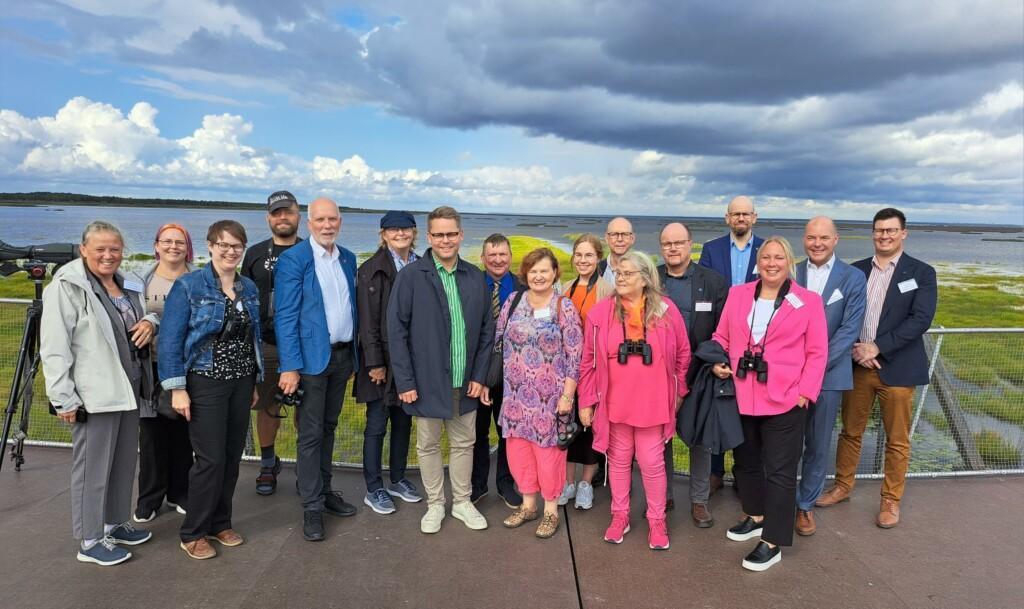
The Baltic Sea Commission's maritime working group of CPMR met in Oulu on 3-4 June. The theme of the meeting was the role of ports in the Baltic Sea.
The event included a review of the security situation in the Baltic Sea by Pekka Toveri, former Chief of Intelligence of the Finnish Defence Forces, as well as presentations on the ports of Oulu and Stockholm and the Raahe region. In the new TEN-T regulation, the Port of Oulu rose from a comprehensive network to a core network.
“Ports have been an important topic on the agenda of the Maritime Working Group during this EU mandate period, and their importance will be further emphasised in the future due to the security policy situation in the Baltic Sea. It is also important to ensure an adequate level of CEF funding to support port investments. The participation of our key partner regions in the meeting of the Maritime Working Group in Oulu was particularly valuable," says Sari Nurro, Chairman of the Maritime Working Group and Member of the Regional Board of Northern Ostrobothnia.
On Tuesday 4.6, the maritime working group made a visit to the port of Raahe, where the port's role in the energy transition in Northern Ostrobothnia and in wind power transports was presented. The Port of Raahe has grown into one of Finland's busiest ports due to wind power transports.
“The visit to the port of Raahe was an interesting experience for the representatives of the partner regions to see the diverse energy and circular economy port in practice.”, Nurro continues.
CPMR is a cross-border organisation of 150 regions in 24 countries, divided into six regional commissions. The Regional Assembly of Oulu Region is active in the CPMR Baltic Sea Commission together in cooperation in cooperation with other member regions from Finland, Sweden, Germany and Estonia.
NATO's DIANA programme creates opportunities for companies in the Oulu region in the defence industry
07.06.2024 / 07:51
Finland has been a member of NATO for over a year. Membership has required a change in our thinking. In addition to defending our own country, we are now a member of the Alliance. It is our duty to ensure that, in addition to reconciling NATO's needs, our NATO partners understand our specificities and needs.
As a member of NATO, Finland has joined NATO's research and innovation initiatives. Especially important for Oulu was the decision of NATO's DIANA programme.
DIANA stands for Defence Innovation Accelerator for the North Atlantic. DIANA implements NATO's innovation policy, which is based on new disruptive technologies. In Finland, the structure of the DIANA programme is a national business accelerator and two test centres, a 6G test centre coordinated by the University of Oulu, and another VTT test centre for space and quantum technology. In addition to Oulu and Espoo, DIANA has offices in Sodankylä.
In a grand power competition, disruptive technologies are vital for maintaining a competitive advantage in the field of common defence and security. The sector must have access to the latest information on the latest technologies. This information is often found in small start-ups.
In the past, many disruptive technologies were developed for defence use, from where they spread to civilian use. A famous example of innovations funded by the Defense Administration is the US ARPANET, which evolved into the Internet. Today, the situation has been partly reversed. Technology is developing rapidly and in a business-driven manner.
Not all entrepreneurs necessarily perceive the defence industry as the sector they want to target first and foremost. The idea of the DIANA programme is to look for and find civilian applications that could also be used in the defence sector.
In particular, DIANA is looking for innovative solutions in cooperation in cooperation with a critical dual-use capability. The application can therefore be used on the civilian and military side. There's a lot of classified information in the defence industry. The objective of DIANA is, in principle, to be a programme of information in which the information is not confidential. If a civil technological application is exploitable in the defence sector, the nature of the matter will change.
The intellectual property rights (IPR) created in the DIANA accelerator remain in cooperation in cooperation with the companies. The idea is to bring different people together physically, so that different problems are better understood depending on the point of view from which the matter is viewed.
The entire test centre network of the DIANA programme is at the disposal of companies. The aim is for the company to understand the nature of the defence sector market. DIANA is part of NATO's activities, providing access to the markets of NATO and allied countries.
The DIANA programme is accessible through a challenge programme for companies. The company selected for the DIANA programme will receive a six-month intensive training and mentoring package for access to the defence market. The Enterprise Development Programme supports technological development and demonstration to accelerate business activity in the defence sector. Mentoring is offered by a variety of experts from industry, finance, the research sector, end-users and government.
The aim is to apply for participation in the business development programme in cooperation in cooperation with the help of an annual challenge campaign. Challenges are the themes of the program. Last year there were three challenges and this year there are five. The application form for participating in the challenge campaign is simple, which is why it is worth investing in presenting your idea clearly.
In the first phase of the challenge campaign, the company receives €100,000. A reduced number of companies will be selected for the second phase, and 300,000 euros of funding will be provided. At this point in time, the issue will also be discussed in cooperation in cooperation with potential investors. DIANA offers a reliable network of investors, including Finnish Industry Investment TESI.
Last year's DIANA themes were energy security, secure information sharing and observation and monitoring systems. The security threats posed by climate change and digitalisation apply equally to civilian and military applications.
The development of energy networks is a good example of this. Climate change and the green energy transition will affect the resilience and energy security of NATO and EU Member States’ military transport infrastructure and capabilities.
The Finnish business accelerator and test network will be fully operational in January 2025, when it will be fully involved in supporting the companies selected this year under the DIANA programme.
DIANA offers companies the opportunity to improve their business opportunities by networking in NATO's transatlantic ecosystem. It also strengthens national technological and industrial know-how and is a place to coordinate and embrace NATO's RDI philosophy.
Hanna Honkamäkilä is Manager of International Affairs at the Regional Assembly of Oulu Region.
Hannu Nikurautio is Research Director at the University of Oulu's Wireless Communications Research Centre.
Haapavesi broadband support application has been opened
19.05.2022 / 09:00
Support under the Act on Fixed Broadband Construction 1262/2020 can be applied for in the area of the city of Haapavesi. Applications addressed to the Regional Assembly of Oulu Region must be submitted by 17.6 noon at the latest by e-mail to kirjaamo@pohjois-pohjanmaa.fi
More information on the project area, the application procedure and the selection criteria can be found at https://www.pohjois-karjala.fi/broadband.
In the same boat – circular economy and Northern Ostrobothnia
21.05.2021 / 09:13
Eva Pongracz, Professor at the Water, Energy and Environmental Engineering Research Unit of the University of Oulu
According to Sitra's definition, the circular economy is an economic model that does not continuously produce more goods, but instead uses services instead of owning them: sharing, renting and recycling. The idea behind the circular economy is that materials taken from nature – which have already been refined to meet the needs of humanity – will remain in use and in the economic system for as long as possible. Economic growth therefore does not depend on the consumption of natural resources.
As a concept, the circular economy is not new. The idea originated in the 1960s and was first mentioned as a word in 1966. The concept was made famous by Lady Ellen MacArthur, a world record-holder solo sailor who woke up to the finiteness of natural resources when she lived on her boat's limited cargo for 71 days while sailing around the world in 2005. He founded the foundation bearing his name in 2010 and, together in cooperation in cooperation with experts, developed the now-known circular economy model, which became, among other things, the cornerstone of the EU Green Deal. The circular economy model developed by the Foundation introduced ideas such as industrial ecology, the cradle-to-cradle thinking model and the service economy.
The idea of industrial ecology is that the waste of one is the raw material of the other. Finland and our region can be proud to be a forerunner in the recovery of waste and by-products from the technology industry. The result is even better processed products than natural products, such as the record-breaking eco-concrete developed at the University of Oulu. Utilising industrial by-products is also a climate action, and there is a lot of potential in Northern Ostrobothnia when there are large companies and larger waste streams and research supporting it. One possibility would be, for example, the development of the Laanila industrial area into an eco-industrial park.
The idea behind the cradle-to-cradle thinking model is that after use the product becomes easily reusable or can be completely recycled. This can be supported by planning in which biological nutrients (sataorontically decomposing) and so-called technological nutrients (100% recyclable) are not mixed. For my pleasure, I noticed that Wikipedia offers life cycle thinking, utopia and entropy as a similar idea. Lots of truth in everyone, but entropy or ‘disorder’ is a very good observation. The laws of thermodynamics do not support 100% recycling. However, the main idea is that products must be designed for recycling or reuse. A good example of this in Finland is the recycling of deposit bottles, which combines design that supports recycling, a deposit that motivates consumers and an advanced infrastructure. Consumers play an important role in promoting recycling. Mixed waste sorting studies carried out by the Circular Arc showed that there is far too much recyclable material in the incinerated waste, up to 75 per cent. One third of this is food and the rest is packaging, plastic and paper. However, packaging should not be blamed for this, as it is only a sign of (over)consumption. It can be said that Finland has a very good recycling system, but its weakest link is the consumer himself.
Perhaps the most fascinating idea of the circular economy is the sharing economy. Why buy expensive items that you rarely use if you can borrow them? There are many good examples of this in the world and also in Finland; Libraries and rental companies as parents. In recent years, services have become more electronic and the sharing economy has moved to the Internet. Listening to audiobooks and streaming movies online. The sharing economy is even seen as one of the economic successes of the pandemic: food is ordered online, videoconferences are held and movie streaming services save the evenings. The sharing economy is growing in popularity and is particularly enjoyed by the prosperous middle class. On the other hand, the pandemic also highlighted the downsides: The CO2 emissions of the Internet exceed those of air travel, food home delivery increases the number of single-use packaging and social inequalities become visible. The benefits of online services are also spoiled by overconsumption, when you watch videos instead of listening to music and each family member watches a different channel in a different room. Finland is one of the world's leading countries in mobile data transfer per capita.
The pillars of a sustainable sharing economy – and the circular economy in general – are a paradigm shift, planning and moderation. To this end, one of the objectives could be to promote repair services and reuse. This requires both smart product design and responsible consumption habits, as well as functional digital platforms. Oulu's high level of ICT expertise offers excellent business opportunities for this, in the development of applications and services in the sharing economy and platform economy. However, let's keep in mind what the final goal is: an economy based on a reasonable consumption of natural resources, which guarantees the well-being of society.
Eva Pongracz, Professor at the Water, Energy and Environmental Engineering Research Unit of the University of Oulu
Move and feel well
16.04.2021 / 08:42
Immobility costs money. At the Finnish level, the price of inactivity is estimated from 3.2 billion euros to as much as 7.5 billion euros per year in a study conducted by the Director of the UKK Institute Tommi Vasankari. A comparison can be made, for example, in cooperation in cooperation with the acquisition of fighter jets by the Finnish Defence Forces, which is the most expensive acquisition in the history of the Finnish state. The price is estimated to be between $7 and $10 billion. The fighters are renewed approximately every 30 years, but the cost of immobility is annual. The majority of the costs of inactivity are currently borne by the adult population, the working age population. However, various studies show that the movement of children and adolescents has also decreased and overweight has increased.
According to the same study, lack of mobility costs nearly 400 million euros per year in Northern Ostrobothnia. Measured by a different morbidity index, Northern Ostrobothnia is one of the most ill regions in Finland.
Who is responsible for promoting the well-being and health of people? Will the issue be solved by the new health and social services centres? Let's not solve it. The well-being and health of people belong to everyone. First and foremost, of course, it belongs to each person themselves. No outsider can force or command a person to live a healthy life. Ultimately, everyone decides for themselves.
A society that includes the state, counties and municipalities can contribute to the well-being of people. The aim must be to increase the well-being, health and functional capacity of residents, prevent diseases and social exclusion, and strengthen Participation and Participation and Inclusion.
Increasing physical activity and mobility is a key solution for well-being work: The positive effects on mental and physical well-being, the prevention of health problems, learning outcomes, work ability and the prevention of exclusion and integration are undeniable. Future solutions for physical activity will also contribute to the achievement of the climate goals of society as a whole.
In its Government Programme, the Finnish Government has taken into account the development of people's physical activity more strongly than ever before. The programme continues the Finland on the Move programme launched by the previous government, which aims to increase mobility in all age groups from the point of view of human health. Now this activity must be involved in a cross-administrative way in the regional programme for Northern Ostrobothnia and in the strategies of the municipalities in the region. In the upcoming new Regional Assembly term, the role of physical activity in the well-being work of municipalities must be strengthened. Promoting physical activity should be a priority for well-being work and the municipal strategy. Physical activity should be seen as a cross-administrative and wide-ranging strategic entity. It has significant impacts on the well-being, attractiveness, comfort, tourism and the vitality of companies.
Improving your physical condition doesn't have to be a self-flashing blood taste in your mouth. We still see too much of this kind of exercise, for example, on the ski track. According to the exercise recommendations, it is recommended that adults exercise at least 2.5 hours per week to speed up their heart rate. For this purpose, a brisk walk, cycling or peaceful skiing is enough. In addition, it is recommended twice a week to maintain muscle fitness in cooperation in cooperation with exercise that burdens large muscle groups: stair walks, heavy yard work, group exercise, gym or ball games. in cooperation in cooperation with age, muscle strength, flexibility and especially balance management should be emphasized in the exercises.
New sports recommendations for children and young people have just been published. One of the key objectives of the recommendations is: Reduce attendance, move daily. Children under the age of 17 are expected to exercise for at least one hour a day. Exercise where you breathe. Movement does not have to be continuous, but can consist of smaller parts. Resistance-type exercise that is strenuous in intensity, as well as exercise that strengthens muscle strength and bones, should be done at least three times a week.
I will end this story where I started. Although it costs a lot to promote and enable physical activity, it is much cheaper than the price of physical inactivity.
Esko Hassinen Regional Director, Northern Ostrobothnia Sports and Exercise (PoPLi)
Esko Hassinen Regional Director, Northern Ostrobothnia Sports and Exercise (PoPLi)
Transport is not only an issue of the environment but also of the quality of life, and we in Northern Ostrobothnia have a lot to do
15.04.2021 / 08:41
The situation in North America is interesting. In many places, the area is strongly growing, while in other places it is strongly shrinking. We are far from other growth centres and the capital, where accessibility is a particular issue for the development of our region. As values change and in the face of Finland's emission reductions, we need environmentally sustainable ways to travel to both the rest of Finland and Europe.
Jenni Pitko Member of Parliament
The Helsinki-Oulu route is the most popular domestic flight in Finland. By speeding up the main line, you could get to Helsinki by train in as little as three and a half hours in cooperation in cooperation with the current train fleet and thus get a smooth alternative to flying. For a train of less than four hours, we need the green light from the government and financial assistance from the EU. Train traffic in this period was on the rise before the coronavirus. The figures, together in cooperation in cooperation with the freight tonnage, speak clear language in favour of additional tracks.
The Finnish Transport Infrastructure Agency recently published its report on the need for changes to the main railway line. Developing the track north of Tampere would serve both passenger and freight traffic. In conclusion, the study suggests that the construction of the double track could be carried out in parts. Even in short intervals, adding a double track could make the use of the track more efficient.
The train connection to Europe via Tornio and Haparanda will take a step forward this week as a regular commuter train starts on the Swedish side of the rush Thursday. The Finnish Government has agreed that the track on the Finnish side will also be put in order. A passenger train connection to Sweden and Europe would bring new opportunities for tourism in Northern Finland and enable us Northern people to move to Europe in a climate-resilient way.
By far the largest emissions from mobility come from road transport and, in the case of passenger transport, from private cars. To replace these, we need a genuinely functional commuter train service for the Oulu region and more fast and convenient bus services to the city area. Alternative propulsion, especially electric cars, is constantly increasing. The technology of electric cars is constantly evolving, and the prices of cars in cooperation in cooperation with larger ranges are falling. At the same time, the network of charging points is developing, making an electric car a more attractive option everywhere.
The potential of cycling should not be underestimated. By developing good cycling paths, the opportunities for cycling can be significantly improved, including outside city centres. Especially in the flat countryside of Northern Ostrobothnia, electric cycling can offer a lot of new opportunities.
Even outside the Oulu region, there is potential to increase public transport, for example through easily accessible digital services. Large employers could also play a crucial role in this, if public transport were increasingly offered as an employment benefit and suitable shifts were negotiated in cooperation in cooperation with the transport operator.
The potential of transport development will increase further if we are able to make more use of the digitalisation of transport and develop travel chains. The Northern Ostrobothnia region, especially the Oulu region, has previously been the engine of technological development in Finland. The future of transport is full of huge opportunities for new business as well.
By solving the challenges of long distances, we can also lead the way for the rest of Finland and the world. There are, for example, magnificent nature sites in our area, the accessibility of which in cooperation in cooperation without a car of its own would be a service to us and future generations. The COVID-19 pandemic has increased interest in travelling in nature. At times when we face huge environmental problems, we cannot underestimate the importance of lowering the threshold for enjoying nature and experiencing contact in cooperation in cooperation with our environment.
Transport is an important quality of life issue. Acting on traffic makes life and our everyday life smooth. On the other hand, transport is also an important part of the solution to the environmental crisis. Northern Ostrobothnia has great nature and amazing four seasons. As the climate warms, these are under severe threat of change. By investing in sustainable mobility, we ensure that these remain the same.
Jenni Pitko, Member of Parliament (Greens)
How can RDI activities and higher education cooperation be made more effective?
13.04.2021 / 08:39
Taina Pihlajaniemi, Vice-Rector of Research at the University of Oulu
The mission of universities is to promote free research and scientific and artistic education, to provide research-based supreme education and to educate students to serve their country and society. In carrying out their duties, universities must offer opportunities for continuous learning, interact in cooperation in cooperation with the rest of society and promote the societal impact of research results and artistic activities.
Basic scientific research produces new information on the subject to be studied. This work is fuelled by the curiosity and interest of researchers to better understand the subject of their research. The significance of new knowledge is universal in nature and brought to the attention of the world's scientific community through scientific publications and presentations. Applied research, on the other hand, aims at utilising already existing information, for example, to implement the desired type of product.
It is worth noting that many, perhaps most, of the inventions that have changed the world are based on ground-breaking research at the forefront of their field, such as antibiotics, laser technology or, for example, the thin film method used in almost all computers and smartphones, based on the research of Tuomo Suuntola, the recipient of the Finnish Millennium Technology Prize 2018.
I would like to emphasise the close link between high-quality basic research and applied work. Application development may require more basic research and, on the other hand, basic research is often aimed at the practical use of new information. Scientific research, which is at the forefront of its field in the world, is precisely the research that interests the users.
The range of disciplines at the University of Oulu is exceptionally wide and offers plenty of potential for exploitation. We have strong regional cooperation between researchers, companies, cities and other stakeholders in society. The University has been well involved in the planning of the regional strategy for Northern Ostrobothnia, for example, and through the Oulu Innovation Alliance it is possible to concentrate activities and build innovation ecosystems on a broad basis.
Our researchers are involved in many international projects and mainly collaborate in cooperation in cooperation with the international community. One of the ways in which cooperation can be developed and made more effective could be to seek to implement and make more active and better use of cutting-edge research and know-how in these international projects and, more broadly, in the international community. This would increase our effectiveness. This would take place in the context of regional cooperation in cooperation in cooperation with universities and businesses in the region.
High-quality research cannot be carried out in cooperation in cooperation without up-to-date equipment, datasets and expert staff. Another aspect that enhances cooperation and effectiveness is the joint use and procurement of research infrastructures between universities and industry. We have already actively implemented this in the university for larger and more expensive infras, but we could improve e.g. the shared use of laboratories and also the use of smaller infras. Thus, investments in research infrastructures serve our scientific performance and international competitiveness, as well as cooperation in cooperation in cooperation with companies.
The future success of knowledge and innovations is based on supporting leading scientific fields. Through cutting-edge research, the University of Oulu seeks solutions to global issues in five focus areas: Sustainable Materials and Systems, Digitalization and Smart Society, People in a Changing World, Lifelong Health, and Changing Climate and Northern Environment. Research in these fields generates world-class know-how and innovations that can be utilised, for example, in decision-making and businesses around the world and that support the vitality of our region.
Taina Pihlajaniemi, Vice-Rector of Research at the University of Oulu
Entrepreneurship is changing and changing the world, including in Northern Ostrobothnia
25.03.2021 / 08:37
Marjo Kolehmainen, CEO of Northern Ostrobothnia Entrepreneurs
There are 17,000 companies in Northern Ostrobothnia. More than half of these are solo self-employed and the rest employ more than 72,000 people. Entrepreneurship as a driver of vitality is recognised in our region. The numbers also speak for it. In Northern Ostrobothnia, companies pay approximately EUR 2.41 billion in wages annually and generate approximately EUR 15.6 billion in turnover. Businesses pay about 200 million euros in corporate income tax. in cooperation in cooperation with taxes, society can take care of its own services.
Entrepreneurship is constantly changing. In our region, entrepreneurship is still growing. More businesses are created than ceases. Entrepreneurship in general is more interesting as a career option. It is a career dream for many young people today. An important observation that should be reflected in the teaching.
The resulting companies are, as a rule, solo entrepreneurs. Unfortunately, the number of employers has fallen for several years. Can a large number of solo entrepreneurs grow in such a way that the national economy also develops? I don't think so. There is still a need for employable enterprises, and efforts must be made to this end, including through labour market reforms. Because employment is perceived as challenging, the right ways to support solo entrepreneurship must be found. A solo entrepreneur doesn't try to do it alone. Entrepreneurship is increasingly network entrepreneurship, regardless of the size of the company. The work is done in a networked manner. Here lies its own power, which is important to note. Therefore, the regional programme should pay close attention to the possibilities of solo entrepreneurship. How can we support the development of networks and, on the other hand, the competence and operating conditions of the sole entrepreneur? in cooperation in cooperation with the increase in skills and work, the courage to work grows.
The transformation of work, when combined in cooperation in cooperation with the opportunities of digitalisation and its platform economies, is a whole that we must take into account.
A lot of things change entrepreneurship. Digitalisation and technological change in general, ageing, immigration, internationalisation, combating climate change, multi-location, urbanisation, security and now also the coronavirus. These are all threats or opportunities for entrepreneurs in our region. Because we want them to be opportunities in particular, companies must dare to invest in their own expertise in a completely different way.
According to entrepreneurs, their main focus of development is sales and marketing. Even though the world is changing, the most important development target for entrepreneurs has not changed for years. The point is that sales and marketing are changing. Marketing channels are changing, evolving and changing. The means of sales are being renewed. Customers are changing and their needs are changing. Companies must be able to respond to this change, because in cooperation in cooperation without sales, a company is not a company, but an expensive hobby. Sales are Influencingd by virtually all the different fstakeholders that change entrepreneurship, which is why development never stops.
When entrepreneurs are asked about the most important obstacle to growth, the answer is the entrepreneur's own coping. It is said that the company is in just as good a condition as the entrepreneur himself. This is a good comparison. Entrepreneurs are responsible for their business, take risks and take responsibility. If the entrepreneur does not take care of his or her coping, at some point this will also be visible in the company. Entrepreneurs' well-being is a balance between family, leisure and work. Supporting the growth of companies requires that the entrepreneur's own well-being is in order, in which case no other life needs to be neglected due to the growth of the company. Entrepreneurs are human beings and everything starts in cooperation in cooperation with know-how.
If a "region of happy people" is to be pursued, the regional programme must support companies' sales and marketing expertise and the entrepreneur's own coping. From innovation to trade, from new businesses to transfers of ownership, from sole proprietorship to employment, and from the region to the world. The solution to all of this is the entrepreneur's expertise and the willingness to grow. Entrepreneurship must not drown in clusters and ecosystems.
Marjo Kolehmainen, CEO of Northern Ostrobothnia Entrepreneurs