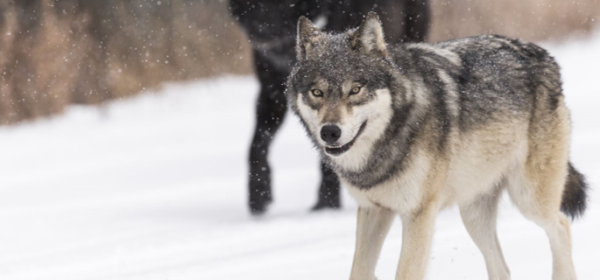
Work package 3c: wolfrevir study
Background
According to the Natural Resources Institute Finland's population estimate (Luke 37/2020), the wolf population has increased since 2017. In western Finland, the area formed by Southwest Finland and Southern Satakunta was distinguished by the densest wolf populations, as well as Northern Ostrobothnia. In these areas, the majority of the estates were inhabited by herds. In the population management area of Eastern Finland, the prevalence of wolves was concentrated in the eastern parts of Kainuu and North Karelia and in the northern parts of North Savo. The territory therefore extends across the regional borders.
The wolf territory is quite extensive, but according to Luke, it is also quite permanent. The species changes nest places inside the territory and moves them to transfer nests even after the pups are born. The territory has a core area or areas where the wolf breeds and lives more than the rest of the area. These core areas have breeding sites and resting places.
Under Section 49(1) of the Nature Conservation Act, the destruction and deterioration of breeding sites and resting places of units belonging to the animal species referred to in Annex IV(a) to the Habitats Directive (including the wolf) is prohibited. The effects of wind power on wolves have not been studied very much. The focus of the planning of wind power projects is shifting from coast to inland. From the point of view of sustainable land use, it is essential to identify the core areas of wolf territory so that they can be taken into account in the planning of activities that change the environment.
wolfrevir study
The focus of the wolf territory study of the TUULI project is on impact assessment. The study examines the effects of potential wind power areas on wolf populations in the Northern Ostrobothnia region.
The report gives a regional and, to some extent, a cross-regional view of the consideration and effects of wolf territory.