15.03.2021
Future technologies are an opportunity for Northern Ostrobothnia
Head of Research Area
VTT
Northern Ostrobothnia boasts a young population base, universities, basic industry and successful growth companies. The region has world-leading research knowledge and technology in many of the growing fields of the future. The challenge is how to integrate our know-how and innovations into value chains and into global markets.
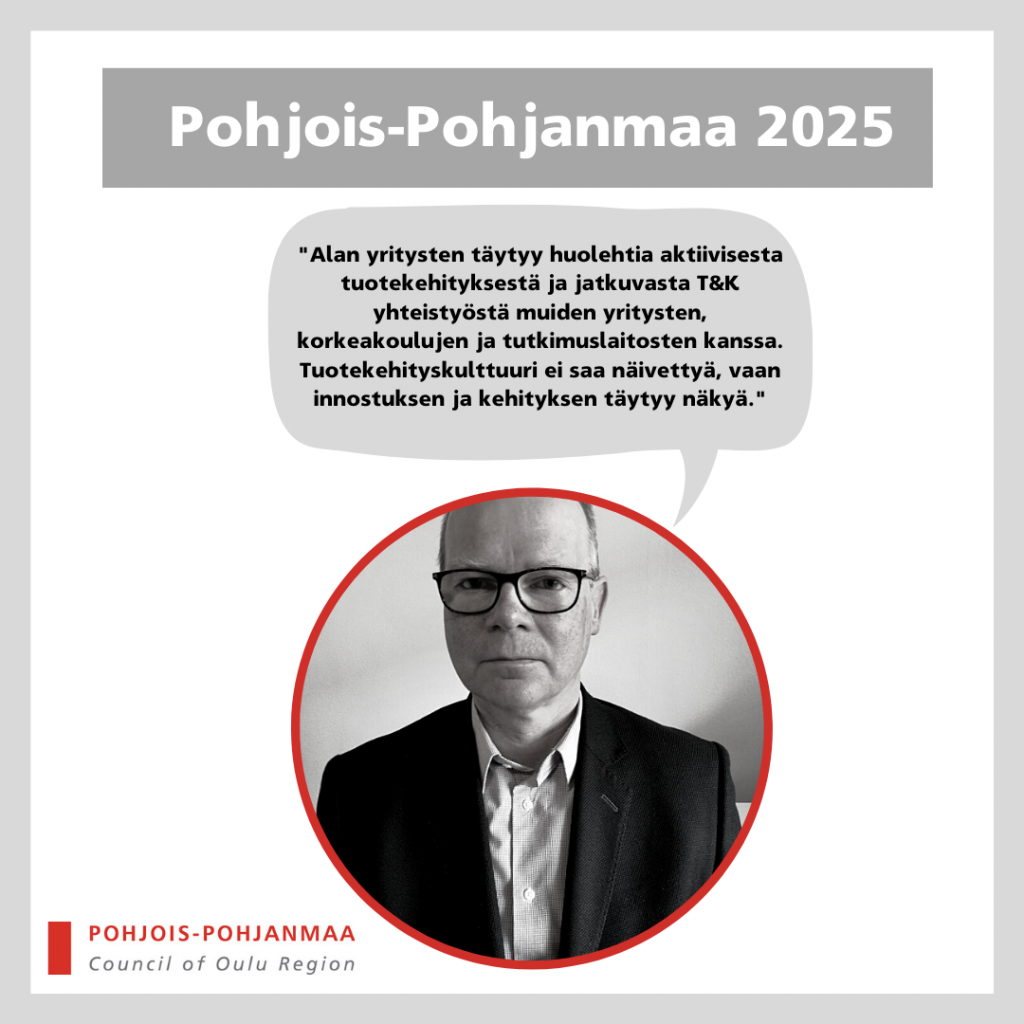
Past success is not a guarantee of future success. Telecommunications technology is a local example, combining high-level expertise, active research and development, and successful international business. Over the years, Nokia has created a critical mass in the region that is credible and capable of operating globally in an extremely competitive industry. We have the full potential to continue to thrive in cooperation in cooperation with products based on radio expertise, but this requires continuous research and development. Companies in the sector must take care of active product development and continuous R&D cooperation in cooperation in cooperation with other companies, universities and research institutes. The product development culture must not be eroded, but the enthusiasm and development must be visible.
Printed electronics, on the other hand, is an example of what long-term research can achieve. The sector has been developed in Finland and at VTT for more than 20 years – largely in cooperation in cooperation with EU funding. We have gained a good foothold as a forerunner in printed intelligence and are developing the industry in the PrintoCent industrial cluster in cooperation in cooperation with around 40 stakeholders. Our success is now weighed in how we incorporate our research results into the final products of a large business. Development work should generate business, products and production, as well as jobs in an area where most of the development work has also been carried out. In addition to research, we need private investment to drive ideas forward.
Unleashing the potential of future technologies requires educated young people who believe in their cause. Educational decision-making bodies must present technology study paths for high school students, for example in electronics, optics, embedded systems and telecommunications technology. Young people could be offered company visits to technology companies that would tell about the company's activities, products and their development, as well as jobs. When young people then apply for high-tech studies, they must be attached to companies and networks by offering internships and supervising theses at the end of their studies. There are many good career opportunities in technology fields, but young people need to see them and can also be directed towards technology studies.
Technological breakthroughs have brought tremendous potential to the region and its businesses. Northern Ostrobothnia should aim to create new technology-based growth companies. They use innovations from research institutes to create competitive export products and profitable business.
The road maps for the future of Finland and the EU include, for example, intelligent transport and autonomous vehicles, environmentally friendly energy solutions, renewable digital health care and increased industrial automation, including the growth of IoT (Internet-of-Things). All these visions require technology based on, for example, electronics, optics and software, and telecommunication technology. Digitalisation requires state-of-the-art electronics and a ‘small to cloud’ approach. Technology has the potential for growth and well-being in Northern Ostrobothnia.
Jussi Paakkari
Head of Research Area
VTT