Generic selectors
Exact matches only
Search in title
Search in content
Post Type Selectors
Search in posts
Search in pages
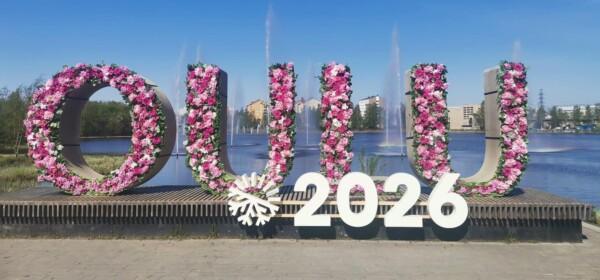
The letters OULU in pink in front of Tuira, each decorated in honour of the summer and the year of the Capital of Culture.

news

01.06.2021

Salmon and trout are transferred to the free sections of the river Iijoki
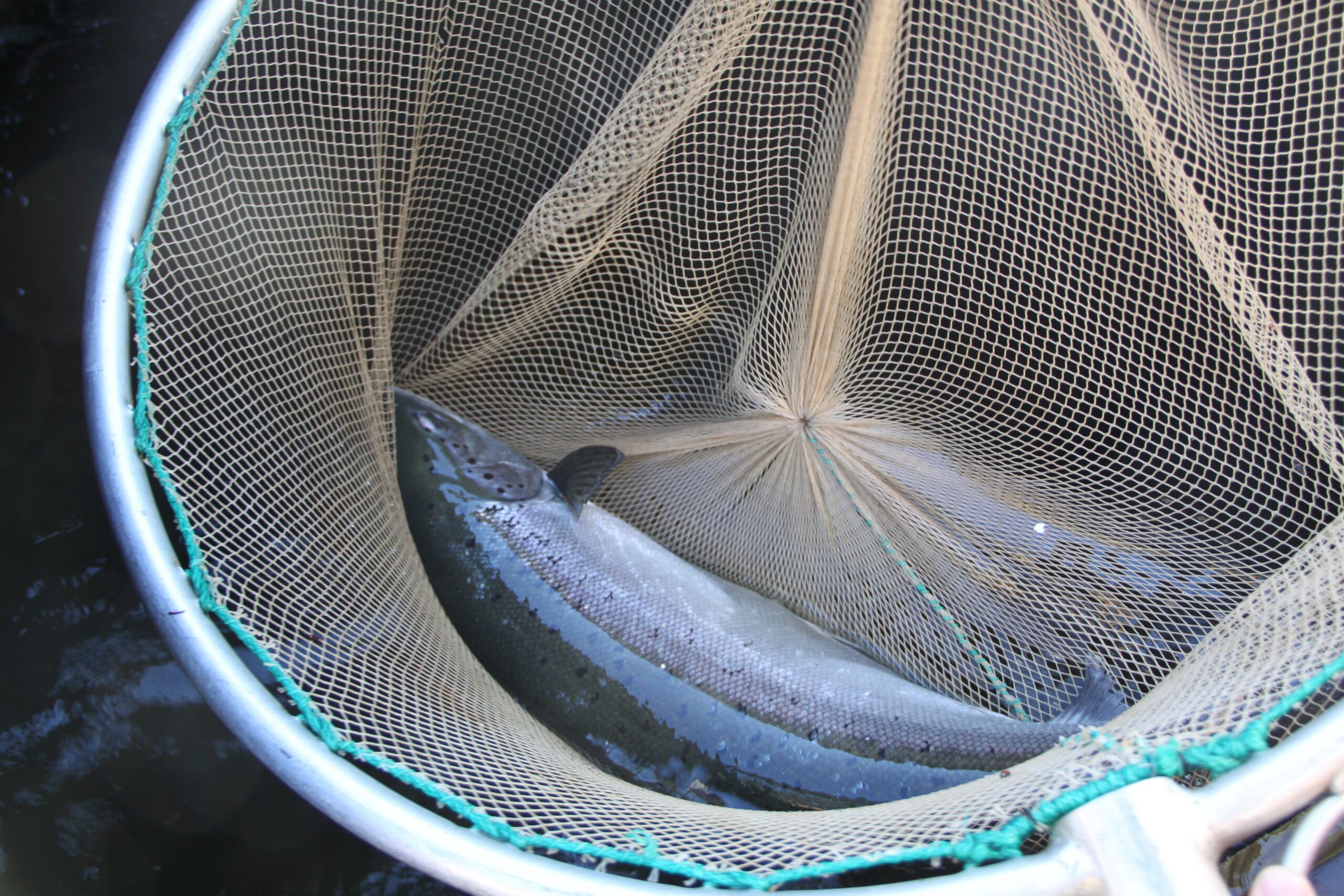
The salmon is in the net.
Figure: Regional Assembly of Oulu Region. The over-transfer of salmonids continues in Iijoki after a few years' break.

Atlantic salmon and trout will be transferred to the Iijoki and Livojoki rivers during the summer of 2021. Over-transfers support the emergence of salmonid stocks stigmatised in the river. The offspring of the transferred fish will migrate in smolts in a few years' time, when they can be followed in studies in Haapakoski.

Commercial fishermen catch salmon and trout from the estuary. The fish are transported in water tanks by car to waters above power plants. Fish are handled as gently as possible and avoid stress. Transfers are interrupted when the water temperature rises to 17 degrees.

‘The purpose is to transfer a maximum of 200 salmon or trout. The aim is to carry out transfers during June and, if necessary, to continue them in late summer.’, says the CEO Risto Tolonen Cooperative from Team Kala.

“Extra-transfers are expected to produce several thousand smolts if the fish to be transferred find a suitable spawning pair and breeding grounds. Once the Raasaka Fish Road is built, over-transfers can be made more efficient and the quantities of fish transferred can be increased’, continues project manager for the Iijoki migratory fish project 2020-2022 Mirko Laakkonen Regional Assembly of Oulu Region.

Cooperative Team Kala is responsible for the practical implementation of overtransfers. The transfer permit is in the Iijoki fishing area and the measure is made possible by the Iijoki migratory fish project 2020-2022.

The measures of the Iijoki migratory fish project 2020-2022 are the construction of a downward migration path for smolts to Haapakoski, the planting of small juveniles, the over-transfer of high-rise fish, the transfer and monitoring of smolts, and the promotion of the construction of the Raasaka fish road. The project is implemented by PVO-Vesivoima Oy, the Lapland ELY Centre, the Ministry of Agriculture and Forestry, Ii, Oulu, Pudasjärvi, Taivalkoski, Kuusamo, the Regional Assembly of Oulu Region, the Iijoki fishing area, Metsähallitus, the Northern Ostrobothnia ELY Centre and the Natural Resources Institute Finland. The project is coordinated by the Regional Assembly of Oulu Region. The total budget of the project is approximately EUR 2.2 million.

The project has received funding from the Ministry of Agriculture and Forestry's NOUSU programme, which improves the living conditions of migratory fish and aims to restore the natural reproduction of migratory fish stocks in Finland's current waters.

More information on the Iijoki migratory fish project 2020-2022: Mirko Laakkonen, Project Manager, Regional Assembly of Oulu Region, tel. +358 40 685 4036, mirko.laakkonen(at)pohjois-pohjanmaa.fi

Related articles

03.06.2021
Freshly hatched Atlantic salmon and trout can grow in the Iijoki River

At the beginning of June, 460,000 freshly hatched juveniles of Atlantic salmon and 60,000 sea trout will be planted in the river Iijoki and its tributaries. Restocking supports the creation of salmonid stocks stigmatised in the river. The fish that are now being planted will start to migrate in smolts within a few years, when they can be monitored in studies carried out in Haapakoski. ‘We plant trout in the Loukusanjoki and Pärjänjoki rivers, salmon in the main stream of the Iijoki river and in the Livojoki river. At the end of the summer, our experimental fish will be planted," says Eero Hartikainen, wilderness planner at Metsähallitus. The young were purchased from the Natural Resources Institute Finland and they are planted by Metsähallitus. The plantings now being carried out are expected to produce several thousand smolts. Mirko Laakkonen, Project Manager of the Iijoki Migratory Fish Project 2020-2022, from the Regional Council of Northern Ostrobothnia, says: “The planting rates of youngsters are expected to increase in the coming years, while dam bypass solutions are advancing at the bottom of the river. The restocking of small juveniles is part of the Iijoki migratory fish project 2020-2022. Other measures of the project include the construction of a downward migration path for smolts to Haapakoski, as well as over-transfers and monitoring of salmonids. The project is implemented by PVO-Vesivoima Oy, the Lapland ELY Centre, the Ministry of Agriculture and Forestry, Ii, Oulu, Pudasjärvi, Taivalkoski, Kuusamo, the Regional Council of Northern Ostrobothnia, the Iijoki fishing area, Metsähallitus, the North Ostrobothnia ELY Centre and the Natural Resources Institute Finland. The project is coordinated by the Regional Council of Northern Ostrobothnia. The total budget of the project is approximately EUR 2.2 million. The project has received funding from the Ministry of Agriculture and Forestry's NOUSU programme, which improves the living conditions of migratory fish and aims to restore the natural reproduction of migratory fish stocks in Finland's current waters. More information on the Iijoki migratory fish project 2020-2022: Mirko Laakkonen, Project Manager, Regional Council of Northern Ostrobothnia, tel. 040 685 4036, mirko.laakkonen(at)pohjois-pohjanmaa.fi Photo: The Forest Board. Metsähallitus wilderness planner Eero Hartikainen planting freshly hatched sea trout in the Loukusanjoki river.

09.11.2020
Finland's first downhill smolt migration route to be built in Haapakoski, Iijoki

In order to secure the downward migration of salmonids, a construction contract worth over EUR 1.5 million will be launched in Haapakoski, Iijoki, in November. The construction of a downhill migration route is a great example of what can be achieved through extensive cooperation. This project will provide us with valuable information and experiences that we can use in our future projects," says CEO Jani Pulli from PVO-Vesivoima Oy. The smolts' downward migration path and catchment device consist of a funnel extending to the upper channel of the power plant, flip-flops placed in the funnel, two catchment cage and two pipes, each with a diameter of 1 m. The shorter pipe serves as a water discharge pipe as needed. The longer pipe, 130 m, passes through the heel below the dam to the lower channel of the power plant. This tube allows fish to migrate if they are not caught for research or over-transfers. The downhill migration path shall be operated at a flow rate of 1 to 3 m3/s.  [caption id="attachment_20224" align="alignnone" width="300"] The Smolt migration path will be built between turbines and hatches.[/caption] In line with the Water Vision 2030, the Iijoki River aims to restore the natural life cycle of salmonids. The success of the downward migration of the Smolts is one of the key elements in this whole. In 2019, a smolt fence was installed in Haapakoski. The downhill migration route now being built will complete the whole and enable the migration of fish, says Mirko Laakkonen, Project Manager at the Regional Council of Northern Ostrobothnia for the Iijoki migration fish project 2020-2022. OMP-Konepaja Oy was selected as the construction contractor for the downhill migration route following the tendering procedure. The construction consultant is CC Control Oy. The fairway was designed by Sweco Structural Engineering Ltd. The construction work will be completed in 2021. It is great to be able to build Finland's first downhill migration route for smolts. The project also includes the engineering, manufacturing and installation of a fish catching device. We have strong expertise in similar projects, says CEO Vesa Korkiakoski from OMP-Konepaja Oy. [caption id="attachment_21002" align="alignnone" width="300"] PVO Vesivoima Oy. Signature of the Haapakoski Downhill Passage Agreement.[/caption] The construction of the Downhill Passage is part of the Iijoki Migratory Fish Project 2020-2022. Other measures of the project include the over-transfer and monitoring of salmonids and the restocking of small juveniles. The project is implemented by PVO-Vesivoima Oy, the Lapland ELY Centre, the Ministry of Agriculture and Forestry, Ii, Oulu, Pudasjärvi, Taivalkoski, Kuusamo, the Regional Council of Northern Ostrobothnia, the Iijoki fishing area, Metsähallitus, the North Ostrobothnia ELY Centre and the Natural Resources Institute Finland. The project is coordinated by the Regional Council of Northern Ostrobothnia. The total budget of the project is approximately EUR 2.2 million. The project has received funding from the Ministry of Agriculture and Forestry's NOUSU programme, which improves the living conditions of migratory fish and aims to restore the natural reproduction of migratory fish stocks in Finland's current waters. Additional information: Mirko Laakkonen, Project Manager, Iijoki migratory fish project 2020-2022,…