20.10.2022
The construction of the Oulujoki river basin was a major post-war work
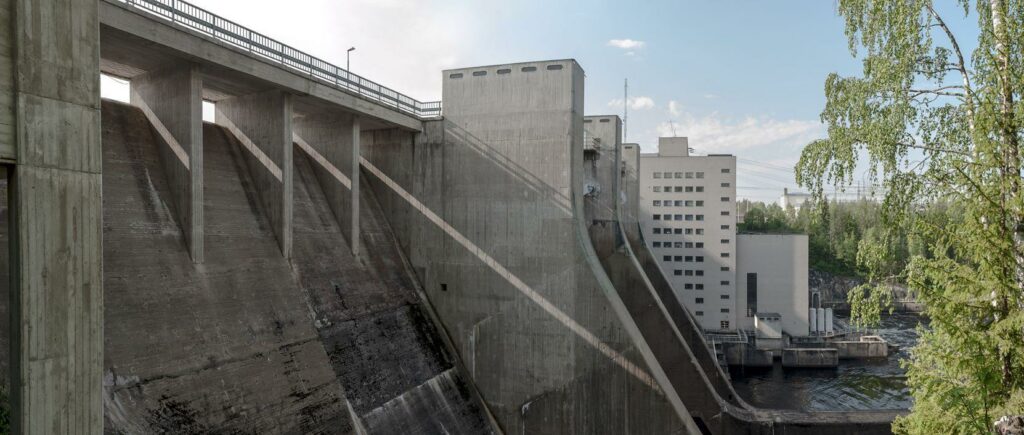
The construction of the Oulujoki hydropower was a major post-war work whose cultural-historical and architectural value sought equals. The Hydropower Cultural Heritage (VekuVaku) project coordinated by the Regional Council of Northern Ostrobothnia Building an Industrial Identity It was announced in mid-October.
Samuli Paitsola, editor of the work, summed up the cultural-historical and architectural value of the construction of the Oulujoki power plants in three perspectives at the publication of the work.
‘In post-war Finland, a social transition started. Finland moved from an agrarian Finland to a modern industrial society. In a project such as harnessing the Oulujoki river, the image aspect must also be taken into account. It was a showcase to the world. We wanted to show that we can and are capable of making world-class industrial architecture and industry", Paitsola describes the background to the work.
Second, Paitsola points out that the construction of the Oulujoki power plants to function as a unified system is completely unique and demonstrates the expertise of modern architecture, new technology and concrete construction.
“It is also worth noting the power plant communities built in connection with power plants, which have been built in connection with almost every plant,” Paitsola points out. The communities were mimicking ironworks communities and socially hierarchical, but the attraction factor was, among other things, the exceptional indoor showers of their time.
Ervi's architecture is key
Like Paizola, the project's former project manager, architect Pekka Elomaa, was able to dive into the construction of the Oulujoki hydropower through several visits and through Fortum's and Oulun Energia's photo archives.
Elomaa especially admires the architecture of the leading architect of her time, Aarne Ervi, which can be found in the Oulujoki hydropower plants. In an interview with Kaleva, Elomaa described, for example, the impact of the dam structures at the Pyhäkoski power plant in Muhos as Egyptian architecture.
Elomaa also sees nuances in the entities, which are characteristic of Aarne Ervi's architecture and which are repeated in their own way in Ervi's later plans, the most famous of which are the Porthania building of the University of Helsinki and the central plan of Tapiola in Espoo.
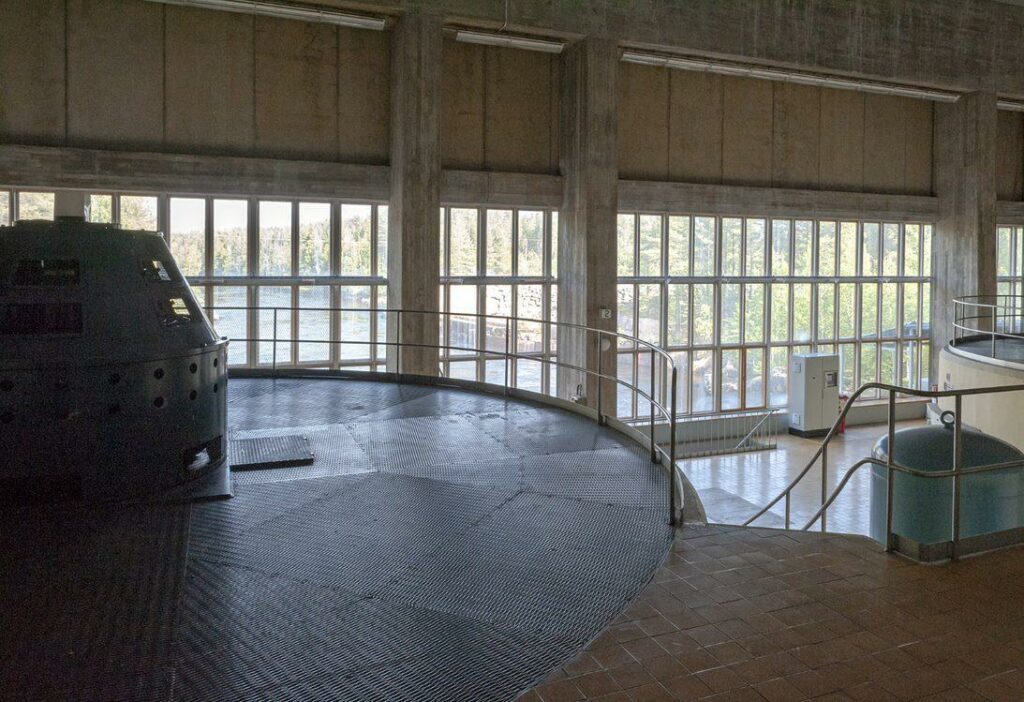
Architecturally, the Oulujoki power plant series also represents the early days of the use of concrete elements. “Elementary construction increased the chances of making large windows. The use of natural light is important for Ervi and is highlighted in these power plants", says Elomaa.
Elomaa is so impressed with the whole Oulujoki river that she is careful not to rank the buildings in any sort of order, but she has the most impressive object in mind.
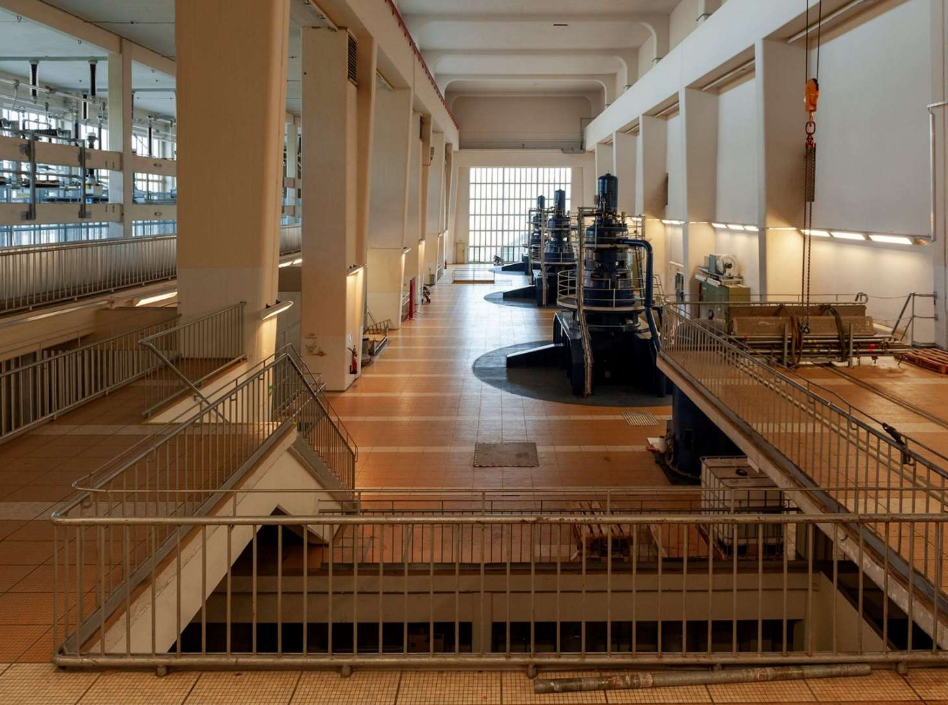
‘The machine hall of the Pyhäjoki power plant could easily fit inside a three-storey small apartment building’, Elomaa describes the largest and still one of the largest hydropower plants in Finland.
Significant historical context
The cultural-historical significance of the Oulujoki River is also emphasised by the world-historical situation in which it was decided to build a series of power plants in the Oulujoki River. Hanna Honkamäkilä, Head of International Affairs at the Regional Council of North Ostrobothnia, explained the matter in more detail at the publication of Building an Industrial Identity.
"After the end of World War II, Finland was in a situation where, after the devastated war, it was necessary to try to get out of Germany and not to rely on the Soviet Union for energy production, and the whole of Europe was in ruins and there was no money," Honkamäkilä describes the starting positions in Finland in the 1940s.
The project manager of the VekuVaku project, regional architect Kirsti Reskalenko, also emphasised the historical significance of hydropower construction in its time.
Honkamäkilä also highlighted the connection between construction and the bilateral relationship between Finland and the United States. “The situation was particularly difficult for Finland because the Soviet Union had to be paid war reparations and the United States did not want to support Finland directly because the money would have gone directly To the Soviet Union. Finland was not allowed to participate in the US Marshall Plan, but cheap loans were received and it was an important part of the financing of power plants", Honkamäkilä says.
Pauli Harju, Regional Director for Northern Ostrobothnia, who opened the event, pointed out in his speech that such projects increase our understanding of the surrounding built environment.
“Outside our eyes, we have a unique industrial environment on the Oulujoki River. In 2015 and 2016, we had many World Heritage Sites. a project to update the national list of intents;. Obtaining status is more important than obtaining it. It increases our understanding of ourselves", Harju says.
VekuVaku in brief
The Hydropower Cultural Heritage project (VekuVaku) highlights the power plants and their communities in the Oulujoki and Luleå rivers as cultural heritage and a diverse resource. Thanks to cross-border cooperation, the cultural heritage of power plant construction in northern rivers will be clarified, promoted and the identity of local communities strengthened.
This project is co-financed by the EU's Interreg Northern Programme and the Regional Council of Lapland the project has been carried out in cooperation between North Ostrobothnian and Norrbotten operators during the years 2019-22.
The cooperation partners include the Kainuu Regional Council, the Museum of Finnish Architecture, the University of Oulu, the museums of Norrbotten, Kainuu and Northern Ostrobothnia, energy companies in the region (Oulun Energia, Fortum Power and Heat Oy, Kainuun Voima Oy, Loiste Oy, UPM-Kymmene Oyj, Vattenfall), Kainuun Nuotta ry, Metsähallitus, Rokua UNESCO Global Geopark, village and local associations, as well as municipalities of waterways, their upper secondary schools and educational institutions.
Captions in order from top to bottom:
Pyhäkoski power plant. Figure: Pekka Elomaa 2019 , © Regional Council of Northern Ostrobothnia.
View Utasen power plantfrom the datacenter downstream. Photo by Pekka Elomaa, © Regional Council of Northern Ostrobothnia.
Jylhämä power plant's data center. Photo by Pekka Elomaa, © Regional Council of Northern Ostrobothnia.
Download the work of art and see what else has been written about it
Download ‘Building an Industrial Identity’ here.
VekuVaku project website in Finnish.
Finnish Architecture Navigator website.
Yle News Northern Finland 17.10.2022