11.06.2026
Rural COOP workshop discusses the content of the upcoming ERDF call
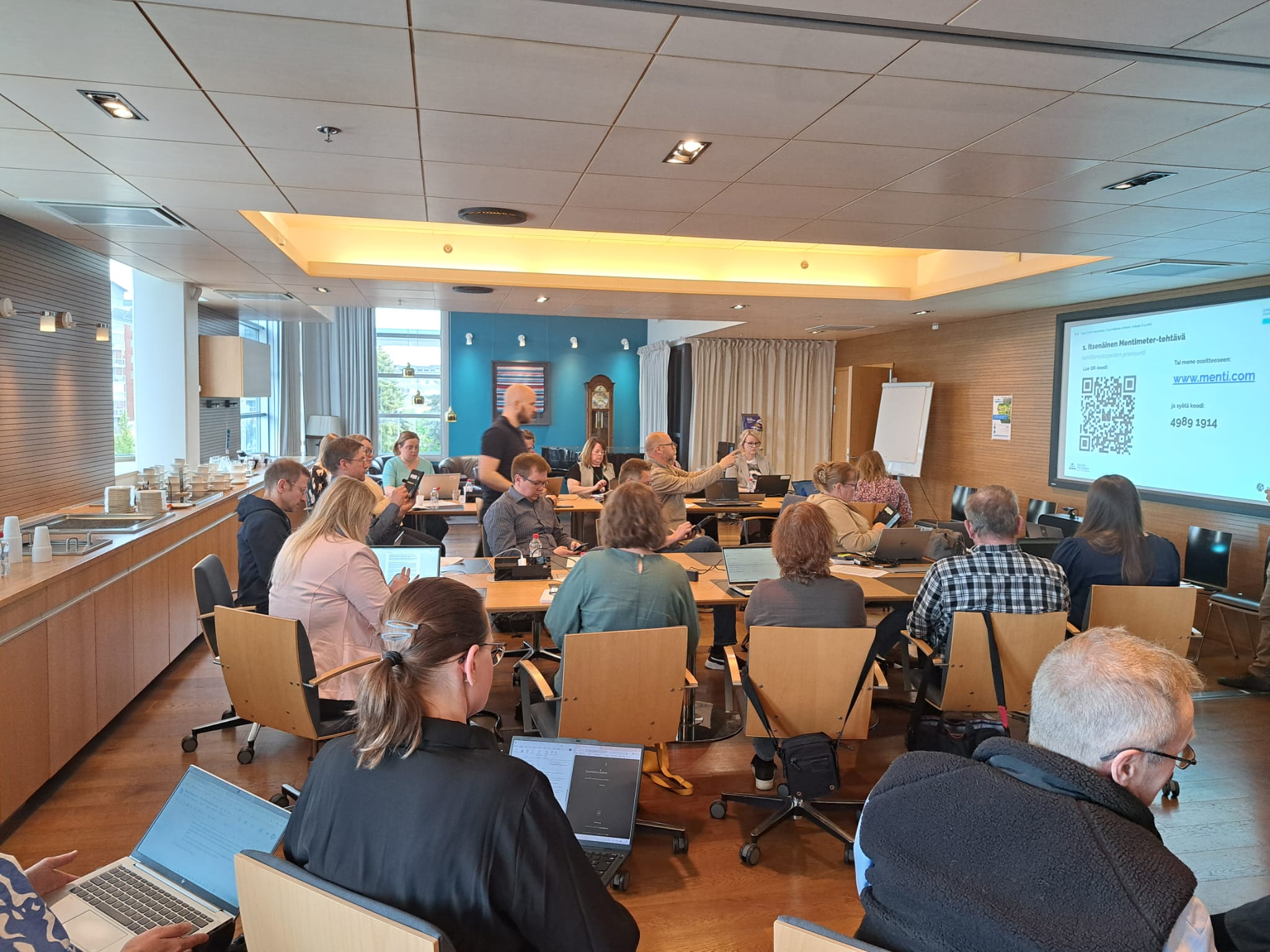
In the stakeholder workshop in May, regional stakeholders were involved in the planning of the autumn ERDF theme application. The thematic call is scheduled to start in September 2026 and the call for applications will amount to EUR 500,000. One of the objectives of the Rural Coop project implemented by the Regional Assembly of Oulu Region is to develop new regional development practices, especially from the perspective of the funding process.
– The autumn ERDF call is a Rural Coop call linked to Specific Objective 2.1. Promoting energy efficiency measures and reducing greenhouse gas emissions. The specific objective is set out very broadly in the programming document and allows for a wide range of projects to be carried out under it. This is why we wanted to organize a workshop. We wanted to hear from municipalities, in particular, what matters are topical in energy efficiency and climate work. We aim to take thoughts and ideas into account in the preparation of the call for applications, says Development Manager Laura Kelhä.
The event brought together a total of 29 participants, representing a diverse range of stakeholders in our region: municipalities, research and training organisations and development organisations. During the afternoon workshop, the priorities of the programming document were prioritised, weak signals were identified and joint actions were developed. The workshop was facilitated by: Samuel Ahola From the Arctic Factory.
The workshop identified key development themes that were broadly related to the development of the energy system, such as storage solutions, smart demand response, distributed energy production and biogas. There was also a discussion on the circular economy and the use of critical raw materials. At the interface between municipalities and companies, the development of competence in responsibility, procurement and emission assessment was highlighted.
– The subject of the workshop was challenging, but we received drawdowns that can be taken into account when preparing the call for applications. The stakeholders called for the need to move from surveys towards conducting, and various experiments, for example, were hoped for. Next, we will continue to work on the workshop material internally and try to take into account the entries created in the workshop. In addition, we complement our understanding by, for example, reviewing the contents of municipalities' climate plans and strategies, Kelhä concludes.
Thank you to all participants for sharing their time and knowledge! Work will continue in the autumn at the application clinics of the Rural COOP-themed ERDF call and at the application info, which will be communicated in more detail after the summer holidays.
More information about Rural COOP can be found here: Rural COOP – Rethinking sUstainable and integRAted deveLopment in non-urban areas: COOPerative foresight and anticipation
Keywords:
ruralcoop