24.11.2026
The EU looks to the north
Arctic strategy and green transition open up new opportunities
The themes of security of supply, clean energy and security have increased Europe's interest in the Arctic. In October, the European Union published the Arctic Strategy, as the strategic importance of the region for Europe has increased as the geopolitical situation has changed. The EU's Arctic strategy focuses not only on security and the economy, but also on climate change and the well-being of people living in the northern regions.
Development offers new opportunities for Northern Finland, but their utilisation requires concrete investments and strong regional participation in EU decision-making. These themes were raised at the CPMR General Assembly in Stavanger, Norway, from 18 to 20 November.
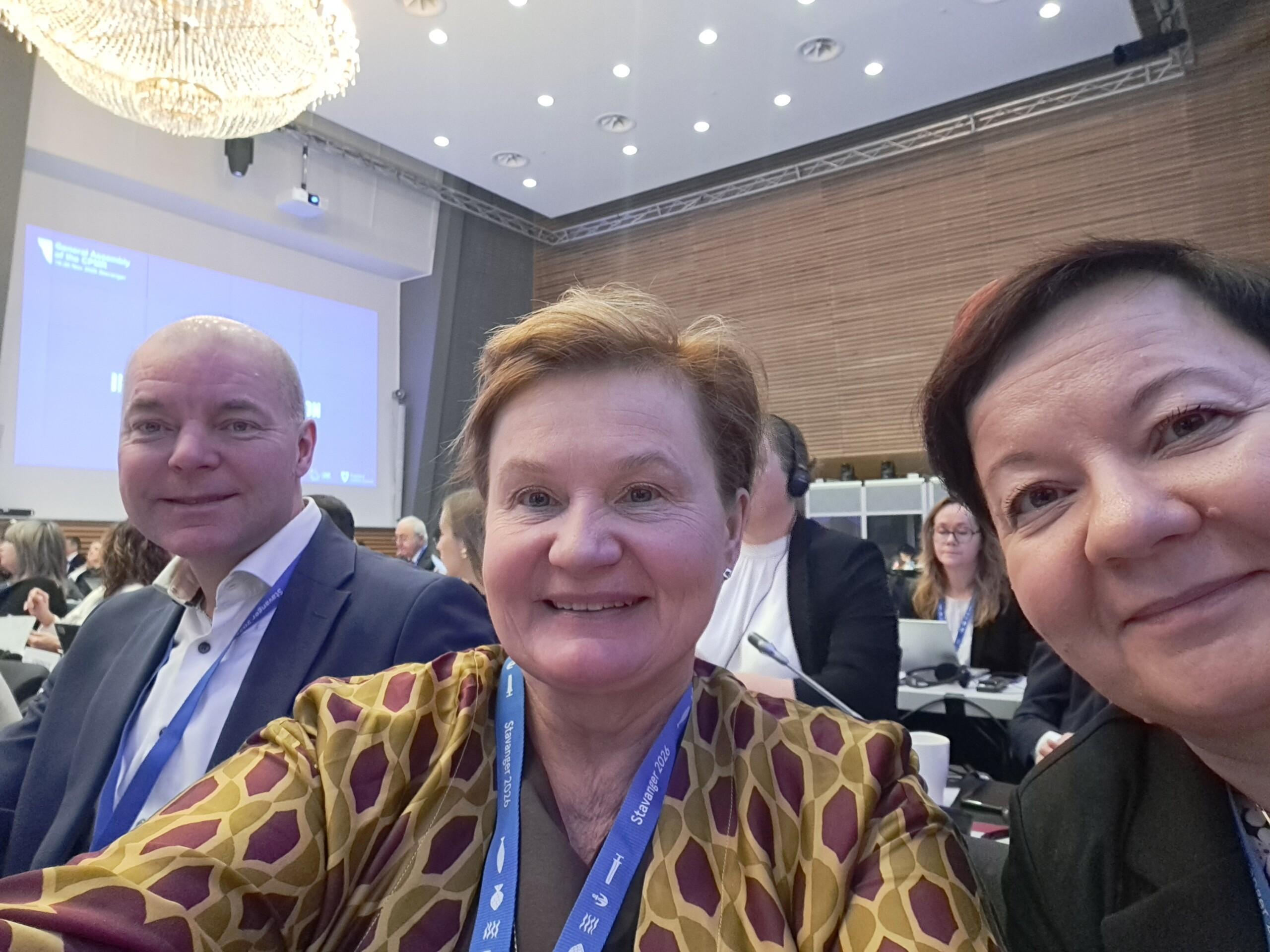
Representing Northern Ostrobothnia in the General Assembly Sari Nurro noted after the meeting that interest in the Arctic region opens up new opportunities for influencing Northern Finland as well.
– The EU’s focus on the updated Arctic Strategy offers opportunities for Northern Finland that should be exploited. The opportunities offered by the Arctic Strategy relate in particular to the development of transport corridors between Finland, Sweden and Norway to meet the needs of civilian and military mobility. Through the TEN-T network and the Rail Nordica project, we can strengthen cross-border connections in the north," says Nurro.
The speeches in Stavanger stressed that the objectives of Arctic policy must be reflected in practical measures and investments. The northern regions are important for Europe not only in terms of their natural resources and energy production, but also in terms of transport and telecommunications connections and security of supply. In addition, the special conditions of northern sparsely populated areas must be taken into account in transport, energy and regional development policies.
– Oulu is the node of the TEN-T core network, connecting the main rail line via Kainuu and Tornio in the directions of Norrbotten in Sweden. The double track between Oulu and Liminka and the Oulu railway yard are an important part of the security of supply in Europe as a whole. The joint procurement of icebreakers proposed by Finland would also strengthen winter navigation in the Bothnian Bay, which is vital for northern industry," says Nurro.
Green transition needs northern energy and natural resources
Northern Europe also plays an important role in clean energy production and the green transition of industry. For example, North Ostrobothnia produces 46 per cent of Finland's wind power and solar power capacity is as much as 78 per cent of Finland's capacity. Other Nordic countries are also investing in the green transition and sustainably produced energy.
– Europe aims to strengthen its energy independence and reduce its dependence on non-European supply chains. This will increase the importance of the northern regions as locations for renewable energy, critical raw materials and new industries," Sari Nurro points out.
The discussions highlighted the considerable investment potential of Northern Finland and projects such as the Aurora Line electricity transmission link between Finland and Sweden, which strengthen Nordic energy market interconnections.
From the perspective of Northern Ostrobothnia, the opportunities of the green transition are particularly related to renewable energy production, electricity networks and investments in clean energy industries.
The meeting also highlighted the need for the benefits of the green transition to remain stronger in the regions where energy is produced and investments are carried out. The mere production of natural resources and energy elsewhere is not enough; investments must also generate local jobs, skills and vitality.
At the same time, the involvement of local communities and the acceptability of projects are prerequisites for the realisation of large investments.
Security and the green transition are interlinked
The common denominator of Arctic policy and the green transition is strengthening Europe’s capacity to act and its sustainability. Northern transport networks, ports, energy connections and telecommunications connections serve business, security of supply and safety at the same time.
In Stavanger, particular emphasis was placed on the importance of cross-border cooperation. Transport and energy links in the North Calotte are not just regional development issues, but are important for the competitiveness and security of Europe as a whole.
This will create new arguments for boosting investment in northern infrastructure also in the future EU financial framework for 2028-2034.
"The regions must now form an exceptionally strong united front in lobbying, so that the future EU financial framework genuinely takes into account the needs and specificities of the regions," says Nurro.
CPMR (Conference of Peripheral Maritime Regions) is a European association of coastal, island and peripheral regions. The Regional Council of Northern Ostrobothnia participates in the organisation's activities through the Baltic Sea Commission. The meeting in Stavanger was the 54th General Assembly of the CPMR and concluded with the handover of the leadership of Philip Reinhag of Gotland as president of the organisation to Jaume Duch of Catalonia.