06.11.2023
Opening speech by Mari-Leena Talvitie, Chair of the Regional Assembly, at the Regional Parliament of Northern Ostrobothnia, 6 November 2023
Minister, honourable representatives of the municipalities and all the partners, good participants.
We warmly welcome you and it is nice that you have arrived to the regional parliament organized by the Regional Assembly of Oulu Region.
What is Northern Ostrobothnia like? Geographically, we are the 2nd largest region in Finland. Homeland for about 416,000 people. We are also a region of young people. The average age of a Northern Ostrobothnian is about 40.2 years.
The eyes turn north in many ways. in cooperation with the many changes in the world, the North is becoming a national question for Finland and a question of the future for Europe as a whole, both in terms of security and economy. The importance of the north has become even more pronounced, unfortunately in cooperation with the ongoing brutal Russian war of aggression and Finland's NATO membership.
At present, about 95 per cent of Finland's foreign trade passes through the Gulf of Finland by sea. In the event of a disruption to maritime traffic in the Gulf of Finland, we will have to resort to alternative routes. The geopolitical importance of the north is crystallised in the fact that, in such a situation, land connections are used, the only of which passes through northern Finland to Sweden and Norway, and from there to the world. The north is our gateway to the west. The increasing emphasis on security has led us to consider how we can most reliably secure our country's security of supply even in crisis situations.
Efficient and smooth transport connections are prerequisites for ensuring safety and economic growth. The main connections in our region are of national importance.
Export euros circulating on the tracks, i.e. export tons. They don't vote. Freight runs from the ports of Oulu and Raahe on the tracks at maximum capacity. That is why Prime Minister Petteri Orpo's government will implement the Oulu-Liminka double track. Its plans are expected to be completed in early 2024. Hopefully, the Government will make a financing decision on the project as soon as possible, already during 2024.
After the Oulu-Liminka double track, the biggest bottleneck for freight transport, i.e. economic growth, is the Liminka-Ylivieska interval. That's why we need the Liminka-Ylivieska double track. Let's move the conversation from hours to tons.
The flight connections in Northern Ostrobothnia serve as on market terms. Flights to Oulu and Kuusamo are prerequisites for the accessibility of our region. The past year has been difficult for Oulu flights. When Norwegian discontinued its scheduled flights between Oulu and Helsinki, the number of flights decreased, and due to the discontinuation of Finnair's smaller aircraft and competition, the prices of the flights have been completely unreasonable and the availability in cooperation with the card.
The efforts of BusinessOulu, the City of Oulu and the Regional Assembly to get new air connections and stakeholders have been ambitious and diverse. We in the region, together, have shown strong political support for these.
In November, Finnair will increase the number of flights and return larger aircraft between Oulu and Helsinki. Lufthansa will start flights from Oulu to Munich in December.
In the spring, I was negotiating the Clean Energy Finland section of Petteri Orpo's Government Programme, together in cooperation with Minister Ranne. As a result of the negotiations, we outlined that the goal as a government is to double the production of clean electricity and a 10% share of the EU's clean hydrogen production. These will also enable energy-intensive industries to serve as in Finland and in our region in the future.
Achieving the clean energy target requires improvements in the operating conditions of companies, smooth licensing and, of course, good cooperation characteristic of Finland.
In the end, doubling clean energy means significant industrial investments for Finland and, as a result, jobs and well-being. Finland has a historic opportunity to benefit from the global clean transition investment wave. It provides the greatest transformative force for industrial renewal in decades. One example of this in our region is SSAB's factory in Raahe, which will produce carbon-free steel in cooperation with emission-free electricity in the future.
As the world moves towards carbon neutrality, emission-free electricity production plays a crucial role. It allows many traditional industries to regenerate to the limits of the Earth's carrying capacity. In this transition, there are many opportunities for Finland in the north.
We in Northern Ostrobothnia already produce more than 40 per cent of the country's wind power electricity, and billions of investments in wind power are planned in Northern Ostrobothnia alone. The Regional Assembly of Oulu Region is doing this supportive work by partial mapping of areas that are suitable for wind power production and areas that are not. This contributes to closer cooperation between municipalities and creates a basis for the approval of wind power.
In addition to regional successes, we need national measures to increase the social acceptability of wind power. The Orpo Board will therefore pay special attention by increasing the obligations related to, for example, the dismantling of power plants and the restoration of areas, as well as by correcting the shortcomings concerning the status of landowners.
For the construction of offshore wind power, the government set an ambitious goal, not forgetting the immediate clarification of the rules of the game, such as licensing and taxation.
in cooperation with regard to nuclear power, the Board of Directors undertakes to approve all applications for permits in principle that meet the criteria, in which the applicants' backgrounds are acceptable from the point of view of national security. Under the leadership of Minister Kai Mykkänen, the Nuclear Energy Act will also be reformed by 2026 to improve the flow of projects and facilitate the construction of modular small nuclear restakeholders.
It is possible that an alternative supplier will be sought for the Hanhikivi nuclear power plant area in Pyhäjoki in the next few years or that small nuclear power plants may be built. Would this be one of our new energy solutions?
It is important to repatriate investments from the refining industry to Finland instead of exporting significant amounts of electricity or unrefined hydrogen from Finland.
The increasing production of clean energy in the whole country will also lower the price of consumer electricity, which worried us all last winter.
Finland can also play an important role in Europe’s energy independence and its ability to be at the forefront of the green transition. It is about the security of Finland and Europe, economic growth in our country and jobs in our region.
Orpo's Board of Directors aims to make more investments in research, development and innovation activities in Finland. The goal is to invest 4% of GDP in R&D in Finland. That is why the government is implementing the historic R&D efforts that have been parliamentaryly agreed. Next year, public funding will increase by approximately EUR 280 million.
This will be accompanied by additional efforts by industry and large companies, as well as new R&D activities by SMEs. A good incentive for this is the R&D tax deduction for companies. In the 2023 taxation, companies can already deduct the wage costs of R&A activities and purchased R&A services.
Northern Ostrobothnia has one of the highest R&D and GDP ratios in Finland. At present, our R&D investments account for 5.3% of GDP, of which private investments account for more than 70%. We are a forerunner in national comparison. Nonetheless, we must continue to lead the way and also seek our share of the increase in public investment.
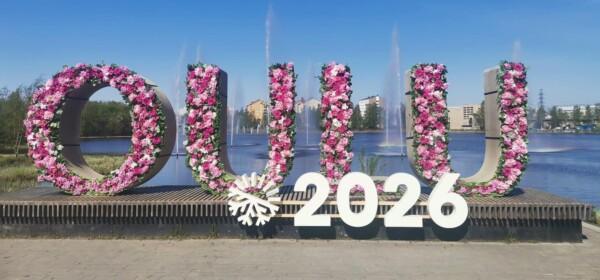
I hope that the joint journey of Oulu and 30 other places to become the European Capital of Culture for 2026 will be visible and heard in our region next year. Oulu 2026 and the idea based on its arctic attitude, boldly on the edge, is a great way to create a sense of community and togetherness, and at the same time a diverse cultural and climate change in our region, more broadly in the north. Small things can grow together into something hugely meaningful.
We in the northern region had a clear goal in the new Government Programme: Finland needs a Northern Programme. In the spring, we worked together to ensure that it was included in Prime Minister Petteri Orpo's government programme. The Government Programme states that the Northern Programme will be prepared under the leadership of the Prime Minister's Office. This shows that the importance of the North is now understood to be important also at government level. In addition to strengthening security of supply, the Northern Programme will enable us to further accelerate the sustainable growth of the Northern Finnish industry for the benefit of Finland as a whole.
Preparatory work for the Northern Agenda has started in the Prime Minister's Office under the leadership of State Secretary Risto Artjoki. In accordance in cooperation with the Government Programme text, an Advisory Board will be established to support the preparation of the Northern Programme and set up by the Government.
In order to take advantage of these opportunities, effective cooperation is crucial.
When I was the chairman of the Oulu City Board, we built a new Oulu. I used to say that in this fast-paced world of information, everyone can compete against themselves to death, but in the future, those who enter into partnerships – even in cooperation with the worst competitor – will succeed.
Cooperation must not be limited to the level of companies, universities, municipalities, cities, regions and Regional Assemblys, but must be transnational. When Finland, Sweden and Norway join forces, we can achieve more and benefit from our shared opportunities.
Today is also a time for discussion and networking. There is an even stronger need and demand for building tomorrow's well-being and future. It means brainstorming and refining ideas, collaboration and partnerships, from near or far. As is known, there is only one good idea that works, but partners are needed for the implementation.
Keywords:
the regional Parliaments