Generic selectors
Exact matches only
Search in title
Search in content
Post Type Selectors
Search in posts
Search in pages
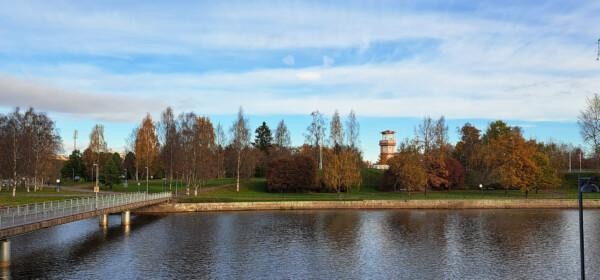
The letters OULU in pink in front of Tuira, each decorated in honour of the summer and the year of the Capital of Culture.

news

18.06.2026

On-the-spot verifications support the implementation of the project
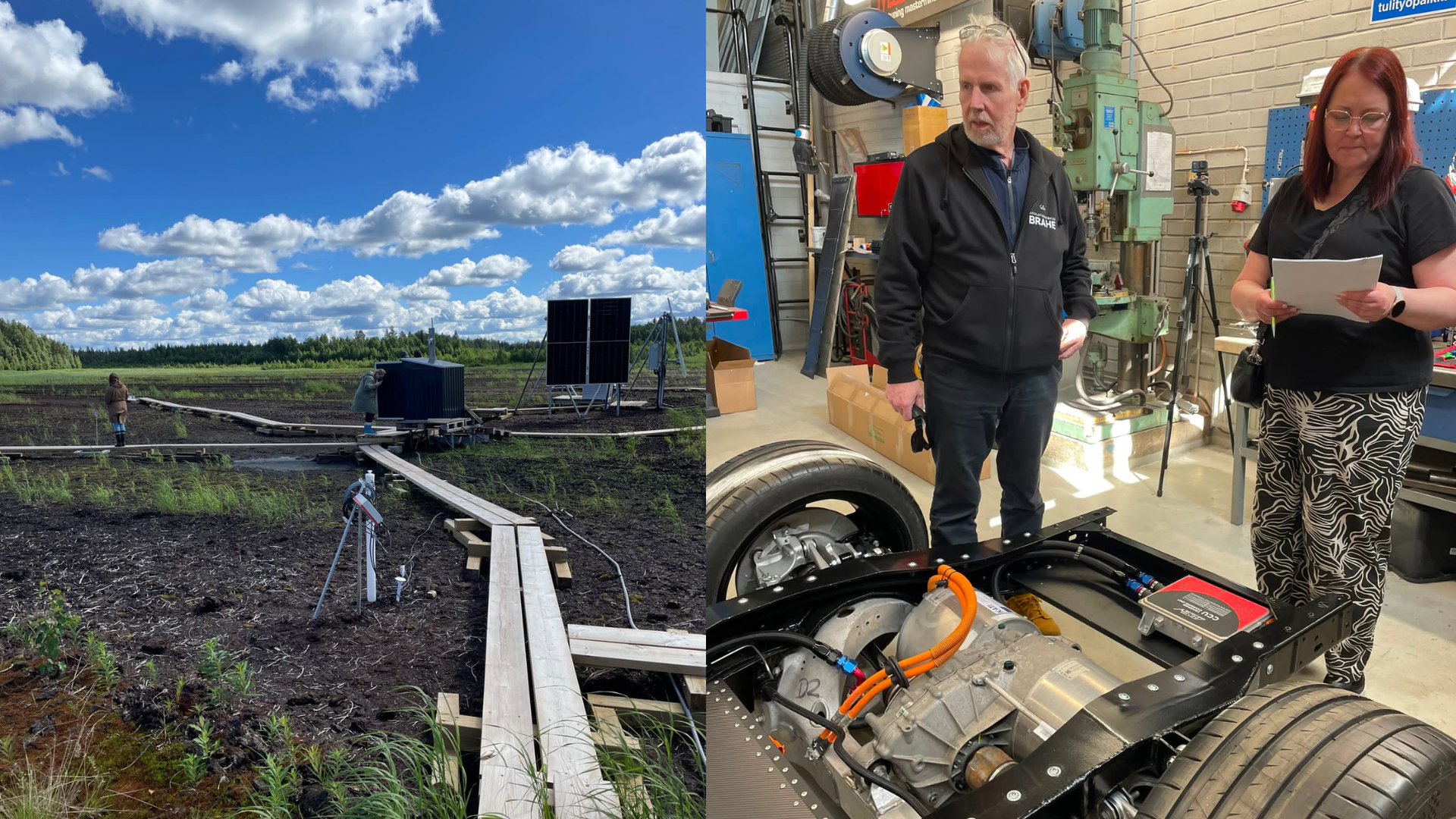
Pohjois-Pohjanmaan liiton maksatusasiantuntijat perehtyivät toukokuussa erilaisiin hankkeisiin paikan päällä tehtävissä varmennuksissa. Vasemmalla  Miehonsuon tutkimusympäristö  ja tutkija Maarit Liimatainen (LUKE). Oikealla koulutuskuntayhtymä Brahen tekniikan ja palveluiden yksikön projektipäällikkö Leo Aho sekä maksatusasiantuntija Mari Väänänen Pohjois-Pohjanmaan liitosta.

Pohjois-Pohjanmaan liitto on käynnistänyt vuoden 2026 paikan päällä tehtävät varmennukset. Tänä vuonna maksatusasiantuntijat käyvät maakunnan alueella noin 20:ssa erilaisessa EAKR- tai  JTF -hankekohteessa. Valvonta ulottuu 15 prosenttiin kaikista Pohjois-Pohjanmaan liiton osarahoittamista ohjelmakauden 2021–2027 EAKR- ja JTF -hankkeista. Lisäksi varmennuksia voidaan toteuttaa kansallista rahoitusta saaneille hankkeille. Varmennus toteutetaan maksatusasiantuntijan johdolla ja paikalla on myös hanketta valvova aluekehitysasiantuntija.

Tarkastettavat hankkeet valikoituvat erilaisten kriteerien perusteella. Varmennettavaksi pyritään valikoimaan keskenään erilaisia hankkeita: ryhmähankkeiden pää- tai osatoteuttajia, yksittäisen toimijan hankkeita, eri kokoisia ja tyyppisiä hankkeita. Lisäksi pääsääntöisesti suuret, yli 800 000 euron julkisen tuen hankkeet tarkastetaan aina.

Käynnin keskeisin tavoite on varmistua siitä, että hanketta on toteutettu hankesuunnitelman ja -päätöksen mukaisesti. Varmennuksessa käydään läpi muun muassa hankintojen oikeellisuutta ja syntyneitä kuluja. Esimerkiksi  palkkojen yksikkökustannuksia käyttävissä hankkeissa tarkastetaan tuntihinnan laskentaperusteet.

– Paikan päällä tehtävät käynnit täydentävät maksatushakemuksen yhteydessä tehtävää tarkastusta. Samalla siihen kannattaa suhtautua ohjauskäyntinä, jossa voi esittää kysymyksiä myös meille, vinkkaa maksatusasiantuntija Mari Väänänen.

Vierailulla keskustellaan usein myös hankkeen tuloksista ja viestintään liittyvistä asioista. Viestinnän osalta tärkeimpiä ovat esimerkiksi aineistoista, materiaaleista ja tiloista löytyvät EU-tunnukset sekä Pohjois-Pohjanmaan liiton logo. Ne tuovat näkyville hankkeissa tehtävää toimintaa. Lisäksi varmennuksessa käydään läpi hankesuunnitelmassa määriteltyjä tulosindikaattoreita sekä niiden toteutumista hankkeen aikana. Oleellista indikaattoreiden näkökulmasta on jäljitettävyys, jotta varmistutaan tuloksen tosiasiallisesta syntymisestä. Indikaattoreiden lisäksi, usein hanketoimijan yllätykseksi, käydään läpi myös hankesuunnitelmassa määritellyt horisontaaliset periaatteet. Myös kehittämistoiminnan jatkuvuudesta hankkeen jälkeen keskustellaan.

Käyntiin olisi hyvä valmistautua kasaamalla hankkeen asiakirjat yhteen sekä pohtimalla esimerkiksi hankkeen indikaattoritietoja ja horisontaalisia periaatteita ennakkoon. Lisäksi jouhevan varmennuksen puolesta olisi hyödyllisintä, että paikalle saataisiin henkilöitä, jotka aidosti toteuttavat hanketta ja osaavat vastata esitettyihin kysymyksiin.

–  Tärkeää on myös avulias ja avoin mieli. Varmennus on yhteispeliä ja pyrimme siihen, että myös hanketoimijat saisivat siitä tukea hankkeen toteuttamiseen, päättää Väänänen.

Varmennuskäynnin jälkeen maksatusasiantuntija laatii muistion, jossa havainnot käynniltä vedetään yhteen.

Vinkkilista tarkastukseen valmistautumiseen

  • Kokoa hankkeen aineisto (kirjanpito, kilpailutusaineistot, viestintä, palkkojen laskentaperusteet jne.) yhteen sekä varmista, että oikeat ihmiset ovat paikalla tapaamisessa.
  • Huolehdi, että henkilötietolomakkeet, erityisesti nimikkeet, ovat ajan tasalla.
  • Tarkista, että EU-tunnukset ja Pohjois-Pohjanmaan liiton logo ovat esillä vaaditulla tavalla.
  • Indikaattoritietojen jäljitettävyys on hanketoteuttajan vastuulla – huolehdi, että jäljitysketju on olemassa.
  • Palauta mieleen hankehakemuksessa esitetyt horisontaaliset periaatteet – miten nämä ovat toteutuneet käytännössä? Onko tullut täydennettävää?
  • Valmistaudu kertomaan, miten hankkeen kehittämistyö jatkuu sen päätyttyä – mitä hankkeessa jää jäljelle?
  • Pohdi, onko sinulla itselläsi kysyttävää – varmennus on hyvä hetki myös esittää kysymyksiä esimerkiksi hankehallinnosta.
  • Käyntiä ei tarvitse jännittää!
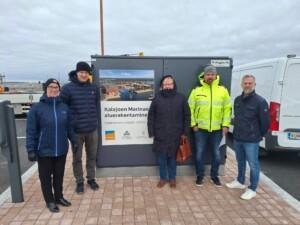
Viisi ihmistä seisoo sähköpääkeskuksen edessä. Taustalla on sähköpääkeskukseen kiinnitetty kyltti, jossa lukee Kalajoen Marinan aluerakentaminen.
AKKE-erillisrahoitteisen Kalajoen Marinan aluerakentamisen hankkeen varmennuskäynti toukokuussa 2026. Kuvassa vasemmalta kehitysjohtaja Tiina Rajala, aluekehitysasiantuntija Heikki Laukkanen, hanketalousasiantuntija Pia Välimäki, urakoitsija Matti Sirviö Valukon Oy:sta sekä tekninen johtaja Marko Raiman Kalajoen kaupungilta.


Related articles

17.08.2026
Application period for ERDF funding open until 30 September 2026

The ERDF call for applications for the 2021-2027 programming period of the Regional Council of Northern Ostrobothnia is open until 30 September 2026! In this call for applications, ERDF applications will be accepted in accordance with the following specific objectives: 1.1. Improving research and innovation capacities and the uptake of advanced technologies 2.3. Promoting the transition to a circular economy 3.1. Developing regional and local accessibility A total of EUR 2 820 000 is planned to be used to finance incoming projects. The maximum contribution requested (ERDF+Member State) is 70 % development project and up to 70 % the total cost of the investment project. Before preparing your application, you should read more about the Renewable and Skilled Finland 2021-2027 programme document and the contents of the above-mentioned specific objectives. Projects financed under Specific Objective 1.1 must also be in line with the Northern Ostrobothnia Smart Specialisation Strategy 2021-2025. The Regional Council of Northern Ostrobothnia's ERDF project selection emphasises the promotion of development targets in accordance with the provincial programme for Northern Ostrobothnia 2026-2029 and the provincial implementation plan for security of supply and comprehensive security. In addition, the assessment of applications under priority axis two focuses on their suitability as a project under the Northern Ostrobothnia Climate Roadmap 2021-2030. You can access the call for applications here: EURA 2021: The 12th call for applications of the Regional Council of Northern Ostrobothnia ERDF 4.5.-30.9.2026 The material of the call for applications organised in May can be found here: More information on the current call for applications is available from the contact persons of the Regional Council of Northern Ostrobothnia:  Jarkko Kärkimaa, Regional Development Specialist, tel. +358 50 520 6670 Aki Lappalainen, Regional Development Specialist, tel. +358 40 502 1851 Heikki Laukkanen, Regional Development Specialist, tel. +358 50 918 0035 Katarina Timisjärvi, Regional Development Specialist, tel. +358 40 685 4025 Laura Kelhä, Regional Development Manager, tel. +358 40 685 4016 (especially project presentations)

17.06.2026
The implementation plan for the security of supply and overall safety in Northern Ostrobothnia has been updated

The implementation plan for the security of supply and comprehensive security of North Ostrobothnia for 2026-2027 has been updated and approved by the Provincial Government on 8 June 2026. The implementation plan brings together key measures to strengthen the region's resilience to crises and ensure the functioning of society in a changing security environment. The update shifts the focus from preparedness towards resilience – the ability to act even in long-term disruptions. The development is guided by three key areas: RDI activities, the security of supply of business life and the safety of people's everyday lives. The plan sets out concrete actions for different sectors. For example, the reliability of the energy system will be strengthened by developing decentralised energy production, energy storage and reserve power solutions. In food and water supply, the availability of water is secured and reserve power is ensured to ensure the continuity of operations. Logistics invests in alternative transport routes and the reliability of critical infrastructure, such as ports and the road network.  In addition, the importance of local production, shortening supply chains and strengthening know-how is emphasised. The implementation plan emphasises more than before the importance of people and communities in building overall security. The security of everyday life, communality, participation and the ability of citizens to act in disruption situations are seen as key factors for the resilience of the region. Cooperation will also continue in the implementation phase, where information sharing, strengthening partnerships and developing operating models across sector boundaries will be key. International cooperation, especially at EU and Nordic level, is seen as an important part of the development of security of supply. The implementation plan is based on extensive cooperation with the actors in the region and aims to turn the strategic guidelines into practical measures throughout the region.  The full implementation plan can be found here.

21.05.2026
Plenty of applications for funding for the implementation of programmes in Eastern and Northern Finland

The IP AKKE funding is called the national appropriation for supporting the sustainable growth and vitality of the regions, which, in accordance with the Government's decision, is available for approximately 16 million for the implementation of programmes in Eastern and Northern Finland. The funding authority is the Regional Council of South Karelia, which opened the project applications at the beginning of March 2026. The first selection period for the IP AKKE funding call ended on Friday 15 May 2026. In the first selection period, a total of 33 applications were submitted for a total amount of more than EUR 52 million. The number of applications exceeded expectations and indicates a strong interest in the implementation of the programmes. At the same time, the amount of aid applied for far exceeds the available appropriation of EUR 16 million. “The number of applications shows that the objectives of the programmes are considered very timely and necessary. It is particularly gratifying that cross-regional cooperation is already strongly visible in the project preparation phase," says Senior Adviser Hanna‑Maria Urjankangas from the Ministry of Economic Affairs and Employment. Urjankangas chairs the steering group guiding the IP AKKE funding package. Of the applications, 19 were directed to the region of Eastern Finland, seven to the region of Northern Finland and seven were cross-regional projects. The applications will now be submitted for evaluation. The aim is to carry out evaluations even before the summer holiday season, but the large number of applications may delay the processing schedule of applications. As the selection process progresses, the Regional Council of South Karelia will inform about the possible continuation of the application process. If not all IP AKKE funding is used for project applications submitted in the first selection period, the next selection period will end on 30 October 2026. If, on the other hand, the entire appropriation is already committed to projects through funding decisions, the Regional Council of South Karelia will suspend the application process. Further information: Regional Development Manager Heli Gynther, Regional Council of South Karelia, heli.gynther@ekarjala.fi, +358 40 485 5109

04.05.2026
Investments and accessibility were highlighted in regional development discussions in Northern Finland

In the annual regional development discussions between the state and the regions, continuous changes in the operating environment were highlighted this spring. The geopolitical situation, tightening public finances and the weakening of young people's future faith and well-being all have an impact on regional development. The position and strategic importance of Northern Finland, both in terms of overall security and large-scale investments, have grown significantly in recent years. The investment potential of the North is exceptionally high - estimates move up to EUR 80 billion over the next ten years. The investments focus on the clean transition, such as renewable energy and the extractive sector, as well as on industry and solutions that strengthen security of supply. From the point of view of investments, investments related to accessibility and the transport system, permitting processes and their duration, the possibility to anticipate the operating environment and the general availability of financing played a key role. From a financial point of view, the coordination of different sources of funding is key. The vitality of the sparsely populated north was found to be strategically important for Finland as a whole. Permanent settlement in border areas creates security and enables local food production. Energy investments in the North strengthen the country's energy self-sufficiency and security of supply, while creating jobs and livelihoods in the region. In particular, the importance of accessibility and dual-use infrastructure as a critical development target for Northern Finland was highlighted in the discussions. The strategic position of the north, long distances and sparsely populated areas, as well as climate factors, make transport connections and telecommunications networks critical. In particular, investments are needed in transport connections to Sweden and Norway, starting from the eastern border, and in the backhaul connections in Northern Finland. It is also necessary to ensure the continuity of air connections and to improve the condition of the road network. In addition to physical accessibility, digital security of supply is emphasised in northern sparsely populated areas. Energy networks also need to be strengthened for investments in the clean transition. In the view of the Regional Council of Northern Ostrobothnia, there is a need for long-term strategic work that extends beyond government terms and supports the operating conditions of Northern Finland. Ensuring the continuity and timeliness of the Northern Programme is key in this regard. In the Northern Finland programme, cooperation between the northern regions of Finland, Sweden and Norway in cooperation with the regions is of paramount importance and the provinces should play an active role in this. The annual regional development debates (ALKE debates) were held in the provinces of Northern Finland on 26 March 2026. In regional development discussions, the state and the counties review the objectives and operating conditions of regional development with the aim of strengthening the vitality and self-development of the regions. From the state side, several different administrative branches participate in the discussions, which makes it possible to pay attention to the factors that jointly affect the development of each province.…