Generic selectors
Exact matches only
Search in title
Search in content
Post Type Selectors
Search in posts
Search in pages

news

04.11.2026

Nordic funding, Arctic cooperation and security on display at Tornio's NSPA Forum
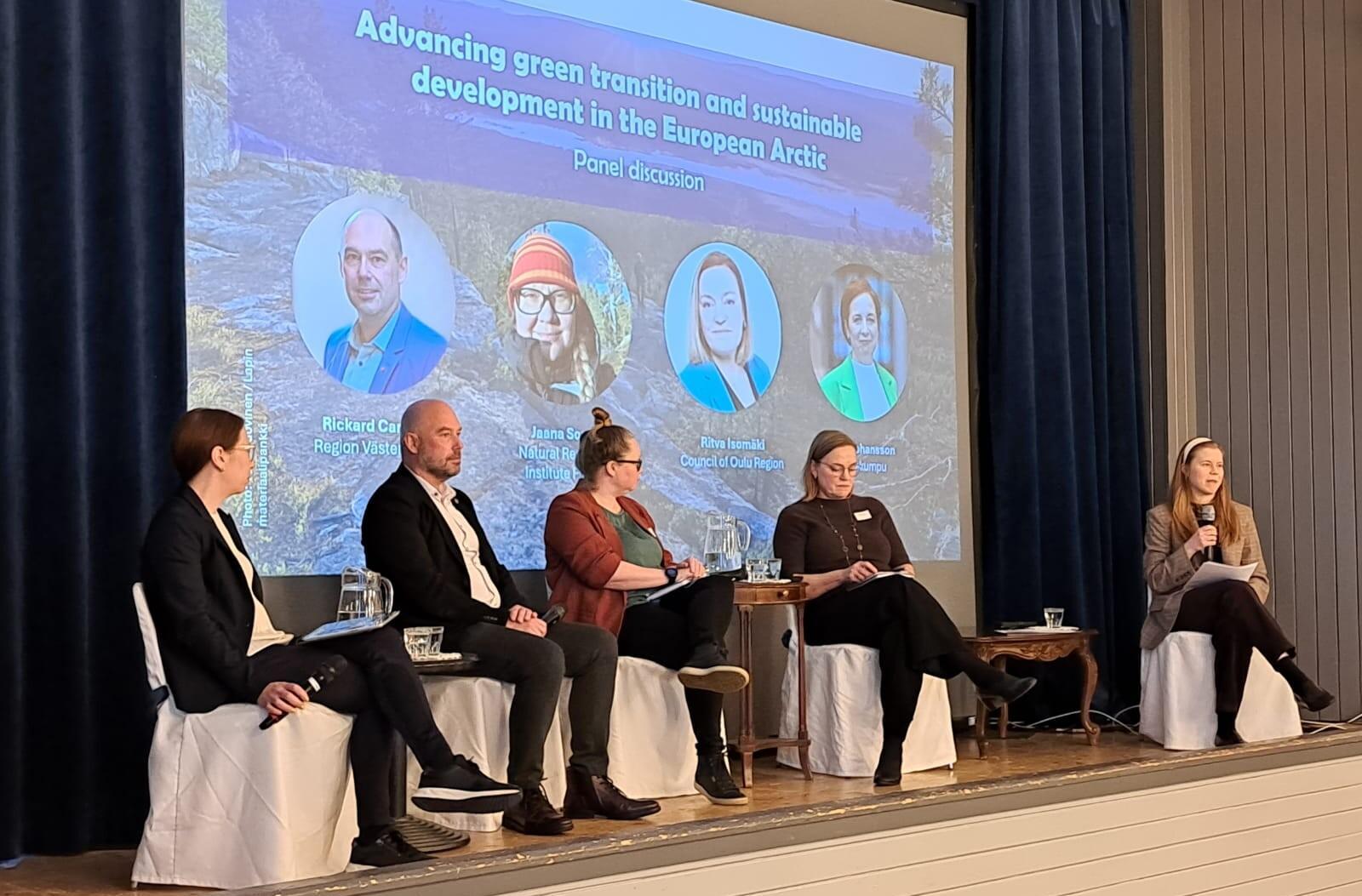
Five people sitting on stage and having a panel discussion

Figure: NSPA Forum panel discussion ongoing, from left: Kirsi Johansson Outokummulta, Head of Environmental and Biodiversity Projects, Regional Counsellor, (regionråd) Rickard Carstedt the Västerbotten region, Docent Jaana Sorvali from the Natural Resources Institute Finland and Environmental and Natural Resources Manager Ritva Isomäki from the Regional Council of Northern Ostrobothnia. The discussion was led by Tiina, Senior Specialist Paakkari EU Office for Eastern and Northern Finlandsta.  

On 29-30 October, the Northern Sparsely Populated Areas (NSPA) platform brought together experts from Finland, Sweden and Norway on regional development, EU engagement and Arctic cooperation in Tornio. The key message of the Forum was clear: The vitality, competitiveness and security of Europe's northern regions is a strategic issue for Europe as a whole that must be taken into account in future EU financial and regulatory solutions.

The two-day forum covered topics such as the EU's Arctic strategy, the future Multiannual Financial Framework, competitiveness, the green transition, and security, resilience and cooperation in the northern regions. The discussions were timely, as the European Union has just published its new Arctic strategy and negotiations on the Multiannual Financial Framework (MFF) for 2028-2034 are ongoing.

Northern regions' views on the future of the EU and the Arctic strategy

Miguel Roncero, Directorate-General for Maritime Affairs and Fisheries of the European Commission, presented the key priorities of the new Arctic Strategy via videoconference. In their speeches, the Finnish Ministry for Foreign Affairs' Arctic Ambassador Kalle Kankaanpää and Päivi Ekdahl, Development Director of the Regional Council of Lapland, emphasised the growing importance of the Arctic regions from the perspective of Europe's security, energy independence, green transition and competitiveness. The need to invest in infrastructure, accessibility and vibrant local communities was also raised.

The discussions highlighted the importance of the NSPA network as an actor in the Arctic region and as an implementer of the strategy. Both Roncero and Kankaanpää stressed that in the implementation of the Arctic Strategy, local and regional actors as well as cooperation between actors are key.

– From the perspective of the NSPA regions, it is very important that the new EU Arctic Strategy identifies the northern regions not only as key areas for Europe's security and strategic competitiveness, but also as vibrant living and operating environments. However, the strategy's objectives will not be achieved without concrete investments, strong regional agency and long-term EU funding. In particular, special funding for northern sparsely populated areas must be secured in the future funding period. The implementation of the Arctic strategy must take place together with the regions – not just the regions, says Development Director Tiina Rajala Regional Assembly of Oulu Region.

The future of EU funding as a key theme

Member of the European Parliament Elsi Katainen discussed the state of play of the negotiations on the National and Regional Partnership Plans (NRPPs). In her speech, Ms Katainen stressed the importance of the regions, stating that there would be no prosperous Europe without prosperous regions. He highlighted in particular the role of the regions in the preparation of the future Multiannual Financial Framework (MFF) and stressed the importance of national coordination and regional skills. Ms Katainen stressed the importance of securing sufficient funding for the various EU funds and of identifying the needs of the regions and exploiting know-how as part of future EU policy.

The state of play of the discussions on the EU's Multiannual Financial Framework (MFF) was also examined by Hanna Honkamäkilä, Secretary General of the NRPP Preparation for Eastern and Northern Finland, and Kari Aalto, Director of the EU Office for Eastern and Northern Finland.

– The future EU Multiannual Financial Framework (MFF) highlights the need to secure long-term development funding for sparsely populated northern regions. The NSPA regions consider it important that the specific conditions of the regions are identified in the future partnership plan, says Secretary General of the NRPP Preparation for Eastern and Northern Finland Hanna Honkamäkilä.

Sustainable transition and security in the northern regions

The panel on the green transition and sustainable development of the Arctic regions examined the potential of the northern regions and the sustainable implementation of large investments from the perspectives of research, industry and regional development. In the panel, perspectives were provided by Research Manager, Docent Jaana Sorvali from the Natural Resources Institute Finland, Head of Environmental and Biodiversity Projects Kirsi Johansson Outokumpu, Provincial Counsellor, (regionråd) Rickard Carstedt the Västerbotten region and Environmental and Natural Resources Manager Ritva Isomäki from the Regional Council of Northern Ostrobothnia. The discussion was led by Tiina, Senior Specialist Paakkari EU Office for Eastern and Northern Finlandsta.  

– Northern regions are not just a target for investments and natural resources for the green transition, but active actors in the implementation of the transformation. As major investments progress, regional coordination is increasingly needed to take into account land use, nature, livelihoods and local needs, summarises: Ritva Isomäki.

The second day of the Forum addressed the security, resilience and changing geopolitical situation in the European Arctic. In their speeches, NATO expert Johannes Puukki and Professor Tanja Joona from the Arctic Centre of the University of Lapland emphasised the importance of Arctic security, the resilience of regions and civil society, and practical implementation. Both interventions highlighted the importance of cooperation and mutual trust.

The future of the Arctic region will be solved through practical cooperation, which is why know-how, cooperation, resilience and development work in the northern regions are more important than ever before.
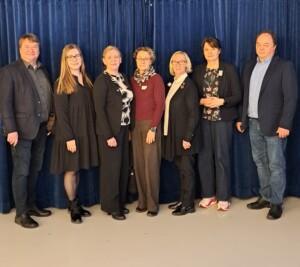
In front of the blue curtain stands seven people in a row and looks at the camera

From the left: Kari Aalto, Director of the EU Office for Eastern and Northern Finland, Laura Kelhä, Regional Development Manager of the Regional Council of North Ostrobothnia, Päivi Ekdahl, Regional Development Director of the Regional Council of Lapland, Leena Leskinen, Regional Development Director of the Regional Council of North Karelia, Tiina Rajala, Regional Development Director of the Regional Council of North Ostrobothnia, Niina Ahtonen, Regional Development Director of the Regional Council of Kainuu and Timo Ollila, Regional Development Director of the Regional Council of North Savo.

Related articles

23.10.2026
The Regional Council of Northern Ostrobothnia participated in the European Week of Regions and Cities in Brussels

Photo: Max Englund from left, Senior Adviser in European Affairs, North Sweden European Office, Hanna Honkamäkilä, Secretary General of NRPP Preparation for Eastern and Northern Finland, Dr Jorge Núñez Ferrer, Director for Cohesion Policy and EU Budget, CPMR, Tiina Rajala, Development Director, Katja Sukuvaara, Head of International Affairs and Laura Kelhä, Regional Development Manager at the Regional Council of Northern Ostrobothnia. Representatives of the Regional Council of Northern Ostrobothnia participated in the European Week of Regions and Cities 2026 in Brussels on 12-14 October. Organised by the European Commission's Directorate-General for Regional and Urban Policy and the European Committee of the Regions, the event is Europe's largest annual event on regional and urban policy. This year's theme was strong regions, a strong Europe. The key message of the event was that strong regions are the basis for the success of Europe as a whole. Different European regions face different challenges, ranging from geopolitical changes and demographic trends to skills shortages and securing services. Therefore, the solutions must also take into account the different starting points and needs of the regions. During the week, representatives of the Regional Council of Northern Ostrobothnia participated in several events that looked at the regions and their future from different perspectives. The discussions highlighted the importance of multilevel governance and the need for regional involvement in the preparation of the new programming period. Experiences of effective cooperation models at national and regional level were also heard. - European cooperation is built on trust between regions and people. By participating, we make our voices heard when we meet European decision-makers, participate in debates, build relationships and promote interests. During the Week of Regions and Cities, we find and meet partners, learn from each other’s solutions and build joint projects that bring knowledge, investment and jobs to the regions. At the same time, we can explain how the strengths of the northern regions strengthen the competitiveness, security of supply and safety of Europe as a whole," says Development Director Tiina Rajala. In addition to the event programme itself, the Baltic Sea Region Directors Network met at the EU office in Eastern and Northern Finland on Wednesday 13 October 2026. The network brings together regional development leaders from Finland, Sweden, Poland, Estonia and Germany. The topic of discussion was smart specialisation and interregional cooperation to promote it. European networks offer North Ostrobothnia the opportunity to both highlight the region's perspectives and learn from the experiences of other regions. Rachel Lancry, Head of Unit of the European Committee of the Regions' Committee on Territorial Cohesion Policy and EU Budget (COTER), also attended the meeting. Rachel...

12.10.2026
The eighth application period for sustainable urban development has closed on 9 October 2026

The eighth application period for sustainable urban development of the Regional Council of Northern Ostrobothnia for the 2021-2027 programming period closed on 9 October 2026. During the application period, 12 new applications were received by the Regional Council of Northern Ostrobothnia. The applications applied for funding from the Regional Council of Northern Ostrobothnia totalling approximately 1,685 M€. Decisions on applications for positive follow-up will be delivered in November 2026. Project selections are made by the City of Oulu's evaluation team. The next application period for sustainable urban development projects will take place in spring 2027. Approximately EUR 1,500,000 in funding will be applied for at the time

12.10.2026
The food future of the region was envisioned at the Nordic Food Economy Strategy and Development Days

The Northern Food Economy Strategy and Development Days gathered in Oulu from 6 to 7 October 2026 a wide range of actors in food economy, research, education and development to discuss the future of the sector and common development priorities. The aim of the event was to bring together actors in the field to build a shared vision of the future of the food economy in Northern Ostrobothnia and more broadly in Northern Finland. The first day of the workshop focused on food strategy work in Northern Ostrobothnia. The day started with two introductory speeches: Research Director Tuomas Kuhmonen from the University of Turku focused his speech on the food system of the future, highlighting the views of young people in particular. After Kuhmonen, Elina Ovaskainen, Senior Specialist at the Ministry of Agriculture and Forestry, spoke out about the national food strategy (2040) and gave tips to support the provincial work. After the introductory speeches, Regional Development Manager Laura Kelhä from the Regional Council of Northern Ostrobothnia presented the preliminary results of the operator interviews conducted in Northern Ostrobothnia. Based on these presentations, the workshop work focused on identifying changes in the operating environment, the region's strengths and future development priorities. Participants from different parts of the food system were present on both days. The discussion was lively, constructive and rewarding. During the workshop discussions, a wide range of views emerged on issues such as competence, competitiveness, security of supply, innovations, the future of primary production, processing and strengthening cooperation. Participants provided valuable insight to support strategy work. I feel that the days were very successful. We have had excellent cooperation with women of the earth and household, and by joining forces we can achieve more. It has been gratifying to see how actively different actors have participated in the strategy work. This reinforces the idea that the topic is important and there is a need for a strategy," says Laura Kelhä, Regional Development Manager. On the second day, the focus was on network work and the construction of practical development measures. The programme of the day focused on cooperation in the northern food and natural products sector, heard about the experiences of the Agri-Food cluster in North Savo and discussed the organisation of the development network and future objectives in relation to regional, national and European food strategies. The strategy work will now continue with the analysis of extensive data and the work of the North Ostrobothnia Food Economics Working Group. During the autumn, the draft strategy will be refined by means of a broader operator survey, after which the draft to be prepared will be placed on a round of comments and opinions. Strategy work and its different stages are described in the various channels of the Regional Council of Northern Ostrobothnia.

02.10.2026
The Twelfth Application Period for Structural Fund Projects of the Regional Council of Northern Ostrobothnia has closed on 30 September 2026

The twelfth application period for projects (ERDF) of the Regional Council of Northern Ostrobothnia for the 2021-2027 programming period ended on 30 September 2026. During the application period, 78 new applications were received by the Regional Council of Northern Ostrobothnia. The applications applied for funding from the Regional Council of Northern Ostrobothnia totalling approximately EUR 13,966 million. Decisions on applications for positive follow-up will be delivered in November 2026. The next application period for new ERDF projects will run from June to September 2027. The funding to be applied for at that time is estimated at EUR 3,000,000. In addition, the application period for JTF projects will be implemented in early February-March 2027. Approximately EUR 2.500.000 in JTF funding is being applied for. The timetables and contents of the application periods will be specified after the granting powers have been confirmed in early 2027.