02.09.2022
Vehkaperä: Northern issues must be raised in the European Union itself
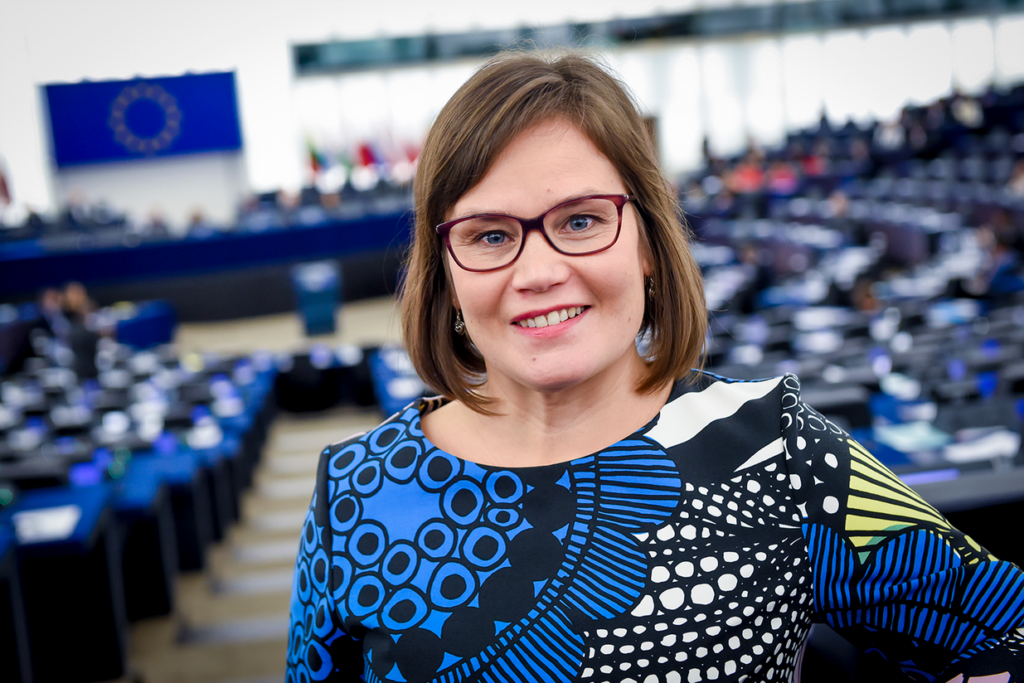 The questions of the North do not automatically take centre stage in the European Union; they must be raised there on their own. This is the direction of Mirja Vehkaperä, whose positions of trust include not only the chairmanship of the City Board, but also membership of the European Committee of the Regions.
Vehkaperä finds his task very interesting and important. It is particularly important for him to highlight northern issues and illustrate conditions in northern Europe, so that the necessary issues are also understood at EU level and regional issues are taken into account.
"in cooperation with my own experience of the work of MEPs, I can say that cities, regions and local areas are terribly far away from the EU, so we need the Committee of the Regions and to speak on behalf of the regions. The questions of the North always arise. No one talks about it unless we do it ourselves. It is very much up to Members to take up their own political responsibilities to make progress", Vehkaperä line up and continue:
“It is really difficult for a Central European person to understand our long distances, sparsely populated areas and four different seasons. It comes up in everything: transport, agriculture and food production, etc. I am sensitive to issues, regardless of the topic, that require an understanding of local circumstances. Therefore, illustrating things through images and maps, for example, is very important.”
Mirja Vehkaperä (Centre) visited the Regional Assembly of Oulu Region to present his career at the EU Committee of the Regions.
Mr Vehkaperä represents Finland in the Committee of the Regions together in cooperation with eight other representatives, forming the Finnish delegation. The Committee of the Regions has a total of 329 members. The members of the Committee include mayors of municipalities, mayors, parliamentarians and other elected representatives.
The Committee is composed of two committees, of which Mr Vehkaperä is one; COTER (cohesion policy, climate, regional economy) and NAT (agricultural tourism, forests, agriculture, tourism) for the Committee on Territorial Cohesion.
Concrete opportunity to Influencing
The European Parliament and the Commission are obliged to consult the Committee on municipal and regional matters. In the Committee of the Regions, members are personally Influencingd through reporting tasks. Reporting tasks are allocated to each political group, according to its size, and it is decided in cooperation within the committee which group is in charge of reporting. in cooperation within the group, a suitable member is selected to report on the matter, usually according to interest. Each member usually receives 2-4 reporting tasks per season.
When a Member receives a reporting role, he/she collects the necessary information and prepares a report in cooperation with presentations, which is presented and voted on in plenary. Vehkaperä's reporting task at the moment is to: Strategy for Europe's Everyday Regions, presented at the plenary session on 29 June.
Networking and Collaboration
Mr Vehkaperä describes his role in the Committee as a small role as an ambassador.
“The work is very much networking, people to people. Personal relations in cooperation with Members of the Committee and Parliament are important. Every year we visit a member's county to get to know local things. For example, there will be a visit to Prague to learn about the local public transport culture.”
Working as a member of the Committee of the Regions is a elected position, consisting of preparing for various events and speeches, working in commissions, participating in plenary sessions and seminars, communicating and networking in various ways. The work also includes a lot of work in cooperation with reports and study trips. According to Vehkaperä, working for the Committee employs him for about a week per month. The remuneration for the post is the meeting fee.
Work is important and enjoyable
In addition to his current reporting role at the Committee of the Regions, he also works in the Green Transition Task Force. Vehkaperä finds it interesting that the tasks include a lot of EU legislation and a lot of things are happening in the working groups at the moment. Especially energy-climate matters are close to his heart. Green Deal going local Through his work in the Working Group on Climate Change, he has also become the EU's climate ambassador among hundreds of other volunteers.
Overall, he has found the Committee of the Regions to be an interesting part of his career.
“Economic issues, regional policy, energy, climate, agriculture and tourism are at work. These are topics that are also of interest to me. There are many exportable things in the region, such as energy, digitalisation, technology, 5G, 6G, medicine, nature and the environment, forest and cycling. The work is also very international and allows for networking. It's also really rewarding to go outside the sandbox sometimes to ventilate your head, noticing things that we have succeeded in and are even ahead of others. It also gives you a lot for your own work.”
Outlook for the future
Vehkaperä thinks that the future looks challenging. He believes that large variables will undoubtedly continue to manifest themselves more and more in a larger cycle. For example, economic recession is something to talk about.
‘The question shall be: Are we gonna keep up? While in an ideal situation, of course, we should strive to be ahead so that we don't have to just react all the time. The aim would be to be able to build the future we want."
Mr Vehkaperä says that he was a member of the Conference on the Future of Europe, which ended a few months ago, and agreed on a common future policy for Europe.
“Despite the controversy, it was a pleasure to see that the EU is doing what it should. For example, the war situation in Ukraine has united nations in a certain way, and there has been much more solidarity among Member States than I had even thought. It is good to start preparing for the fact that even peace in Europe will not last forever.”