10.12.2021
Developing social enterprises together internationally
In the AGRO SE-VI-Link project, the Regional Council of Northern Ostrobothnia organised a small-scale two-day workshop in Oulu on 17-18 November 2021. This involved the Regional Authority of West Greece, the main project implementer, and the administration of the Province of Burgos, the second co-implementer of the project. The workshop focused on developing a virtual incubation plan that would serve the start-up and development of social enterprises in the food sector. This draft incubation plan has been created on the basis of the good practices collected in the project and the applicability assessments carried out.
In Finland, social entrepreneurship is not a well-known form of entrepreneurship. There are many different definitions of terminology, but in general, in a social enterprise, profits are used to promote some socially meaningful goal. This goal can be the same as in the company's operating model, e.g. reducing food waste, promoting people's well-being, improving employment, etc. In each country, social entrepreneurship operates in different ways and focuses on local needs, but the project has found many common problems with visibility, for example.
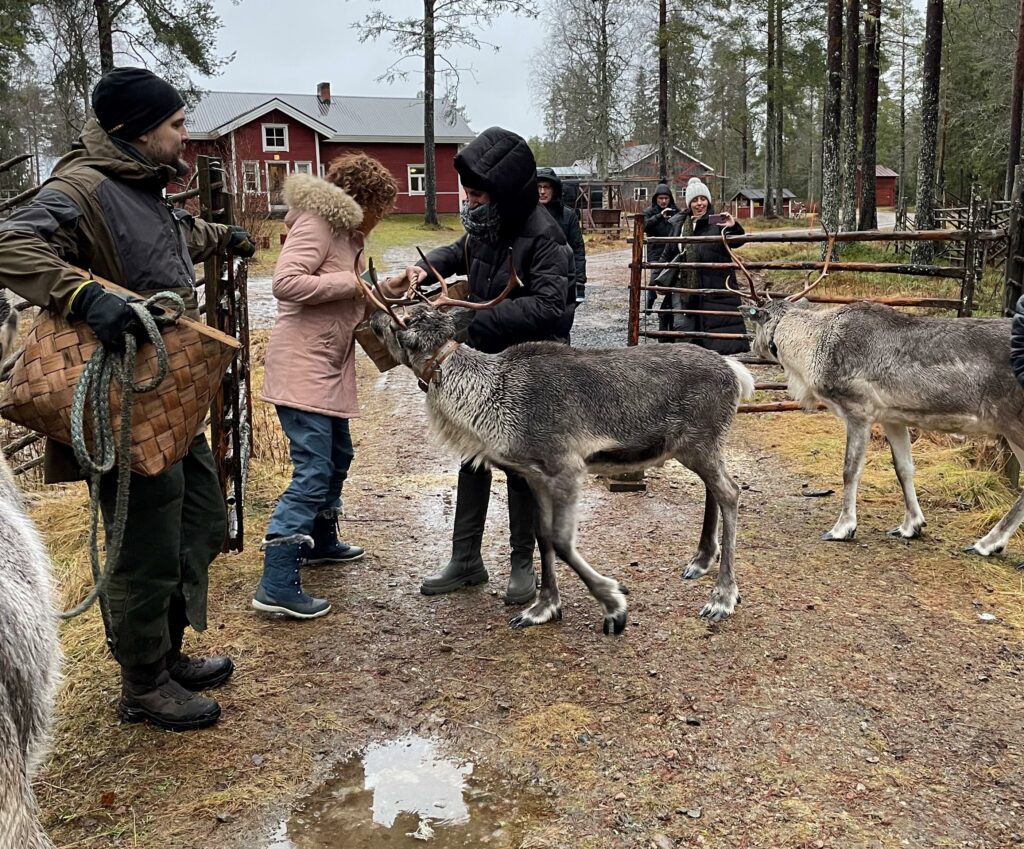
During the seminar we also got to know local companies and associations. The participants visited the Centre for Sustainable Development and the reindeer farm of Poro-Panuma to learn about association-based and tradition-based social activities, which take into account various dimensions of the activities. The activities of the association attracted interest with their diverse offering, all of which involve the development of the circular economy at the same time.
Especially the services of the lunch cafeteria, both in the reduction of wastage and as a food service for the elderly, gave rise to a lot of ideas for the home to be applied among Spanish guests. The Greeks, on the other hand, glorified smooth communication and cooperation based on trust with different networks, but especially with the big city. The long and inclusive family tradition of the reindeer farm and the preservation of the well-being of the reindeer fulfil the characteristics of social entrepreneurship, and the diversification of activities outside reindeer husbandry also attracted a lot of interest, as it is not common, for example, with other livestock and shepherds in Spain or Greece.
Business Designer Niina Karvinen and Cerveza Mico CEO Juan Cereijo Pecharromán also performed at the seminar. Karvinen highlighted the special status of social enterprises both internationally and in Finland. He also sparked discussion about measuring social impact in companies' operations and communicating it outwardly, which is often not done, especially in Finland.
Pecharromán, on the other hand, presented the activities of his brewery and how they take social values strongly into account in the company's operations. For example, they buy their raw materials only from small businesses in the vicinity, where possible, and hire people who are long-term unemployed or otherwise difficult to find employment. Through their efforts, they have succeeded in building a very successful artisanal brewery that has won dozens of international awards with its beers.
The project will continue until the end of January. The collected material will now be used to create a plan template, as well as a common reference framework template. The aim is also to propose policies and policy changes for the EU to promote the activities of social enterprises.