The autumn 2026 rounds for Structural Fund projects of the Regional Council of Northern Ostrobothnia for the programming period 2021-2027 are open until 30 September 2026 and 30 October 2026.
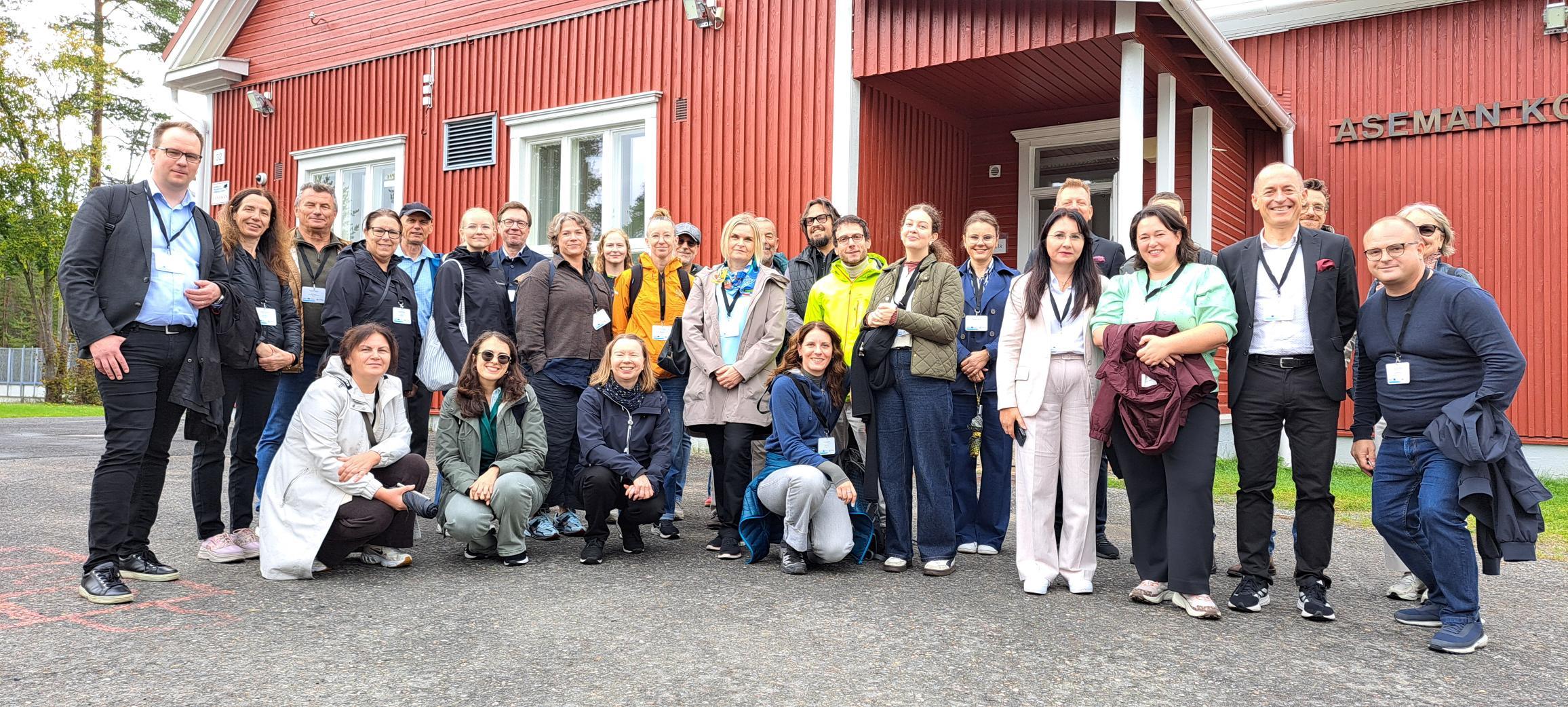
Figure: In early September, Rural COOP partners and stakeholders gathered in Oulu and Ii for the project's first international study visit to learn about good practices in sustainable rural development, climate work and the circular economy. On 2-3 September 2026, the Regional Council of Northern Ostrobothnia hosted the first international study visit of the Interreg Europe-funded Rural COOP project in Oulu and Ii. During the two days, project partners and regional stakeholders from across Europe learned about good practices in sustainable rural development, climate work, the circular economy and regional cooperation, and exchanged experiences on the future of regional development. The Rural COOP project develops the sustainable territorial development of rural and mountainous areas through foresight, inclusion and cooperation approaches. Study visits are a key part of the project's peer learning, the aim of which is to find new solutions for the development of regional policy measures. Partners from seven countries The study visit was attended by project partners and stakeholders from Finland, Sweden, Italy, Poland, Bulgaria, Albania and Switzerland. The participants included experts in regional development, representatives of municipalities, research organisations and actors working on the circular economy and sustainable development. In addition to the Regional Council of Northern Ostrobothnia, regional stakeholders, such as representatives of the municipality of Ii, the municipality of Muhos and the Kerttu Saalasti Institute of the University of Oulu, participated in the visit from Northern Ostrobothnia. – Our regions are different in size, structure and stage of development, but as rural areas we are united by many of the same challenges. Therefore, exchanging experiences with European partners is particularly valuable, says Project Manager Anna-Maija Toivonen. The first day of the study visit was held in Ii, Finland. The day started with acquainting students with the activities of Aseman koulu and the well-known 50/50 model, where students actively participate in energy saving and the development of sustainable everyday solutions. Participants were also able to get to know the nature of Ii on a short nature walk. The programme continued in Micropolis, where the participants heard about the long-term climate and sustainability work of the municipality of Ii. Mayor Marjukka Manninen presented how Ii, as a small municipality, managed to build an internationally known model of climate work together with residents, companies and communities. The proposals sparked a lot of debate on how the involvement of local communities can support the achievement of environmental objectives and strengthen the vitality of regions. During the day, the regional development work in Northern Ostrobothnia and the thematic funding call organised under the Rural COOP project (ERDF) were also presented. Tiina Rajala, Development Director of the Regional Council of Northern Ostrobothnia, gave guests an overview of the region and its regional development system, while Katarina Timisjärvi, Regional Development Specialist, and Laura…, Regional Development Manager
Sustainable growth, regenerative investments, tourism and security are emphasised in cross-regional projects that advance towards funding programmes in Eastern and Northern Finland. The implementation of the Eastern and Northern Finland programmes is progressing through ten large-scale projects. The projects will strengthen the regions' vitality, investment capacity, tourism, food chain, overall safety, as well as research, testing and piloting activities. The available IP AKKE allocation of just under EUR 16 million will be fully allocated to projects that have been successful in the evaluation of the first selection period. 33 applications were submitted for the first selection period for a total amount of more than EUR 52 million. The project steering group assessed the applications and processed them on 18 August 2026, selecting ten projects with which the Association of South Karelia will continue the financing negotiations. As a result of these selections, the appropriation will be allocated to projects in the first selection period and the application process has therefore been suspended. This is preliminary information. Positive applications are currently being supplemented and refined before the actual financing decisions are taken. The Regional Council of South Karelia acts as the funding authority for the project. In Northern Ostrobothnia, four projects receive an IP AKKE grant. The project, coordinated by the development company Naturpolis Oy, brings together 17 municipalities along the eastern border. The aim is to strengthen the municipalities' common situational picture, comprehensive security know-how, preparedness, cooperation and communication, and to support the vitality of the eastern border and the remaining inhabited. The project, coordinated by the University of Oulu, will build a centre of excellence based on cooperation between northern research stations. The project collects and opens information on nature, climate, atmosphere, biodiversity, carbon cycles and water bodies. Information is produced for use by society, research and other users, and common data services, interfaces and pilots are developed. VESKA - Sustainable growth from water and fishing tourism to the north The project, coordinated by Naturpolis Oy, develops water and fishing tourism in Eastern Lapland, Koillismaa and Kainuu. Companies are supported in internationalisation, developing new products and routes, accessing sales channels and strengthening the region's international reputation. Borderland Europe - Northern testing and piloting ecosystem A project coordinated by the City of Oulu will build a transnational testing and piloting ecosystem for defence and dual-use technologies in Northern Finland. The aim is to connect companies, R&D actors, testing environments and user organisations, and to create a pathway for companies from research to piloting, validation and market. Additional information: Heli Gynther, heli.gynther@ekarjala.fi, tel. +358 40 4855 109
Pojois-Pohjanmaa | Regional Assembly of Oulu region
Recent economic data do not come as a big surprise. The turnover of industries continues to grow steadily, but the number of employees has not started to increase. In several clusters, such as ICT, the number of employees is on a downward trend. Only in the metal cluster has the labour force increased moderately. Recruitment is increasingly affected by general uncertainty and technological developments. However, the growth in turnover in the industries is so strong that employment is likely to improve. The big question is when and where is it going to happen? However, excessive credit for the long-term positive impact of major projects on labour demand may be unrealistic. The situation of the ICT cluster, which is important for Oulu, is challenging. Revenue is increasing, but personnel is in a relatively strong decline. The ICT cluster has been characterized by strong monthly turnover fluctuations, in April the growth from the previous year was 12.1 per cent, but in May came down by 5.9 per cent. The impact of AI can be seen in the demand for the cluster's workforce, at least indirectly. Companies closely monitor the development and deployment of AI and anticipate the need for workforce in relation to it. The trump card of the future is 6G mobile technology, the developer of which Oulu plays a key role globally. Construction has been active for several semesters. From 2025, net sales increased by 2.3 per cent and the number of employees decreased by the same amount. Residential construction is still quiet, but some new projects have started. The growth in net sales has come from the construction of industry, tourism and the public sector. Oulu hotel projects and later data centers will significantly increase construction. In the case of data centres, the key issue is how much local companies have access to it, and what is the capacity of the area's earthworks The electricity and energy cluster and the metal cluster are growing strongly. The growth of both from 2025 is in the order of 10%. In the metal cluster, the number of employees has also increased. Net sales growth has been more moderate in wholesale and retail trade and tourism, where the number of personnel has been decreasing. The year-on-year change in the wood and furniture industry was as much as 13.8 per cent and there was also an increase in the number of personnel. In all clusters, seasonality is high, especially in construction. In digital services, Finland's service sector is less developed than in the peer countries, which is also visible in Northern Ostrobothnia. The use of services is still difficult for many in our culture. Jobs in trade and services are important, especially for young people. The growth of many industries also depends on the development of digital services,…
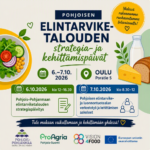
Place: Poratie 5, 90140 Oulu (both days) Welcome to build the future of the Nordic food economy! The two-day event brings together actors in the field to discuss, network and direct joint development work. Register to [...]
What: Rural COOP webinar on Green Economy as a Driver of Integrated Territorial Development Date and Time: 7.10.2026 10.30-12.00 (Finnish time) Where: [...]
The most important seminar for tourism in Northern Ostrobothnia will be held again in October - mark the day in your calendar and sign up! The event brings together tourism companies, developers and decision-makers to hear and [...]