18.09.2026
Rural COOP partners familiarised themselves with good practices in Northern Ostrobothnia
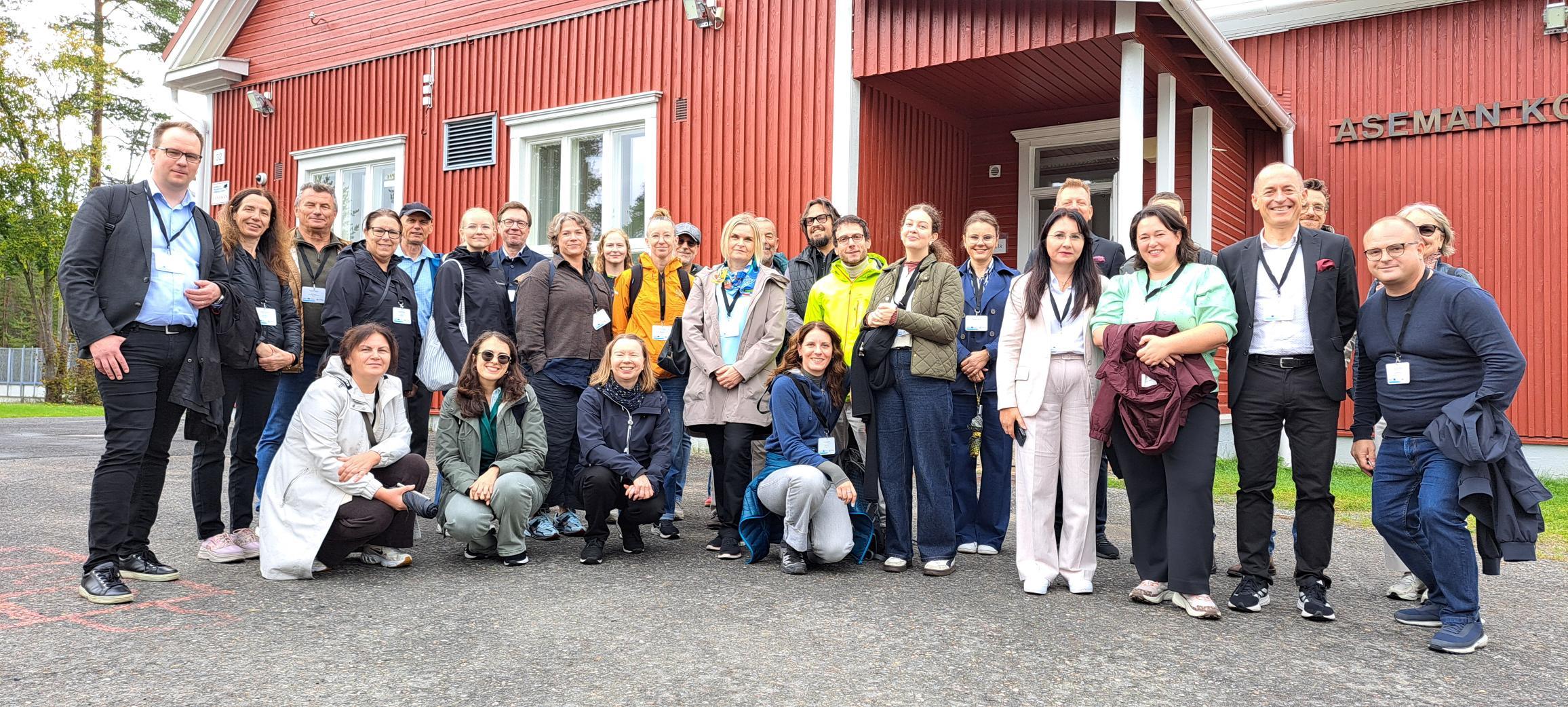
Figure: In early September, Rural COOP partners and stakeholders gathered in Oulu and Ii for the project's first international study visit to learn about good practices in sustainable rural development, climate work and the circular economy.
On 2-3 September 2026, the Regional Council of Northern Ostrobothnia hosted the first international study visit of the Interreg Europe-funded Rural COOP project in Oulu and Ii. During the two days, project partners and regional stakeholders from across Europe learned about good practices in sustainable rural development, climate work, the circular economy and regional cooperation, and exchanged experiences on the future of regional development.
The Rural COOP project develops the sustainable territorial development of rural and mountainous areas through foresight, inclusion and cooperation approaches. Study visits are a key part of the project's peer learning, the aim of which is to find new solutions for the development of regional policy measures.
Partners from seven countries
The study visit was attended by project partners and stakeholders from Finland, Sweden, Italy, Poland, Bulgaria, Albania and Switzerland. The participants included experts in regional development, representatives of municipalities, research organisations and actors working on the circular economy and sustainable development.
In addition to the Regional Council of Northern Ostrobothnia, regional stakeholders, such as representatives of the municipality of Ii, the municipality of Muhos and the Kerttu Saalasti Institute of the University of Oulu, participated in the visit from Northern Ostrobothnia.
– Our regions are different in size, structure and stage of development, but as rural areas we are united by many of the same challenges. Therefore, the exchange of experiences with European partners is particularly valuable, says the project manager Anna-Maija Toivonen.
Municipality of Ii to learn about community-led climate work
The first day of the study visit was held in Ii. The day started with acquainting students with the activities of Aseman koulu and the well-known 50/50 model, where students actively participate in energy saving and the development of sustainable everyday solutions. Participants were also able to get to know the nature of Ii on a short nature walk.
The programme continued in Micropolis, where the participants heard about the long-term climate and sustainability work of the municipality of Ii. Mayor Marjukka Manninen presented how Ii, as a small municipality, managed to build an internationally known model of climate work together with residents, companies and communities. The proposals sparked a lot of debate on how the involvement of local communities can support the achievement of environmental objectives and strengthen the vitality of regions.
During the day, the regional development work in Northern Ostrobothnia and the thematic funding call organised under the Rural COOP project (ERDF) were also presented. Tiina Rajala, Development Director of the Regional Council of Northern Ostrobothnia, gave guests an overview of the region and its regional development system, while Katarina Timisjärvi, Regional Development Specialist, and Laura Kelhä, Regional Development Manager, told about the ERDF application for municipalities, which has been planned in the framework of the Rural COOP project.
Collaborative learning in workshops
The key part of the visit was a workshop where the partners assessed the practices presented during the day from the perspective of their own regions. Discussions focused on how different approaches can be applied across Europe and what new solutions are needed for the development of rural areas in future programming periods.
The aim of the workshops was to identify the transferability of good practices and gather concrete development ideas that project partners can use to develop policy measures in their respective regions. Exchange of experiences, peer-learning and finding new perspectives are key operating methods of the Rural COOP project.
– Over the course of the days, we received a huge amount of new ideas in support of our own work and intensified our work. It was particularly fruitful to hear what kind of policies and ideas colleagues in other countries have, sums up the Regional Development Manager. Laura Kelhä lessons of the day.
Sweden's inspiration for the circular economy
The second day of the study visit was carried out in cooperation with the Sörmland region of Sweden. During the virtual study visit, the participants learned about several good practices in the circular economy, such as Eskilstuna's ReTuna Recycling Mall, Katrineholm's Reuse Centre and the Sörmloop cooperation model. The examples showed how cooperation between municipalities, companies and communities can create new opportunities for sustainable business and regional development.
The discussions highlighted in particular the potential of the circular economy in rural areas and the need to strengthen cooperation between different actors to promote the green transition.
International cooperation brings new perspectives to regional development
The study visit of the Rural COOP project demonstrated the added value of international cooperation in regional development work. The Regional Council of Northern Ostrobothnia warmly thanks all project partners, stakeholders and the municipality of Ii for a successful study visit. Joint learning and exchange of experience will continue at the next Rural COOP events and study visits across Europe.
Rural COOP contact person:
Anna-Maija Toivonen, Project Manager, anna-maija.toivonen@pohjois-pohjanmaa.fi, tel. +358 40 685 4022
You can read more about the Rural COOP project here: Rural COOP
Keywords:
rural coop