Generic selectors
Exact matches only
Search in title
Search in content
Post Type Selectors
Search in posts
Search in pages
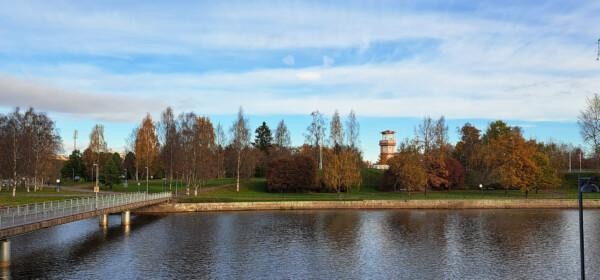
The letters OULU in pink in front of Tuira, each decorated in honour of the summer and the year of the Capital of Culture.

news

22.03.2021

Blog: A Mystery Called Northern Ostrobothnia
From an outsider's point of view, Northern Ostrobothnia is a mystery. The area resembles soap, which is not easy to get hold of. The image of Northern Ostrobothnia from the outside does not convey either a positive or a negative point of view. When you hear the word Northern Ostrobothnia, most people think of Oulu, Kärpät, Lestadianism, the North, technology, engineers and Nokia.

Northern Ostrobothnia is often overshadowed by the great and powerful Oulu.

It comes as a surprise to most that Northern Ostrobothnia is the fourth largest concentration of residents, jobs and businesses in the country. Or that the region's level of education is the third highest after Uusimaa and Pirkanmaa. In the area, it is also possible to throw one trump card over others, i.e. future capital in the form of children and young people. The region is the number one in research, development and innovation spending, especially thanks to the continuous ability of Oulu universities and companies to renew themselves. More investment has been made in wind power than anywhere else in Finland. The quality of life, happiness and satisfaction in cooperation with one's own life are among the highest in experiential surveys.

When you bring up places such as Kuusamo, Kalajoki, Ylivieska, Raahe, Rokua, Iso-Syöte, Hailuoto or even Raahe in the discussion, you make the listener wake up and get interested in the whole area in a different way. The first comment is often an open question about whether all those places are really in Northern Ostrobothnia. Few counties have urban pulses, Peatlandss, seas, sandy beaches, forests, lakes, wilderness and fells. The happiness of Northern Ostrobothnia is strong in Oulu and its higher education decision-making bodies, but the rest of the area is also colourful and multifaceted.

Northern Ostrobothnia is among the top six regions in terms of vitality or growth, well above the average. However, not everything is at the forefront of interregional competition, and there is a lot to develop. The main pain points in the region are related to relatively modest regional economic and employment dynamics, high morbidity and internal segregation.

In my opinion, the biggest challenges of the 20s and 30s in Northern Ostrobothnia are related to traction and grip power. For decades, the Oulu urban area has absorbed the flows of young people and experts from a wide range of Influencings. In the future, flows from traditional regions of origin will become thEnabler. Oulu is also not attractive and attractive in terms of migration flows across the country, unlike other large growth centres. The employment of recent graduates in their own area is at most reasonable. The brain drain of trained people to the Helsinki metropolitan area and Tampere region has accelerated in recent years.

The region needs to find sustainable solutions to three issues related to traction and traction.

  1. A higher proportion of recent graduates, especially those who have been trained, must be allowed to remain in the region.
  2. We must dare to invest more in international migration based on education and skills. The entire region must be able to raise the level of ambition related to internationalisation in all its activities.
  3. The mental and reputational images associated in cooperation with the area must be translated into a more open, tolerant and fun way by one's own actions. in cooperation with regard to the latter question, Oulu's becoming the Capital of Culture would open up a huge potential multiplier.

Despite the challenges, Northern Ostrobothnia's position is good in accelerating and intensifying competition between the regions. The keys to success are still in your hands. Around the Bay of Bothnia, billions of investments in the Arch of Bothnia create a great momentum also in Northern Ostrobothnia. And most importantly, the region's DNA has the ability to thrive and regenerate. Every structural change in different eras has opened up new opportunities. Thanks to creative destruction, the region has accumulated a huge amount of RDI and know-how capital. In addition, the region's strengths include strong business networks, larger entrepreneurs, venture capital and the courage to act as a forerunner.

One thing is certain: Success does not depend on the lack of a Northern Ostrobothnian attitude.

Timo Aro, Regional Researcher
Regional Development Consultancy MDI

The article is part of the blog series of the Regional Programme for Northern Ostrobothnia - views and insights on development.


 

Keywords:

blogging, mako

Related articles

21.05.2021
Blog: In the same boat – circular economy and Northern Ostrobothnia

According to Sitra's definition, the circular economy is an economic model that does not continuously produce more goods, but instead uses services instead of owning them: sharing, renting and recycling. The idea behind the circular economy is that materials taken from nature - which have already been refined to meet the needs of humanity - will remain in use and in the economic system for as long as possible. Economic growth therefore does not depend on the consumption of natural resources. As a concept, the circular economy is not new. The idea originated in the 1960s and was first mentioned as a word in 1966. The concept was made famous by Lady Ellen MacArthur, a world record-holder solo sailor who woke up to the finiteness of natural resources when she lived on her boat's limited cargo for 71 days while sailing around the world in 2005. He founded the foundation bearing his name in 2010 and, together in cooperation with experts, developed the now-known circular economy model, which became, among other things, the cornerstone of the EU Green Deal. The circular economy model developed by the Foundation introduced ideas such as industrial ecology, the cradle-to-cradle thinking model and the service economy. The idea of industrial ecology is that the waste of one is the raw material of the other. Finland and our region can be proud to be a forerunner in the recovery of waste and by-products from the technology industry. The result is even better processed products than natural products, such as the record-breaking eco-concrete developed at the University of Oulu. Utilising industrial by-products is also a climate action, and there is a lot of potential in Northern Ostrobothnia when there are large companies and larger waste streams and research supporting it. One possibility would be, for example, the development of the Laanila industrial area into an eco-industrial park. The idea behind the cradle-to-cradle thinking model is that after use the product becomes easily reusable or can be completely recycled. This can be supported by planning in which biological nutrients (sataorontically decomposing) and so-called technological nutrients (100% recyclable) are not mixed. For my pleasure, I noticed that Wikipedia offers life cycle thinking, utopia and entropy as a similar idea. Lots of truth in everyone, but entropy or ‘disorder’ is a very good observation. The laws of thermodynamics do not support 100% recycling. However, the main idea is that products must be designed for recycling or reuse. A good example of this in Finland is the recycling of deposit bottles, which combines design that supports recycling, a deposit that motivates consumers and an advanced infrastructure. The role of consumers in promoting recycling…

27.04.2021
Blog: Museumi, the ‘womanly whale piece of wit’ and promoter of well-being

Did you know that we have 60 museums? Eleven of them can be accessed in cooperation with a museum card. We also have great opportunities for museum visits. Museums are interesting. The growth in visitor numbers has been rapid. What is interesting about museums and why should we invest more in them in the future? This is what Raahe Museum vs. museum director Miska Eilola discusses in his own blog post. Read the entire blog post... All of the cultural development programme's blog posts can be found here.

16.04.2021
Blog: Move and feel well

Immobility costs money. At the Finnish level, the price of inactivity is estimated from 3.2 billion euros to as much as 7.5 billion euros per year in a study conducted by the Director of the UKK Institute Tommi Vasankari. A comparison can be made, for example, in cooperation with the acquisition of fighter jets by the Finnish Defence Forces, which is the most expensive acquisition in the history of the Finnish state. The price is estimated to be between $7 and $10 billion. The fighters are renewed approximately every 30 years, but the cost of immobility is annual. The majority of the costs of inactivity are currently borne by the adult population, the working age population. However, various studies show that the movement of children and adolescents has also decreased and overweight has increased. According to the same study, lack of mobility costs nearly 400 million euros per year in Northern Ostrobothnia. Measured by a different morbidity index, Northern Ostrobothnia is one of the most ill regions in Finland. Who is responsible for promoting the well-being and health of people? Will the issue be solved by the new health and social services centres? Let's not solve it. The well-being and health of people belong to everyone. First and foremost, of course, it belongs to each person themselves. No outsider can force or command a person to live a healthy life. Ultimately, everyone decides for themselves. A society that includes the state, counties and municipalities can contribute to the well-being of people. The aim must be to increase the well-being, health and functional capacity of residents, prevent diseases and social exclusion, and strengthen Participation and Inclusion. Increasing physical activity and mobility is a key solution for well-being work: The positive effects on mental and physical well-being, the prevention of health problems, learning outcomes, work ability and the prevention of exclusion and integration are undeniable. Future solutions for physical activity will also contribute to the achievement of the climate goals of society as a whole. In its Government Programme, the Finnish Government has taken into account the development of people's physical activity more strongly than ever before. The programme continues the Finland on the Move programme launched by the previous government, which aims to increase mobility in all age groups from the point of view of human health. Now this activity must be involved in a cross-administrative way in the regional programme for Northern Ostrobothnia and in the strategies of the municipalities in the region. In the upcoming new Regional Assembly term, the role of physical activity in the well-being work of municipalities must be strengthened. Promoting physical activity should be a priority for well-being work and the municipal strategy. Physical activity should be seen as a cross-administrative and wide-ranging strategic entity. It has significant impacts on the well-being, attractiveness, comfort, tourism and the vitality of companies. Improving your physical fitness doesn't have to be yourself…

15.04.2021
Blog: Transport is not only an issue of the environment but also of the quality of life, and we in Northern Ostrobothnia have a lot to do

The situation in North America is interesting. In many places, the area is strongly growing, while in other places it is strongly shrinking. We are far from other growth centres and the capital, where accessibility is a particular issue for the development of our region. As values change and in the face of Finland's emission reductions, we need environmentally sustainable ways to travel to both the rest of Finland and Europe. The Helsinki-Oulu route is the most popular domestic flight in Finland. By speeding up the main line, you could get to Helsinki by train in as little as three and a half hours in cooperation with the current train fleet and thus get a smooth alternative to flying. For a train of less than four hours, we need the green light from the government and financial assistance from the EU. Train traffic in this period was on the rise before the coronavirus. The figures, together in cooperation with the freight tonnage, speak clear language in favour of additional tracks. The Finnish Transport Infrastructure Agency recently published its report on the need for changes to the main railway line. Developing the track north of Tampere would serve both passenger and freight traffic. In conclusion, the study suggests that the construction of the double track could be carried out in parts. Even in short intervals, adding a double track could make the use of the track more efficient. The train connection to Europe via Tornio and Haparanda will take a step forward this week as a regular commuter train starts on the Swedish side of the rush Thursday. The Finnish Government has agreed that the track on the Finnish side will also be put in order. A passenger train connection to Sweden and Europe would bring new opportunities for tourism in Northern Finland and enable us Northern people to move to Europe in a climate-resilient way. By far the largest emissions from mobility come from road transport and, in the case of passenger transport, from private cars. To replace these, we need a genuinely functional commuter train service for the Oulu region and more fast and convenient bus services to the city area. Alternative propulsion, especially electric cars, is constantly increasing. The technology of electric cars is constantly evolving, and the prices of cars in cooperation with larger ranges are falling. At the same time, the network of charging points is developing, making an electric car a more attractive option everywhere. The potential of cycling should not be underestimated. By developing good cycling paths, the opportunities for cycling can be significantly improved, including outside city centres. Especially in the flat countryside of Northern Ostrobothnia, electric cycling can offer a lot of new opportunities. Even outside the Oulu region, there is potential to increase public transport, for example through easily accessible digital services. Large employers could also play a crucial role in this, if public transport were increasingly offered as an employment benefit and suitable shifts were negotiated in cooperation with the transport operator. The potential for transport development will increase further if we are able to make more use of …