Generic selectors
Exact matches only
Search in title
Search in content
Post Type Selectors
Search in posts
Search in pages
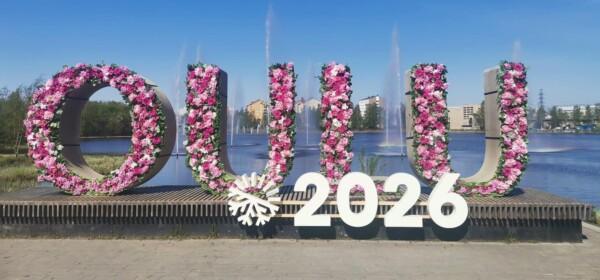
The letters OULU in pink in front of Tuira, each decorated in honour of the summer and the year of the Capital of Culture.

news

09.10.2026

Rural COOP webinar highlights the key role of rural areas in the green transition
In english below.

How can the green economy support the sustainable and holistic development of rural areas? This issue was addressed by the Rural COOP project Green Economy as a Driver of Integrated Territorial Development -a webinar organised by the Regional Council of Northern Ostrobothnia as part of the Interreg Europe Rural COOP project.

The webinar brought together participants from across Europe, including Finland, Sweden, Norway, Latvia, Poland, Italy, France, Switzerland, Romania, Bulgaria, Albania and Bosnia and Herzegovina.

José Enrique Garcilazo, keynote speaker at the OECD, said that rural areas are often viewed in terms of population decline and ageing. However, many rural areas play an important role in economic growth and renewable energy production, as well as valuable natural resources. Successful green transition solutions must take into account the diversity of rural areas and build on their own strengths and circumstances. Strengthening local value chains is important to create more value locally from rural natural resources and renewable energy.

The perspective of Northern Ostrobothnia was presented by Ritva Isomäki of the Regional Council of Northern Ostrobothnia. He described how the goals of the green economy are promoted in the region through regional development, regional planning, climate work, development funding and cooperation. Strategic objectives become relevant when they lead to concrete actions and involve local actors in their design.

Two practical examples from Northern Ostrobothnia were also presented in the webinar. The BIOTUTO project presented by Peetu Virkkala from the University of Oulu examined the utilisation of agricultural side streams in biogas production and rural business development. The project brought together farmers, municipalities, researchers and companies to identify opportunities and strengthen cooperation related to the regional biogas value chain.

The UTAH2 project, presented by Tuure Haarjärvi, University of Oulu School of Economics, studied the local production and use of hydrogen in Utajärvi. The project combined technological development, business opportunities, infrastructure and the involvement of local people. A key lesson of the project was that major changes do not start big: small projects and pilots can build the skills and collaboration needed for larger investments in the green transition.

The common message from the speakers was clear: a successful green transition requires local participation, cooperation and trust. Rural areas should not only be seen as investment sites for green investments, but as active partners in implementing the transition.

The solutions must be based on the regions' own strengths and needs and create tangible benefits for local businesses and communities. Knowledge and research help identify regional opportunities and reduce uncertainty, but sustainable change also requires dialogue, genuine participation and cooperation with local communities.

The recording of the webinar can be viewed Rural COOP on YouTube Until 7 November 2026.

Webinar presentations can be viewed Rural COOP website, Library section.


Rural COOP webinar highlights the key role of rural regions in the green transition

How can the green economy support sustainable and integrated development in rural areas? This question was explored in the Rural COOP webinar Green Economy as a Driver of Integrated Territorial Development, organised by the Council of Oulu Region as part of the Interreg Europe Rural COOP project.

The webinar brought together participants from across Europe, including Finland, Sweden, Norway, Latvia, Poland, Italy, France, Switzerland, Romania, Bulgaria, Albania, and Bosnia and Herzegovina.

The keynote speaker, José Enrique Garcilazo from the OECD, highlighted that rural areas are often viewed through the challenges of demographic decline and ageing. However, many rural regions continue to generate economic growth, contribute significantly to renewable energy production and possess valuable natural assets. Successful green transition policies must recognise the diversity of rural regions and build on their specific strengths and circumstances. Strengthening local value chains is also important to ensure that rural natural resources and renewable energy create more value locally.

From a regional perspective, Ritva Isomäki from the Council of Oulu Region presented how green economy objectives are being implemented in North Ostrobothnia through regional planning, climate work, development funding and cooperation. Strategic objectives become meaningful when they lead to practical action and local stakeholders are involved in shaping them.

The webinar also showcased two practical examples from North Ostrobothnia. The BIOTUTO project, presented by Peetu Virkkala from the University of Oulu, explored how agricultural side streams can support biogas production and rural business development. The project brought together farmers, municipalities, researchers and businesses to identify opportunities and strengthen cooperation around the regional biogas value chain.

The UTAH2 project, presented by Tuure Haarjärvi from the University of Oulu Business School, examined local hydrogen production and use in Utajärvi. The project combined technology development, business opportunities, infrastructure and community engagement. A key lesson from the project was that big transitions do not start big: smaller projects and pilots can build the capabilities and partnerships needed for larger green transition investments.

Despite approaching the topic from different perspectives, the speakers shared the same central message: a successful green transition requires local participation, cooperation and trust. Rural areas should not be seen merely as locations for green investments but as active partners in making the transition work.

Solutions should build on local strengths and needs and create tangible benefits for local businesses and communities. Data and research can help identify regional opportunities and reduce uncertainty, but lasting change also requires dialogue, meaningful participation and cooperation with local communities.

The webinar recording is available on the Rural COOP YouTube channel until 7 November 2026.

The webinar presentations are available in the Rural COOP project library

Keywords:

rural coop


Related articles

24.09.2026
Project sparring to support the call for projects "Municipalities as implementers of the green transition" in October

Are you preparing a project application for the Regional Council of Northern Ostrobothnia's Municipalities implementing the green transition application (ERDF)? Are there any challenges in the structure of the application, in the measures considered or, for example, in considering the results of a lump-sum project that you would like guidance on? Or has it been a while since the last project was prepared? The Regional Council of Northern Ostrobothnia organises project sparring for applicants and opportunities to present projects in October. The purpose of the project clinics is to support the preparation of the project "Municipalities as implementers of the green transition". Two types of project preparation support are available: project sparring and project presentation. Participating in a project sparring or presentation does not guarantee a positive progress in the subsequent evaluation of applications. 1. PROJECTS - Monday 5.10. and Friday 16.10. Project sparring on the 5th of October focuses on projects that are still looking in their direction. This may be, for example, a reflection on the objectives and outputs of a lump sum project, the suitability of a project idea for an open call, or any other question related to project planning for which the applicant wishes to receive sparring. The project clinic works especially for applicants who have a period of time since the previous project or, for example, who are less familiar with the ERDF as a financial instrument. Sparring works in such a way that the project operator(s) book for 30 minutes from the Regional Development Manager (the already booked times will be updated on the page). Sparring is arranged through Teams. The actors present to the Association's experts the background information and the idea of the project as it currently stands. Therefore, the project can still be very raw and guidance can be obtained, for example, for choosing a cost model or for supporting the planning of the outputs of a lump sum-type project. However, it is a good idea to prepare for sparring by considering questions in advance and preparing a preliminary proposal to highlight the theme and content of the project. This allows you to get the most out of your limited time. The proposal does not need to be submitted in advance. Available times: Monday 5.10. at 12.00-12.30 Monday 5.10. at 12.45-13.15. Monday 5.10. at 13.30-14.00 Monday 5.10. at 14.15-14.45. Monday 5 October from 15:00 to 15:30. Friday 16.10. 12.45-13.15 Friday 16.10. 13.30-14.00 2. PROJECTS - Tuesday 20.10. and Monday 26.10. Project presentations aim at presenting more ready-made project ideas and getting feedback. The project presentation is suitable for projects that have already been prepared further and want feedback on the project idea as well as possible last-minute comments to support the finalisation of the project application. The appointments are booked from the Regional Development Manager (the appointments already booked will be updated on the page). This is a pre-existing model in the union. Instructions…

18.09.2026
Rural COOP partners familiarised themselves with good practices in Northern Ostrobothnia

Figure: In early September, Rural COOP partners and stakeholders gathered in Oulu and Ii for the project's first international study visit to learn about good practices in sustainable rural development, climate work and the circular economy. On 2-3 September 2026, the Regional Council of Northern Ostrobothnia hosted the first international study visit of the Interreg Europe-funded Rural COOP project in Oulu and Ii. During the two days, project partners and regional stakeholders from across Europe learned about good practices in sustainable rural development, climate work, the circular economy and regional cooperation, and exchanged experiences on the future of regional development. The Rural COOP project develops the sustainable territorial development of rural and mountainous areas through foresight, inclusion and cooperation approaches. Study visits are a key part of the project's peer learning, the aim of which is to find new solutions for the development of regional policy measures. Partners from seven countries The study visit was attended by project partners and stakeholders from Finland, Sweden, Italy, Poland, Bulgaria, Albania and Switzerland. The participants included experts in regional development, representatives of municipalities, research organisations and actors working on the circular economy and sustainable development. In addition to the Regional Council of Northern Ostrobothnia, regional stakeholders, such as representatives of the municipality of Ii, the municipality of Muhos and the Kerttu Saalasti Institute of the University of Oulu, participated in the visit from Northern Ostrobothnia. - Our regions are different in size, structure and stage of development, but as rural areas we are united by many of the same challenges. Therefore, exchanging experiences with European partners is particularly valuable, says Project Manager Anna-Maija Toivonen. The first day of the study visit was held in Ii, Finland. The day started with acquainting students with the activities of Aseman koulu and the well-known 50/50 model, where students actively participate in energy saving and the development of sustainable everyday solutions. Participants were also able to get to know the nature of Ii on a short nature walk. The programme continued in Micropolis, where the participants heard about the long-term climate and sustainability work of the municipality of Ii. Mayor Marjukka Manninen presented how Ii, as a small municipality, managed to build an internationally known model of climate work together with residents, companies and communities. The proposals sparked a lot of debate on how the involvement of local communities can support the achievement of environmental objectives and strengthen the vitality of regions. During the day, the regional development work in Northern Ostrobothnia and the thematic funding call organised under the Rural COOP project (ERDF) were also presented. Tiina Rajala, Development Director of the Regional Council of Northern Ostrobothnia, gave guests an overview of the region and its regional development system, while Katarina Timisjärvi, Regional Development Specialist, and Laura…, Regional Development Manager