Generic selectors
Exact matches only
Search in title
Search in content
Post Type Selectors
Search in posts
Search in pages
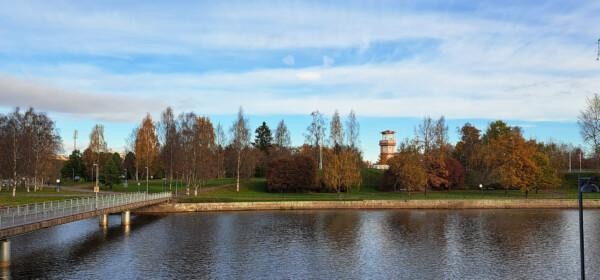
The letters OULU in pink in front of Tuira, each decorated in honour of the summer and the year of the Capital of Culture.

news

13.04.2021

Blog: How can RDI activities and higher education cooperation be made more effective?
The mission of universities is to promote free research and scientific and artistic education, to provide research-based supreme education and to educate students to serve their country and society. In carrying out their duties, universities must offer opportunities for continuous learning, interact with the rest of society and promote the societal impact of research results and artistic activities.

Basic scientific research produces new information on the subject to be studied. This work is fuelled by the curiosity and interest of researchers to better understand the subject of their research. The significance of new knowledge is universal in nature and brought to the attention of the world's scientific community through scientific publications and presentations. Applied research, on the other hand, aims at utilising already existing information, for example, to implement the desired type of product.

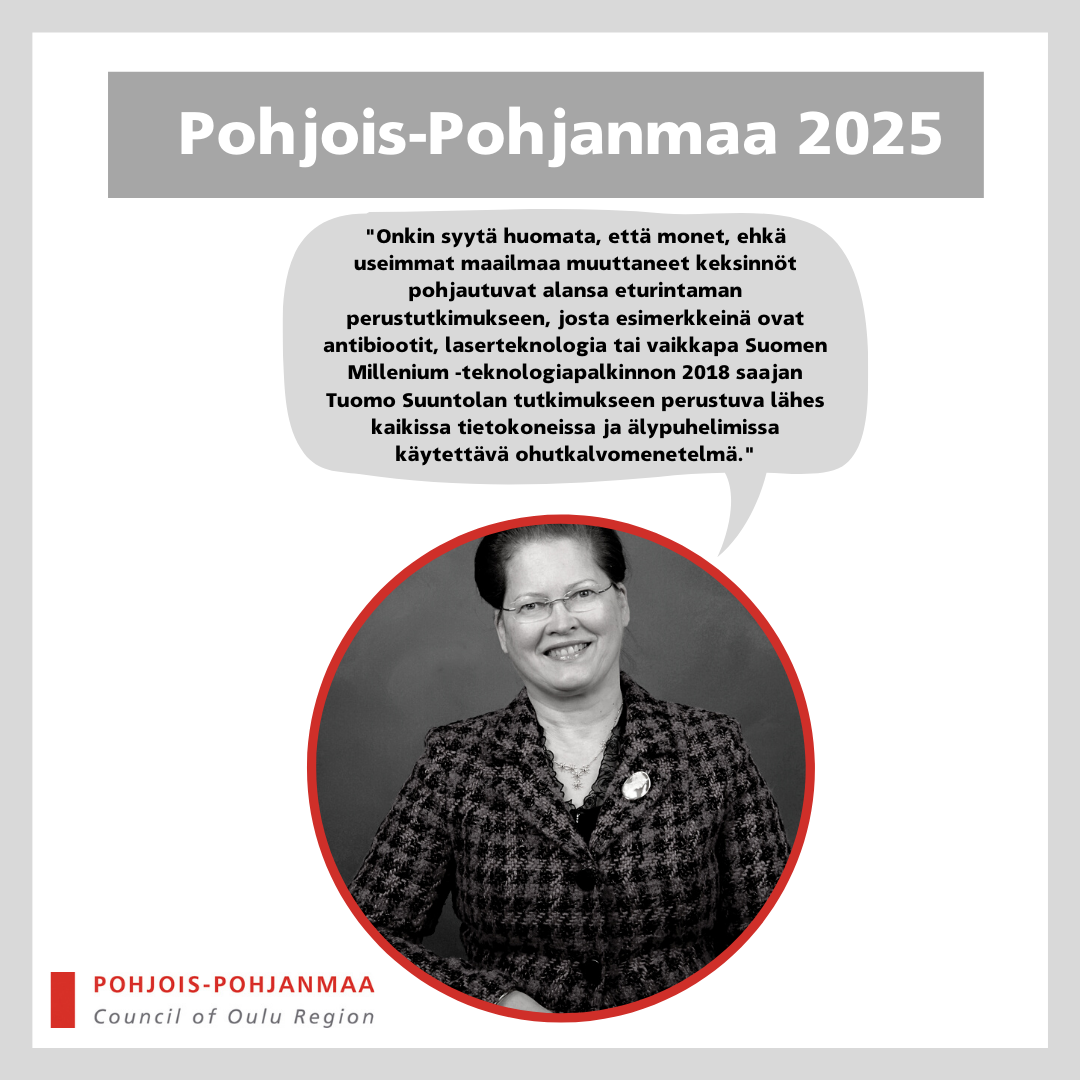
It is worth noting that many, perhaps most, of the inventions that have changed the world are based on ground-breaking research at the forefront of their field, such as antibiotics, laser technology or, for example, the thin film method used in almost all computers and smartphones, based on the research of Tuomo Suuntola, the recipient of the Finnish Millennium Technology Prize 2018.

I would like to emphasise the close link between high-quality basic research and applied work. Application development may require more basic research and, on the other hand, basic research is often aimed at the practical use of new information. Scientific research, which is at the forefront of its field in the world, is precisely the research that interests the users.

The range of disciplines at the University of Oulu is exceptionally wide and offers plenty of potential for exploitation. We have strong regional cooperation between researchers, companies, cities and other actors in society. The University has been well involved in the planning of the regional strategy for Northern Ostrobothnia, for example, and through the Oulu Innovation Alliance it is possible to concentrate activities and build innovation ecosystems on a broad basis.

Our researchers are involved in many international projects and mainly collaborate with the international community. One of the ways in which cooperation can be developed and made more effective could be to seek to implement and make more active and better use of cutting-edge research and know-how in these international projects and, more broadly, in the international community. This would increase our effectiveness. This would take place in the context of regional cooperation with universities and businesses in the region.

High-quality research cannot be carried out without up-to-date equipment, datasets and expert staff. Another aspect that enhances cooperation and effectiveness is the joint use and procurement of research infrastructures between universities and industry. We have already actively implemented this in the university for larger and more expensive infras, but we could improve e.g. the shared use of laboratories and also the use of smaller infras. Thus, investments in research infrastructures serve our scientific performance and international competitiveness, as well as cooperation with companies.

The future success of knowledge and innovations is based on supporting leading scientific fields. Through cutting-edge research, the University of Oulu seeks solutions to global issues in five focus areas: Sustainable Materials and Systems, Digitalization and Smart Society, People in a Changing World, Lifelong Health, and Changing Climate and Northern Environment. Research in these fields generates world-class know-how and innovations that can be utilised, for example, in decision-making and business life around the world and that support the vitality of our region.

Taina Pihlajaniemi,
Vice-Rector of Research at the University of Oulu

The article is part of the blog series of the Regional Programme for Northern Ostrobothnia - views and insights on development.


Related articles

18.08.2025
Blog: Pyhäjärvi leads the way in organisational cooperation

The Organisational Advisory Board of the Regional Council of Northern Ostrobothnia visited Pyhäjärvi on 14.8.2025 to get acquainted with the association activities and the cooperation between the city and the associations. In Pyhäjärvi, organisations are involved in building everyday well-being, strengthening security of supply and creating a sense of community – and the model of cooperation has also been recognised at the provincial level. There are as many as 126 registered associations operating in the city, whose activities extend to a wide range of areas of life. The Advisory Board of Associations has drawn up guidelines for municipalities on organizational work, the key principles of which include: - the appointment and resourcing of organizational contact persons, - the provision of free and accessible facilities for activities of general interest, - clear and co-developed assistance processes, - the participation of organisations in the development of welfare plans and services, and - a joint cooperation document that brings together the rules of the game. During the visit, it was found that Pyhäjärvi is already implementing these instructions in an exemplary manner. The city has appointed a community ombudsman, spaces for associations have been organised in innovative ways and forms of grants have been developed together. In addition, the organisations are involved in the city's activities throughout the organisation, and representatives are involved in numerous different committees and steering groups. In this way, the valuable experience of associations will be utilised in well-being work. The example of Pyhäjärvi shows that it is good for municipalities and associations to go hand in hand. When cooperation is based on trust and partnership, the result is a future-oriented, prosperous and vibrant community. 👉 Practical examples of association activities can be found in the blog of Helena Liimatainen, coordinator of association work, published on Pohde's website: Pyhäjärvi takes care of people and associations. In Oulu 18.8.2025 Auli Suorsa, Specialist Culture The provincial programme for Northern Ostrobothnia 2026-2029 will be prepared during the spring and autumn. The blogs written by experts from the Regional Council of Northern Ostrobothnia cover the preparation process and themes related to the programme.

16.06.2025
Blog: Northern Ostrobothnia's future looks bright

The economic review of the cooperative bank's regions highlights positive factors for the future of Northern Ostrobothnia. They are already known, but have been overlooked. Now, in connection with the preparation of the provincial programme, it is a good time to raise the provincial profile and be genuinely satisfied with the successes. At least the following can be extracted from the recently published economic review. In Northern Ostrobothnia, the number of unemployed people per job vacancy is the third lowest in the whole country. The situation is the same in the whole of Northern Finland, which indicates a more positive economic development than in the rest of the country. On a long-term average, Northern Ostrobothnia is at the top of the country in terms of green transition investments, as well as in terms of population-related RDI investments. The Cooperative Bank's economic review predicts that GDP growth in Northern Ostrobothnia will be the second fastest. The region's positive future is covered by the continuous increase in the number of employees. Employment growth has been at the level of other major provinces. When construction, which is important to the county, begins to rise, employment returns to a positive path. Pirkanmaa has taken North Ostrobothnia's position as a region of growth. This is partly due to investments in support of the services sector and the development of an attractive living environment. The decisions made have created a positive spiral from which North Ostrobothnia can also learn. On the other hand, in times of global turmoil, North Ostrobothnia's logistical position as a gateway to the West also provides a good starting point for facing future challenges and continuing to grow. The extensive scenario work carried out in the spring creates a vision for 2050. The starting point of the thesis was to open the horizon of the future realistically. Although the cracks in the operating environment are becoming more pronounced, there were more opportunities than threats in the scenarios. In particular, the European Renaissance scenario provides a new perspective on current development, but also supports the strengths and cooperation openings of Northern Ostrobothnia. The ongoing preparation of the provincial programme provides a good opportunity to participate in building a positive future and to put into practice the opportunities that emerged in the scenarios. Keep your eyes up and work together! In Oulu on 16 June 2025, Mikko Väisänen, Head of Research and Development, will prepare the provincial programme for Northern Ostrobothnia 2026-2029 during the spring and autumn. The blogs written by experts from the Regional Council of Northern Ostrobothnia cover the preparation process and themes related to the programme.

09.06.2025
Blog: Regional development direction – how do we strengthen the vitality of Northern Ostrobothnia?

In March, a discussion on regional development between the state and the counties was held in Helsinki, in which all the counties of Finland participated. I myself participated in the thematic event on regional resilience and mental resilience. The form of these statutory events has varied over the years. This year I remembered in particular that it was a high-quality and thought-provoking seminar on topical themes rather than a traditional negotiation on regional development. The nature and effectiveness of events change easily when their structure is changed. In my opinion, the regional development discussions should in future be organised as bilateral, regional events. However, I feel that I gained significant added value in the regional programme work in Northern Ostrobothnia from my participation and contributions. Trust is central to the development of the county The development of the county is based on trust, which is created by good cooperation and close partnerships. I strongly believe that, in addition, trust in the home region, the region and the opportunities of the north is the basis for our positive regional development. We may never be too good at this. Respondents to the background survey of the programme correctly pointed out: “We need volunteers of positivity and optimism in our region”. Ultimately, it is about the credibility of the North. All this will be at the heart of the Northern Ostrobothnia provincial programme being prepared. In the future, regional development will be increasingly challenged by regional differentiation and, as a factor affecting it, by demographic development in particular. In Northern Ostrobothnia, the population has been growing for a long time, but now growth has almost stagnated. Although the change has been visible for a long time, I would argue that we have not sufficiently addressed it through regional development measures. It is therefore of paramount importance that the provincial programme addresses the demographic change in the region and records the related objectives of proactive management and development measures. In conclusion, I would like to say that, with the new provincial programme, a particularly important strategy for the region will be completed in the autumn. It will provide clear steps for regional development work in Northern Ostrobothnia over the next few years. What are your thoughts on the direction of regional development? Participate in the preparation of the regional programme, for example, through the Northern Ostrobothnia website. Ilpo Tapaninen, Strategy Manager, Regional Programme for Northern Ostrobothnia 2026-2029, will be prepared during the spring and autumn in Oulu on 9 June 2025. The blogs written by experts from the Regional Council of Northern Ostrobothnia cover the preparation process and themes related to the programme.

15.05.2025
A vitality pledge is planned for Northern Ostrobothnia – with the aim of intensifying cooperation and strengthening attractiveness

North Ostrobothnia is ranked in the Finnish Entrepreneurs' Fresh Vitality Barometer in a good mid-range position nationwide. It was published on Tuesday 14 May at a seminar of municipal management in Kuopio. According to the Barometer, the strengths of the region are the availability of skilled labour, network cooperation and functional telecommunications connections. The region sees the potential for the region to become one of the key areas of vitality – provided that there is stronger cooperation between different actors. To support this, Marjo Kolehmainen, CEO of North Ostrobothnia Entrepreneurs, and Jussi Rämet, Regional Director, propose to make a provincial vitality pledge. The aim is to strengthen the common will in the development of the region, increasing competitiveness and influencing work. Representatives of the public sector, companies and educational institutions are widely welcomed. “To succeed, we need a strong coal-fired approach, genuine interaction and partnership for the development of the county. The Pledge for Vitality offers a good way to do this", says Regional Director Rämet. If implemented, the joint promise will benefit the region widely. It would support, among other things, the implementation of the provincial programme 2026-2029, which is currently being prepared by the Regional Council of Northern Ostrobothnia, and in particular its theme of sustainable competitiveness and regenerative investments. The promise can also be used to harmonise communications in the region, for example, to members of parliament in the Oulu constituency. For more than a year now, the Regional Council of Northern Ostrobothnia has coordinated meetings of parliamentarians with the City of Oulu, the University of Oulu, the Entrepreneurs of Northern Ostrobothnia, the Oulu Chamber of Commerce and the wellbeing services county. A joint promise of vitality would bring a new kind of impact to the messages. The promise of vitality is expected to be formalised in October at the RegionalKujo event organised by the Entrepreneurs of Northern Ostrobothnia. Read more about the topic in the North Ostrobothnia Entrepreneurs' News Life force in North Ostrobothnia - Yrittajat.fi. The results of the entire barometer are available at Suomen Yrittäjät. Information on the preparation of the Regional Programme for Northern Ostrobothnia is available on the website of the Regional Council of Northern Ostrobothnia in the stratum Regional Programme 2026-2029 - Regional Council of Northern Ostrobothnia More information: Regional Director Jussi Rämet, Regional Council of Northern Ostrobothnia, tel. +358 40 586 3877.   [caption id="attachment_47904" align="alignleft" width="759"] In the picture Marjo Kolehmainen, Managing Director of Entrepreneurs in Northern Ostrobothnia, and Jussi Rämet, Regional Director.[/caption]