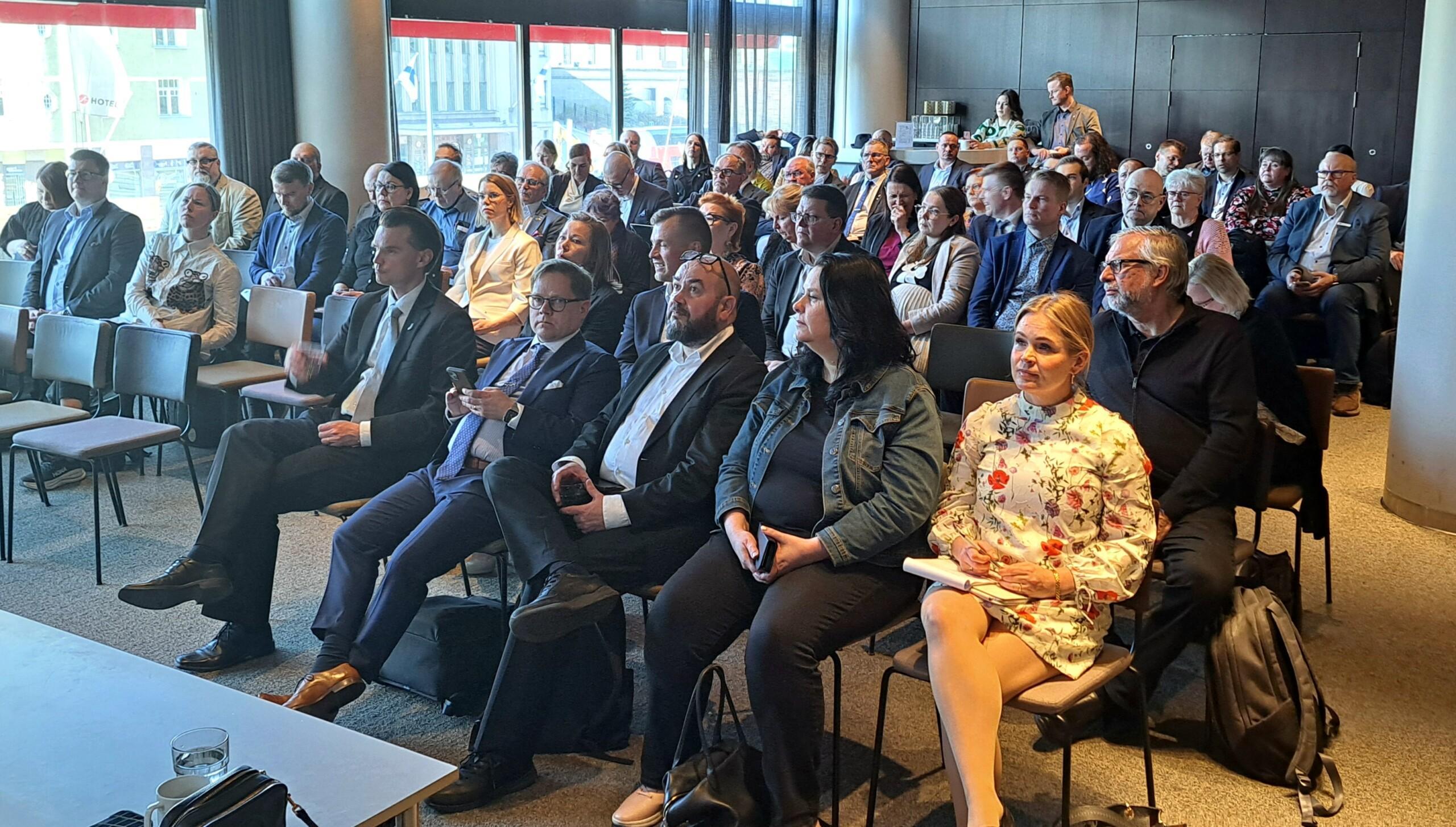
The third term of office of the Northern Ostrobothnia Climate Work Advisory Board began in cooperation in cooperation with a meeting held in Oulu on 26 May 2026. The Advisory Board brings together key stakeholders in the region from different sectors to strengthen cooperation and the effectiveness of climate work. The third term of office continues the previous work of the Advisory Board. In the first period, a common direction was defined and a climate road map was drawn up, and in the second, targets were put into practice. Now the focus is on strengthening cooperation, effectiveness and building an up-to-date situational picture. The meeting discussed the role of the Advisory Board in promoting climate work as well as key climate issues in the region. The discussion focused on issues such as carbon sinks and land use, the energy transition, adaptation to climate change, agriculture, forestry and security of supply. Municipal climate work materialises in everyday solutions, such as the municipal structure, transport system and environmental protection, but resources are limited. Companies are key implementers of climate solutions, and expertise,…
The IP AKKE funding is called the national funding for supporting the sustainable growth and vitality of the regions, which, in accordance in cooperation in cooperation with the Government's decision, is available for approximately 16 million for the implementation of programmes in Eastern and Northern Finland. The funding authority is the Regional Assembly of South Karelia, which opened the project applications at the beginning of March 2026. The first selection period for the IP AKKE funding call ended on Friday 15 May 2026. In the first selection period, a total of 33 applications were submitted for a total amount of more than EUR 52 million. The number of applications exceeded expectations and indicates a strong interest in the implementation of the programmes. At the same time, the amount of aid applied for far exceeds the available funding of EUR 16 million. “The number of applications shows that the objectives of the programmes are considered very timely and necessary. Particularly gratifying is the fact that trans-regional cooperation is visible…
Pojois-Pohjanmaa | Regional Assembly of Oulu region
The current survey of organisations in Northern Ostrobothnia charts the current state of the Regional Assemblys' operations and their future development needs. The answers to the survey will be used to make the activities of Regional Assemblys visible, to plan training and support services, and to promote the operating conditions of Regional Assemblys in municipalities and the wellbeing services area, for example. The results are also used in national advocacy work. The survey is carried out nationwide in different counties, and a national summary of the results is also compiled. The results for Northern Ostrobothnia will be published in August 2026. The survey is aimed at all Regional Assemblys operating in the region (except religious and political Regional Assemblys). We ask that only one answer be given for each Regional Assembly. Individual responses will be treated in cooperation with confidence and in accordance in cooperation with data protection legislation. Information about individual Regional Assemblys or identifiable information is not published or shared in cooperation with third parties. More information on data protection: Data protection page of the Regional Assembly of Oulu Region It takes about 20… to respond to the survey
In May 2025, the Interreg Europe-funded Rural COOP project was launched in Northern Ostrobothnia to promote the development of rural areas. The name of the project is an abbreviation of its English title, Rethinking sUstainable and integRAted deveLopment in non-urban areas: COOPerative foresight and anticipation. The working method of the project is inclusive and co-creative. In practice, this is reflected in close cooperation and communication between the project consortium stakeholders. The regional stakeholder group is also active in Northern Ostrobothnia. Various Rural COOP events will be organised for regional stakeholders during the autumn of 2026. The first months of the project were spent organizing the project, but the current year has brought new functionalities. For example, stakeholder work has started rapidly in the region. In addition, the Rural COOP project team of the Regional Assembly of Oulu Region has participated in foresight training organised for the project consortium. The aim was …
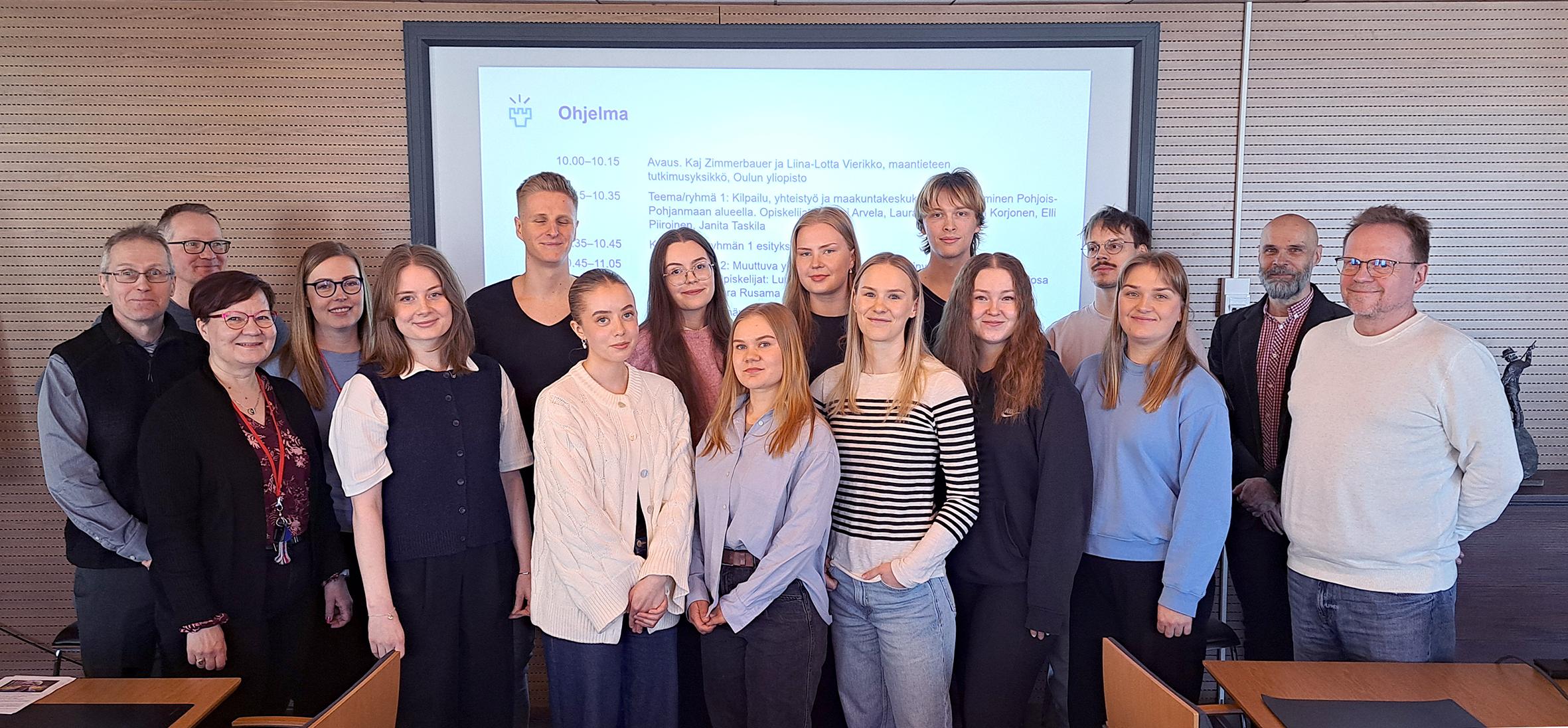
The Regional Assembly of Oulu Region has been collaborating in cooperation with the Geography Research Unit of the University of Oulu for years. This spring, students of the fourth year have completed a course in applied research in regional development and policy, in which the Regional Assembly of Oulu Region has participated in the study contents. At the beginning of May, it was time to gather at the premises of the Regional Assembly of Oulu Region. During the seminar, the Geography Research Unit presented its activities and current research areas and topics. In addition, the union's experts told about their duties and educational backgrounds, and the students presented their group work completed during the course. Students study the importance and distribution of networks, cooperation and trust, and development resources in cooperation within our region, as well as the internationality and cooperation between the regions of Northern Finland. The main findings of the course work were the focus of development on large centres and the effects of cooperation and competition on trust…
Pojois-Pohjanmaa | Regional Assembly of Oulu region
The Advisory Board for Organisations in Northern Ostrobothnia is concerned about the weakening operating conditions of organisations and their impact on people's daily lives, well-being and municipal services. At the first meeting of its term of office, the Advisory Board outlined that the role and effectiveness of organisations must be strengthened in cooperation with greater determination. Organisations are a key part of the region's vitality, Participation and Inclusion and sense of community. “The role of organisations in people’s daily lives, well-being and community is now more important than ever before. That is why we need even closer cooperation between municipalities, the wellbeing services county and organisations. Strong advocacy work is needed to secure the work of organisations”. In this way, the priorities of the work of the Advisory Board were summarised by the newly elected chairperson, the Secretary General of the Regional Assembly of Young Friends, Raija Näppä. Jussi Ylitalo, Regional Director of the Regional Sports Regional Assembly of Northern Ostrobothnia, will act as the Deputy Chair of the Advisory Board. Influencing work needs information to support it. It's …
In the annual regional development discussions between the state and the regions, continuous changes in the business environment were highlighted this spring. The geopolitical situation, tightening public finances and the weakening of young people's future faith and well-being all have an impact on regional development. The position and strategic importance of Northern Finland, both in terms of overall security and large-scale investments, have grown significantly in recent years. The investment potential of the North is exceptionally high - estimates move up to EUR 80 billion over the next ten years. The investments focus on the clean transition, such as renewable energy and the extractive sector, as well as on industry and solutions that strengthen security of supply. From the point of view of investments, investments related to accessibility and the transport system, permitting processes and their duration, the possibility to anticipate the business environment and the general availability of financing played a key role. From a financial point of view, different …
The Finnish Government must ensure that the return of NSPA funding for northern sparsely populated areas and full consideration of the specificities of the northern sparsely populated areas are binding starting points for Finland's EU negotiating position and national programme preparation. The legal basis for NSPA special funding has been identified in Finland's Accession Treaty, the Treaty and the current government's own position on the EU. A weakening of NSPA funding would mean a direct and permanent cut in Finland's EU funding allocation. This would weaken Finland's net payment position, make it more difficult to invest in regional growth and security of supply, and weaken Finland's ability to meet its own and the EU's common security objectives. The decisions for the next financial period will be made now. Eastern and Northern Finland produces a significant share of the EU's raw materials and clean energy The vitality, regional competitiveness, know-how, overall security and sustainable growth offered by Eastern and Northern Finland are essential…
Aura Salla, Member of the European Parliament, who gave the keynote speech at the seminar of the energy and transport working groups of the Conference of Peripheral Maritime Regions of Europe (CPMR), held in Lahti, discussed the electrification of regional energy and transport systems and its current state, challenges and development paths. The challenges of the electricity grid are therefore common across Europe. – Renewable energy currently accounts for almost 50% of Europe's energy production, but the take-up rate of renewable energy varies greatly between European countries, Aura Salla said. European solutions played a key role in the seminar. The speeches focused, among other things, on the European Network Package and the Energy Highways project. The aim of the online package is to strengthen funding and speed up permit processes…
Pojois-Pohjanmaa | Regional Assembly of Oulu region
The Regional Assembly of Oulu Region opens the twelfth round of applications for projects under the EU's Regional and Structural Policy Programme Renewing and Skilled Finland 2021-2027. The application round is open from 4 May to 30 September 2026. The Regional Assembly of Oulu Region finances measures under the European European European European European Regional Development Fund (ERDF) (ERDF) (ERDF) (ERDF) (ERDF). Only projects under Specific Objectives 1.1, 2.3 and 3.1 will be funded under this call. Before preparing your application, you should read more about the Renewable and Skilled Finland 2021-2027 programme document and the contents of the above-mentioned specific objectives. An amount of EUR 2.820.000 is planned to be used to finance the projects received in the application round. The maximum amount of funding requested (ERDF and State) is 70.% development project and up to 70% the total cost of the investment project. For more information on the application rounds, click here.