Generic selectors
Exact matches only
Search in title
Search in content
Post Type Selectors
Search in posts
Search in pages
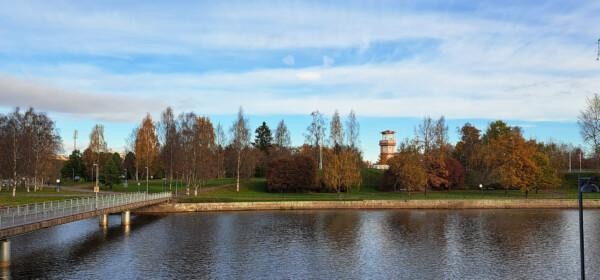
The letters OULU in pink in front of Tuira, each decorated in honour of the summer and the year of the Capital of Culture.

news

22.10.2020

Development of digital support continues in Northern Ostrobothnia
Digital skills are civic skills, and taking care of them is a matter for the whole of Finland. The Regional Assembly of Oulu Region will continue the regional coordination of digital support in the Northern Ostrobothnia Digital Support project in cooperation with further funding from the Ministry of Finance.

In 2020, a total of 14 regional projects were granted state aid for the regional coordination of digital support, of which 11 are follow-on projects and three are new projects. The state aid was granted by the Ministry of Finance. The Digital and Population Data Services Agency takes care of the national coordination of digital support and also guides the work of the Regional Assemblys.

– Digital support belongs to everyone and we are looking forward to further developing it in our own region. It is also a pleasure to involve new regions in digital support cooperation. Maria Puotiniemi and Heidi Niemelä The Northern Ostrobothnia Digital Support Project.

The organisation of digital support contributes to ensuring that all citizens have sufficient digital skills and the opportunity to use the services of the authorities equally in Finland. The projects of the Regional Assemblys bring together the organisers of digital support into regional networks and help to further develop digital support.

– According to a recent digital skills survey, we Finns are a digitally skilled people, but there is also a clear need for digitisation. Digital support is available, but not everyone can find it. The aim of the state aid projects for digital support is, among other things, to map the provision of digital support and promote discoverability, says the project manager Minna Piirainen Digital and Population Data Services Agency.

There is strength in the network

The Digital and Population Data Services Agency supports the activities of the digital support networks assembled by the Regional Assemblys and acts as an advocate for digital support. The task of the counties is to steer the network of digital support stakeholders in the region, increase the awareness of digital support and develop the availability of support.

– When numerous organisations, municipalities, authorities and companies join forces in cooperation with the help of regional The Regional Assemblys, digital support providers become a force for change, which plays a key role in the development of a smooth Finland, Piirainen continues.

Research has also shown that digital skills have an impact on people's well-being and health. The better the digital skills the residents have, the better they are able to make versatile use of digital services and devices to support their well-being. Deficient digital skills, in turn, increase the risk of digital exclusion, which is known to have a negative impact on human well-being and health.

– In Northern Ostrobothnia, there is strong cooperation in cooperation with the regional stakeholders involved in the promotion of well-being and health, so that all the residents of the region have equal opportunities to take advantage of the opportunities brought about by digitalisation, Maria Puotiniemi and Heidi Niemelä say.

Further information:

Maria Puotiniemi, Digital Support Project for Northern Ostrobothnia, tel. +358 40 685 4049, maria.puotiniemi@pohjois-pohjanmaa.fi

Heidi Niemelä, Northern Ostrobothnia Digital Support Project, tel. +358 40 685 4047, heidi.niemela@pohjois-pohjanmaa.fi

Project Manager Minna Piirainen, Digital and Population Data Services Agency, tel. +358 295 535 280, minna.piirainen@dvv.fi

What is digital support?

  • Ministry of Finance grants Regional Assemblys a grant for regional coordination of digital support
  • The work is coordinated by the Digital and Population Data Services Agency
  • Regional Assemblys bring together stakeholders offering digital support in their area and ensure that services are findable
  • Digital support is provided by municipalities, public administration stakeholders, organisations, various projects and companies


 

Related articles

22.08.2023
The well-being of the residents of Northern Ostrobothnia is taken care of in a digitalised society

Digitalisation is already affecting almost every aspect of life, and several functions related to everyday life have become digitalised. Digitalisation brings several benefits and makes life smoother, but it also sets requirements for sufficient digital competence. As digitalisation progresses, it is particularly important to ensure that everyone has the opportunity to learn digital skills and equal conditions to use digital devices, services and environments to support their own lives as they wish. As the development of digitalisation progresses, it is worth considering what kinds of digital services, environments and usage habits increase well-being and which fstakeholders related to digital in turn weaken well-being. The Northern Ostrobothnia digital well-being and participation development project, which ended at the end of July 2023, has aimed to promote digital well-being, especially taking into account the municipality-based perspective. The project has been based on the objectives of the Regional Programme 2022-2025, and during the project the objectives and partnership promise related to the digital capabilities of the Northern Ostrobothnia Welfare Agreement 2019-2025 have been promoted, to which the Regional Assembly of Oulu Region has committed together in cooperation with the municipalities of the region. The aim of the project has been to study the state and development targets of the region's digital well-being and participation, to plan operating models that promote digital well-being together in cooperation with municipal stakeholders, and to coordinate the activities of the Northern Ostrobothnia digital well-being network. The project's activities have been a natural continuation of previous work related to the development of digital support in the Regional Assembly of Oulu Region, which has been carried out in a multi-actor manner on different service interfaces since 2018. The project has collected information on the needs, strengths and development areas related to digital well-being of different target groups. The collected data will be used in the implementation of the objectives of the regional programme and in the work of various stakeholders in Northern Ostrobothnia to promote digital well-being. As far as families in cooperation with children are concerned, it becomes clear that the challenges relate, among other things, to the time spent on digital devices. What is the appropriate amount to be on digital devices so that it does not have a negative impact on the well-being of the family? Excessive use of digital devices and incorrect content may have an impact on increasing insomnia, restlessness, presence and face-to-face interactions, so that social relationships suffer. Parents have a responsibility to assess what kind of digital devices and environments support the child's growth, development and well-being. The parents' high screen time has been found to have an impact on the child's abundant use of digital devices, and the child's abundant use of digital devices for entertainment purposes is known to predict lower school success. Parents' digital and media skills affect how they can ensure that the child's digital and media use is …

04.06.2021
Blog: Digital support strengthens the well-being of young people

The impact of digitalisation on society affects all age groups. in cooperation with digital support, the aim is to strengthen everyone's digital skills sufficient for the everyday life of the individual so that it is possible to stay involved in society, take care of things and use electronic services. Digital support can strengthen Participation and Inclusion, equality and non-discrimination, this is important for all age groups. However, when talking about young people's digital skills, the concept of a digital native quickly emerges. The term was coined by American author Mark Prensky in 2001. He described a new generation of people who haven't experienced the time before the internet and mobile devices. However, Prensky did not intend to describe how well young people who grew up in the digital age use electronic services. (Vallinkoski, 2017.) In everyday speech, however, the concept of "digital native" has gradually become more common and its meaning has changed. We are easily mistaken to think that young people who have grown up in the age of digitalisation use all electronic services fluently and in a sovereign manner. Diginative has thus become a concept synonymous in cooperation with a young person who masters everything related to digital. However, this is a kind of illusion that needs to be slightly shaken up - especially when it makes us think that young people do not need digital support. Although variations in digital skills between individuals also occur in the age group of young people, there is a clear need for digitalization among young people. According to the national digital skills survey, young people need support especially when dealing in cooperation with e-government services. The latest Youth Barometer supports this research result: According to the barometer, about 12 % young people find e-services challenging to find and 10 % They felt that services were not available when they were most needed. In addition, it should be noted that the reason for the lack of use of services may also be in economic structures and socio-economic status, for example young people from low-income families may not be able to afford to buy and maintain the necessary equipment and therefore use the necessary services. Young people want accessibility, clarity and guidance in digital services - who would guide them? For digital support developers, young people's views are valuable information. Our mission is to provide young people in cooperation with accessible, low-threshold digital support and up-to-date and reliable information. In the development of digital support, young people's needs have been heard and they want to be reached by digital support. Cooperation between different stakeholders ensures the availability of digital support for every young person. One current example…