A total of 10 press releases were published in the Iijoki migratory fish tip project. The releases are compiled on this page in chronological order.
24.8.2020 A downhill migration route to Haapakoski in Iijoki was planned for Smolet
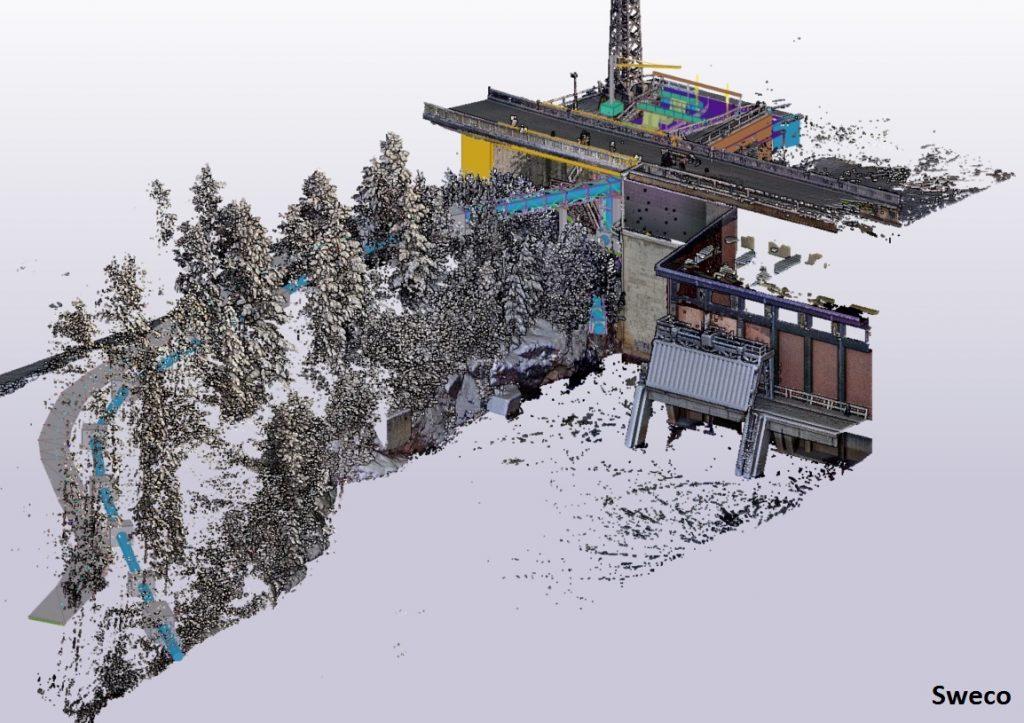
The construction of the fairway is expected to start in autumn 2020. A catching device will also be built in connection in cooperation in cooperation with the fairway, which can be used to request smolts for follow-up studies and over-transfers.
A downhill migration path for salmon and trout migrating juveniles (smolt) has been designed for the Haapakoski power plant in Iijoki. The smolt control fence installed in the upper channel of the power plant in summer 2019 and the route now planned together form a downward migration route for the smolts.
”An accelerating flow was planned for the first part of the downhill migration path. The purpose is that the smolts come to the entrance of the fairway guided by a fence, then detect the flow and are guided to the fairway attracted by it. The fish are then directed either to the catching device or through a pipe to the sub-channel of the power plant and then on to their migration towards the sea’, the Head of Unit Tuomo Tourula From Sweco.
Securing the downward migration of salmonids is important in built-up river areas. According to studies, the migration of smolts slows down and partly stops at power plants. In addition, some smolts become disabled or die as they swim through turbines.
Separate routes are needed for migrating juveniles, as fish paths for high-altitude fish tend to work poorly to support downward migration. Smolts are difficult to guide to fish roads and smolts can stay in them. The Natural Resources Institute Finland has drawn up a general plan for Iijoki, on the basis of which the low-lying routes are implemented.
“In Haapakoski, Iijoki, there has been systematic progress towards Finland’s first downhill smolt migration route. The work is important nationwide, as the experiences gained from Haapakoski can also be utilised in other built-up river areas", emphasises a leading water management expert. Arto Iwendorff Northern Ostrobothnia Centre for Economic Development, Transport and the Environment.
The design of the Smolt migration path was carried out as part of the Iijoki migration fish tip project. The design was carried out by Sweco in cooperation in cooperation with the support of the expert group of the key project.
The project is funded by the Ministry of Agriculture and Forestry, PVO-Vesivoima Oy, Ii, Oulu, Pudasjärvi, Taivalkoski, Kuusamo, Metsähallitus, the Regional Assembly of Oulu Region and the Iijoki river basin fishing area. The Northern Ostrobothnia Centre for Economic Development, Transport and the Environment and the Natural Resources Institute Finland are also strongly involved in the project. The project manager is the Regional Assembly of Oulu Region. This is Finland's largest migratory fish project.
More information about the Iijoki hiking fish tip project:
Mirko Laakkonen, Project Manager, Regional Assembly of Oulu Region, tel. +358 40 685 4036, mirko.laakkonen(at)pohjois-pohjanmaa.fi
More information on the technical solutions for the downhill migration route:
Tuomo Tourula, Head of Unit, Sweco Structural Engineering Ltd, tel. +358 50 511 7787, Tuomo.tourula(at)sweco.fi
____________________
12.6.2020 Freshly hatched Atlantic salmon and trout again in the Iijoki river
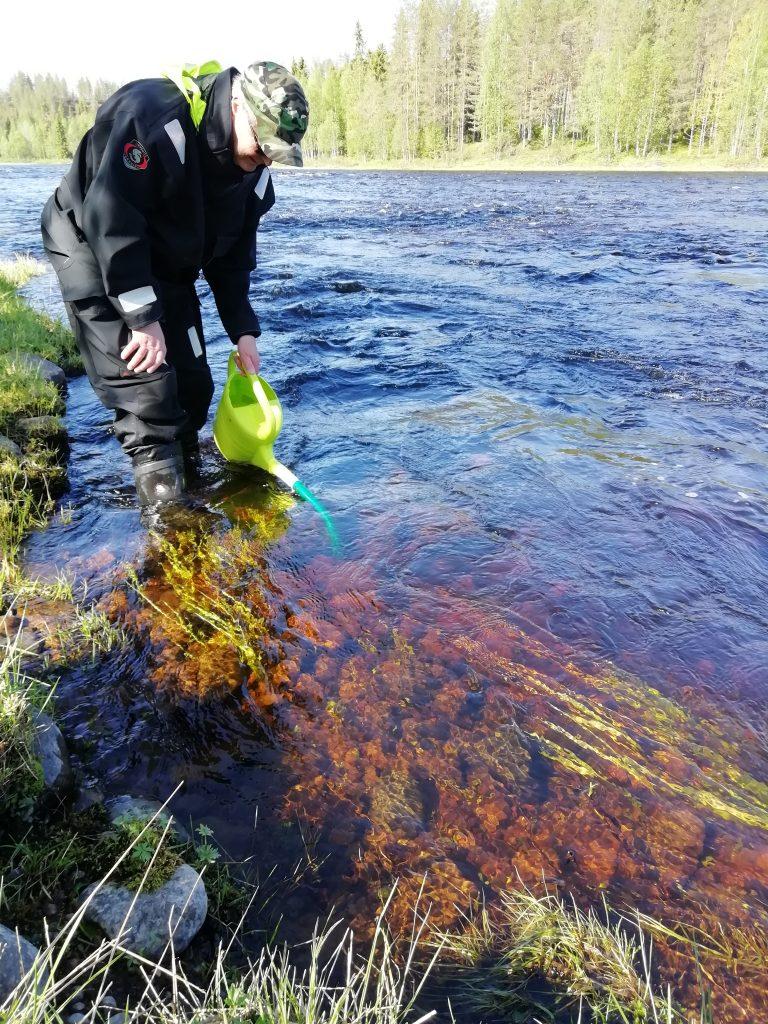
As in recent years, freshly hatched Atlantic salmon and trout continue to be planted in Iijoki. At the beginning of June, 200 000 freshly hatched juveniles of Atlantic salmon and 50 000 sea trout will be planted in the river Iijoki and its tributaries.
Restocking supports the creation of salmonid stocks stigmatised in the river. The fish that are now being planted will smolt and start hiking in cooperation in cooperation within a few years, when they can be monitored in smolt studies in Haapakoski.
‘We plant trout in the tributaries of the river Ii, salmon in the main basin of the river Ii and in the river Livo. It is important that the plantings are annual. This will gradually lay the groundwork for restoring the natural cycle of salmonids.”, says the batch planner Kari Sarajärvi About the forest management.
The Iijoki migratory fish tip project is funded by the Ministry of Agriculture and Forestry, PVO-Vesivoima Oy, Ii, Oulu, Pudasjärvi, Taivalkoski, Kuusamo, Metsähallitus, the Regional Assembly of Oulu Region and the Iijoki river basin fishing area. The Northern Ostrobothnia Centre for Economic Development, Transport and the Environment and the Natural Resources Institute Finland are also strongly involved in the project. The project is managed by the Regional Assembly of Oulu Region. The Iijoki migratory fish tip project is Finland's largest migratory fish project.
More information about the Iijoki hiking fish tip project:
Mirko Laakkonen, Project Manager, Regional Assembly of Oulu Region, tel. +358 40 685 4036, mirko.laakkonen(at)pohjois-pohjanmaa.fi
More information about plantings:
Kari Sarajärvi, wilderness planner, Metsähallitus, tel. +358 20 639 6569, kari.sarajarvi(at)metsa.fi
____________________
11.11.2019 A downhill migration path for smolts is planned in Haapakoski, Iijoki
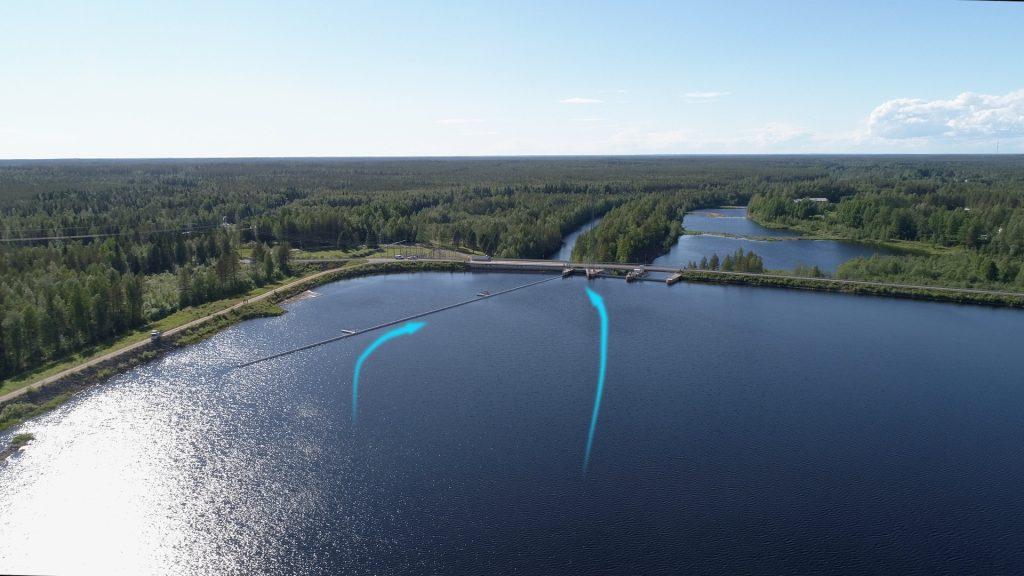
A downhill migration route for salmon and trout juveniles (smolt) is planned in Haapakoski, Iijoki. Sweco is responsible for the planning in cooperation in cooperation in cooperation with the expert group of the Iijoki migratory fish tip project.
“We are pleased that we can contribute to the restoration of the natural cycle of salmonids in Iijoki. The design of the downhill migration path requires an innovative approach, as no similar structure has been implemented in Finland before. We bring strong expertise and experience to the project by utilising Sweco's international network of experts“says the project manager responsible for planning Tuomo Tourula From Sweco.
The planning will be completed by the end of March 2020. The date of construction of the downhill migration route will be announced later. Funding for the construction of the fairway will be sought from the Government of Rinne.
Towards a downhill migration route
In the summer of 2019, the first smolt fence in Finland was installed in Haapakoski. in cooperation in cooperation with the help of the guide fence, the smolts are directed to the former log opening. The downhill route is supposed to start at the same point. Together, the fence and the downward migration path form a downward migration route that can help not only smolts, but also salmonids returning from the spawning stock (tall) and other fish.
Securing the downward migration of salmonids is important in built-up river areas. Several studies show that the migration of smolts slows down and partially stops at power plants. In addition, some smolts become disabled or die as they swim through turbines. The functionality of Haapakoski's structures will be closely studied in the coming years.
The planning of the downhill migration path is part of the Iijoki migration fish tip project. The measures of the project are: Raasakka power plant dam fish path, smolt migration solutions, small juvenile planting programme, over-transfers of Atlantic salmon and trout, and measures on the old channels of Raasakka and Maalismaa.
The project is funded by the Ministry of Agriculture and Forestry, PVO-Vesivoima Oy, Ii, Oulu, Pudasjärvi, Taivalkoski, Kuusamo, Metsähallitus, the Regional Assembly of Oulu Region and the Iijoki river basin fishing area. The project manager is the Regional Assembly of Oulu Region. This is Finland's largest migratory fish project.
More information about the Iijoki hiking fish tip project:
Mirko Laakkonen, Project Manager, Regional Assembly of Oulu Region, tel. +358 40 685 4036, mirko.laakkonen(at)pohjois-pohjanmaa.fi
____________________
18.6.2019 Freshly hatched Atlantic salmon and trout in the Iijoki River
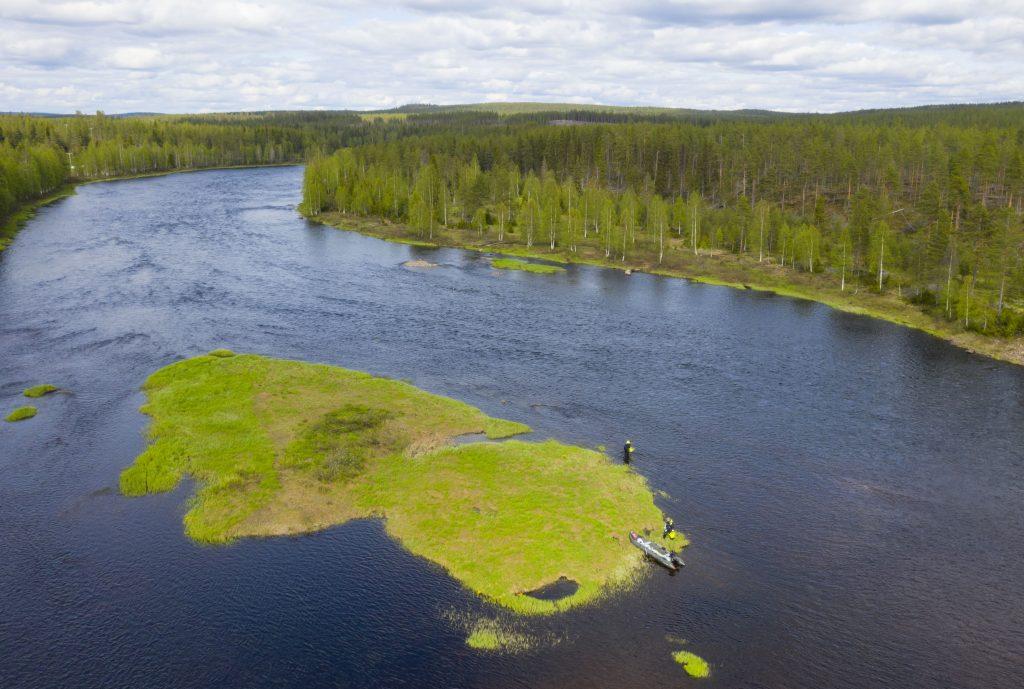
At the turn of May-June, 470,000 freshly hatched juveniles of Atlantic salmon and 200,000 sea trout have been planted in the Iijoki River and its tributaries.
The restocking supports the creation of salmonid stocks stigmatised in the river and explores potential juvenile areas. As the fish start to migrate towards the sea, they can also be used in research related to down migration in Haapakoski. Restocking is part of restoring the natural cycle of Iijoki Atlantic salmon and trout.
”As a new test area, Nauruanoja and Panumaoja were tested for sea trout. Of course, most of the young trout were planted in the old, well-known sea trout tributaries of the River Iijoki. The salmon, on the other hand, were planted in the main river of Iijoki and in the Livojoki river‘, says the batch planner Kari Sarajärvi About the forest management.
The restocking was carried out as part of the Iijoki migratory fish tip project. The fish were sourced from the Natural Resources Institute Finland and planted by Metsähallitus.
The Iijoki migratory fish tip project is funded by the Ministry of Agriculture and Forestry, PVO-Vesivoima Oy, Ii, Oulu, Pudasjärvi, Taivalkoski, Kuusamo, Metsähallitus, the Regional Assembly of Oulu Region and the Iijoki river basin fishing area. The project is managed by the Regional Assembly of Oulu Region. The Iijoki migratory fish tip project is Finland's largest migratory fish project.
More information about the Iijoki hiking fish tip project:
Mirko Laakkonen, Project Manager, Regional Assembly of Oulu Region, tel. +358 40 685 4036, mirko.laakkonen(at)pohjois-pohjanmaa.fi
See also the video about planting chicks:
Link to video
__________________
5.6.2019 Migratory juveniles of salmonids are guided in Iijoki
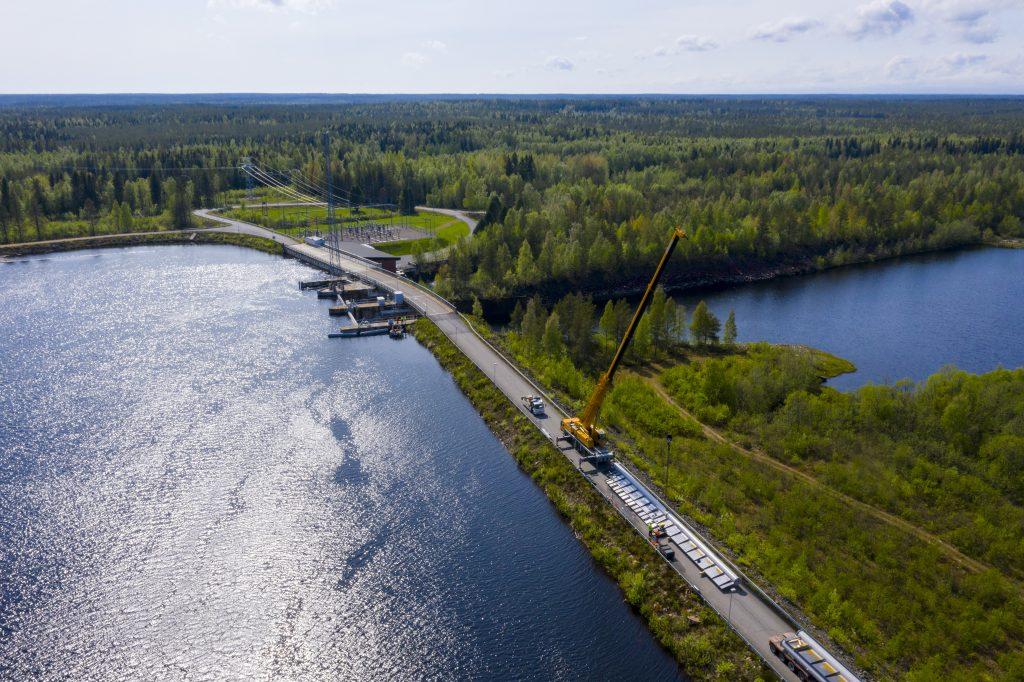
Finland's first pilot fence for young salmon and trout (smolt) will be installed in Haapakoski, Iijoki, from 3 to 7 June 2019.
As part of the Iijoki migratory fish tip project, a floating smolt fence has been built during spring 2019. The fence is 180 metres long and extends to a depth of 1.2 to 3 metres. A similar structure has not been implemented in Finland before. The fence was manufactured by Katera Steel Oy and designed by Ponvia Oy. The completion of the fence has been followed by a separate steering group.
"Preparatory measures, design, construction and installation of the fence have been a major effort and a sign of good multi-party cooperation", notes the Chair of the Steering Group, Senior Water Expert Arto Iwendorff Northern Ostrobothnia Centre for Economic Development, Transport and the Environment.
Securing the downward migration of salmonids is important in built-up river areas. Several studies show that the migration of smolts slows down and partially stops at power plants. In addition, some smolts become disabled or die as they swim through turbines.
in cooperation in cooperation with the help of the control fence, the aim is to direct the smolts to the desired location of the power plant dam. In Haapakoski, the migrating chicks are directed to the area between the power plant and the bypass hatches. In the first stage, it is important to make the fence work as desired. The Natural Resources Institute Finland will study the functionality of the fence in 2020 and 2021.
Planning of the downhill migration route will begin in the autumn
At a later stage, it is planned to build a downward migration path for smolts in connection in cooperation in cooperation with the dam. The planning of the fairway will begin as part of the Iijoki migratory fish tip project in early autumn 2019. In addition to smolts, the downward migration route resulting from the steering fence and the downward migration path may also help the migration of salmonids returning from the spawning stock (tall) and other fish.
”The downhill migration of smolts is a theme that has been overlooked when it comes to migratory fish. It is great that we have the opportunity to promote this issue here in Iijoki in cooperation in cooperation with the help of key project funding. This marks the beginning of a new phase in salmon fish research and the return of salmon fish stocks to built rivers in Finland", rejoices the project manager of the Iijoki migratory fish tip project Mirko Laakkonen Regional Assembly of Oulu Region.
The measures of the Iijoki migratory fish tip project are: Raasakka power plant dam fish path, smolt migration solutions, small juvenile planting programme, over-transfers of Atlantic salmon and trout, and measures on the old channels of Raasakka and Maalismaa. The project is funded by the Ministry of Agriculture and Forestry, PVO-Vesivoima Oy, Ii, Oulu, Pudasjärvi, Taivalkoski, Kuusamo, Metsähallitus, the Regional Assembly of Oulu Region and the Iijoki river basin fishing area. The project manager is the Regional Assembly of Oulu Region. This is Finland's largest migratory fish project.
More information about the Iijoki hiking fish tip project:
Mirko Laakkonen, Project Manager, Regional Assembly of Oulu Region, tel. +358 40 685 4036, mirko.laakkonen(at)pohjois-pohjanmaa.fi
__________________
6.3.2019 Construction planning of Raasaka Fish Road to be specified
The construction plans for the Raasakka power plant dam fish road are specified in the Iijoki migratory fish tip project coordinated by the Regional Assembly of Oulu Region. Items requiring further planning have been identified in the plans.
In December, a public tendering procedure was launched for the construction of the Raasakka fish road. The tenders received far exceeded the estimated cost of the project. It has been decided to suspend the tendering process for construction.
The implementation of the project requires a water permit granted by the Regional State Administrative Agency of Northern Finland. The Authority has not yet taken a decision on the application submitted in March 2017. in cooperation in cooperation with the specification of the construction plans, the schedule of the project will be postponed.
In addition to the Raasaka fish road, the Iijoki migratory fish tip project includes a planting programme for small juveniles, smolt migration solutions, over-transfers of salmon and sea trout, and measures on the old channels of Raasaka and Maalismaa.
The Iijoki migratory fish tip project is funded by the Ministry of Agriculture and Forestry, PVO-Vesivoima Oy, Ii, Oulu, Pudasjärvi, Taivalkoski, Kuusamo, Metsähallitus, the Regional Assembly of Oulu Region and the Iijoki river basin fishing area. The project will be implemented as part of the Government of Finland's nature policy spearhead project.
Further information:
Mirko Laakkonen, Project Manager, Regional Assembly of Oulu Region, mirko.laakkonen(at)pohjois-pohjanmaa.fi, tel. 040 685 4036
Pertti Pietinen, Managing Director, PVO-Vesivoima Oy, pertti.pietinen(at)pvo.fi, tel. 040 581 4726
__________________
14.1.2019 Study on the development possibilities of the Iijoki Maalismaa old channel
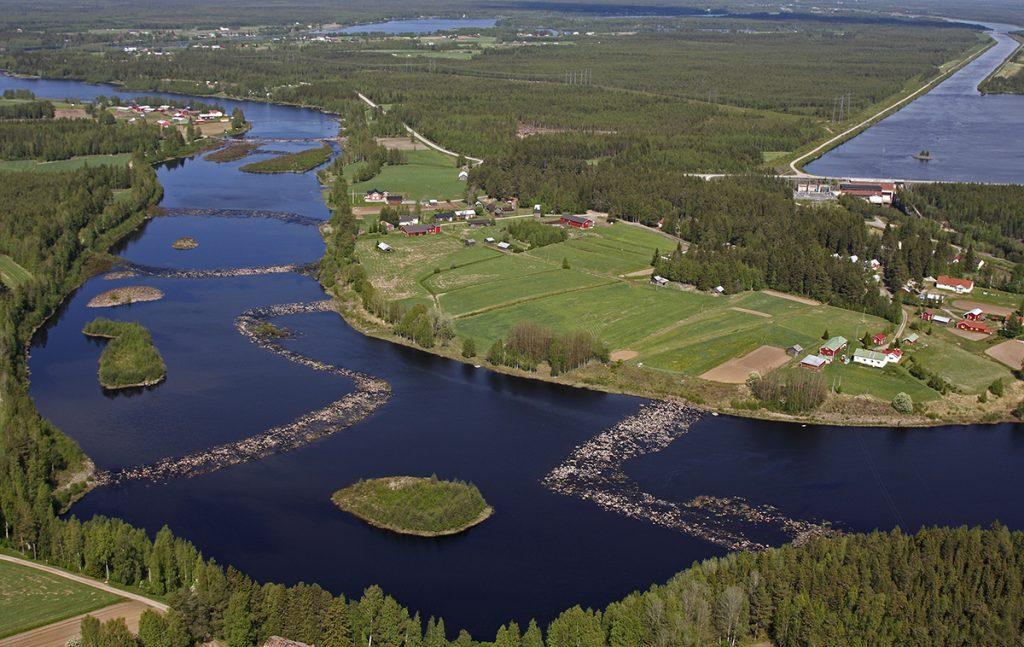
An extensive report has been completed on the current state and development possibilities of the old channel of Iijoki Maalismaa and Nauruanoja, which descends into it. Maalismaa's old channel is located about 24 kilometres from the estuary of the river.
In the study, for example, a description of the current state of the old channel was drawn up, water quality was studied, the possibilities for partial opening of the bottom dams and partial introduction of the old ones were assessed, a cost estimate was made in different flow options, experimental fishing was carried out, the number of breeding and juvenile production areas suitable for salmonid fish in the current state was estimated, and the potential areas in different flow situations were estimated. The report also covered Nauruanoja's main bed.
“This report provided a lot of additional information on the situation of the old channel and Nauruanoja in Maalismaa. We also made suggestions for the necessary follow-up measures. One clear development is overcoming the barrier in Nauruanoja”, specify fish biologist Arto Hautala.
The study was prepared by Maveplan Oy in cooperation in cooperation in cooperation with Tmi Arto Hautala. The work was carried out as part of the Iijoki migratory fish tip project. The measures of the project are the Raasaka power plant dam fishway, smolt migration solutions, a planting programme for small juveniles, over-transfers of salmon and sea trout, and measures on the old channels of Raasaka and Maalismaa.
The Iijoki migratory fish tip project is funded by the Ministry of Agriculture and Forestry, PVO-Vesivoima Oy, Ii, Oulu, Pudasjärvi, Taivalkoski, Kuusamo, Metsähallitus, the Regional Assembly of Oulu Region and the Iijoki river basin fishing area. The project is managed by the Regional Assembly of Oulu Region. This is Finland's largest migratory fish project.
More information about the Iijoki hiking fish tip project:
Mirko Laakkonen, Project Manager, Regional Assembly of Oulu Region, tel. +358 40 685 4036, mirko.laakkonen(at)pohjois-pohjanmaa.fi
More information about the survey:
Hannu Alatalo, Master of Science (Technology), Maveplan Oy, tel. +358 40 516 1504, hannu.alatalo(at)maveplan.fi
Arto Hautala, fish biologist, Tmi Arto Hautala, tel. 050 351 3208, arto(at)artohautala.fi
The report is available at:
https://www.pohjois-pohjanmaa.fi/aluesuunnittelu/iijoen_vaelluskalakärkihanke
__________________
3.12.2018 Finland's first smolt fence to Iijoki
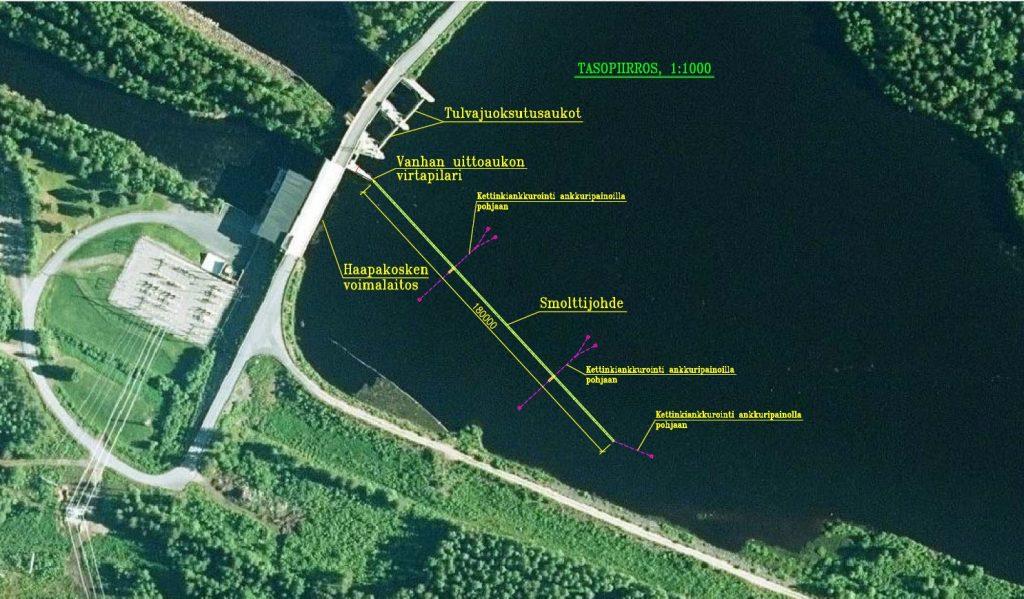
The steering fence for salmon and trout migratory juveniles (smolt) will be built during this winter. The fence will be installed in Haapakoski, Iijoki, in early summer 2019. The functionality of the fence will be examined for an initial period of two years. The measure is part of the Iijoki migratory fish tip project.
Securing the downward migration of salmonids is important in built-up river areas. Several studies show that the migration of smolts slows down and partially stops at power plants. In addition, some smolts become disabled or die as they swim through turbines. We are now looking for a solution to this challenge in Iijoki. A floating, 180-metre-long, two-metre-deep smolt fence will be built in Haapakoski.
Katera Steel Oy won the contract for the control structure. The structure is designed by Ponvia Oy. A separate steering group has been established for the monitoring of design and construction.
“We have delivered similar types of structures in the past, albeit for a different purpose, i.e. log casting leads”, says the CEO Taisto Shoemaker Katera Steel Oy.
in cooperation in cooperation with the help of the fence, the smolts are directed to the desired location of the power plant dam; In the case of Haapakoski, to the area between the power plant and the bypass hatches. In the first stage, it is important to make the fence work as desired. In the next few years, the Natural Resources Institute Finland will be responsible for examining the functionality of the fence. At a later stage, it is planned to build a downward migration path for smolts in connection in cooperation in cooperation with the dam. In the future, the downward migration route resulting from the steering fence and the downward migration path may also help the migration of salmonids returning from the spawning stock (tall) and other fish.
“Major steps are being taken to reintroduce migratory fish in Iijoki. This is the first time we have been able to study the steering structures of smolts in Finland. The results of the study can be compared to the smolt study carried out previously in the Iijoki Otva project’, says the researcher Riina Huusko Natural Resources Institute Finland.
The measures of the Iijoki migratory fish tip project are: Raasakka power plant dam fish path, smolt migration solutions, small juvenile planting programme, over-transfers of salmon and sea trout, and measures on the old channels of Raasakka and Maalismaa. The project is funded by the Ministry of Agriculture and Forestry, PVO-Vesivoima Oy, Ii, Oulu, Pudasjärvi, Taivalkoski, Kuusamo, Metsähallitus, the Regional Assembly of Oulu Region and the Iijoki river basin fishing area. The project manager is the Regional Assembly of Oulu Region. This is Finland's largest migratory fish project.
More information about the Iijoki hiking fish tip project:
Mirko Laakkonen, Project Manager, Regional Assembly of Oulu Region, tel. +358 40 685 4036, mirko.laakkonen(at)pohjois-pohjanmaa.fi
More information about the Haapakoski power plant:
Matti Åman, Specialist, PVO-Vesivoima Oy, tel. 050 303 8621, matti.aman(at)pvo.fi
More information on smolt migration studies:
Researcher Riina Huusko, Natural Resources Institute Finland, tel. +358 29 532 2192, rina.huusko(at)luke.fi
__________________
12.6.2018 Small boy furnishings in Iijoki
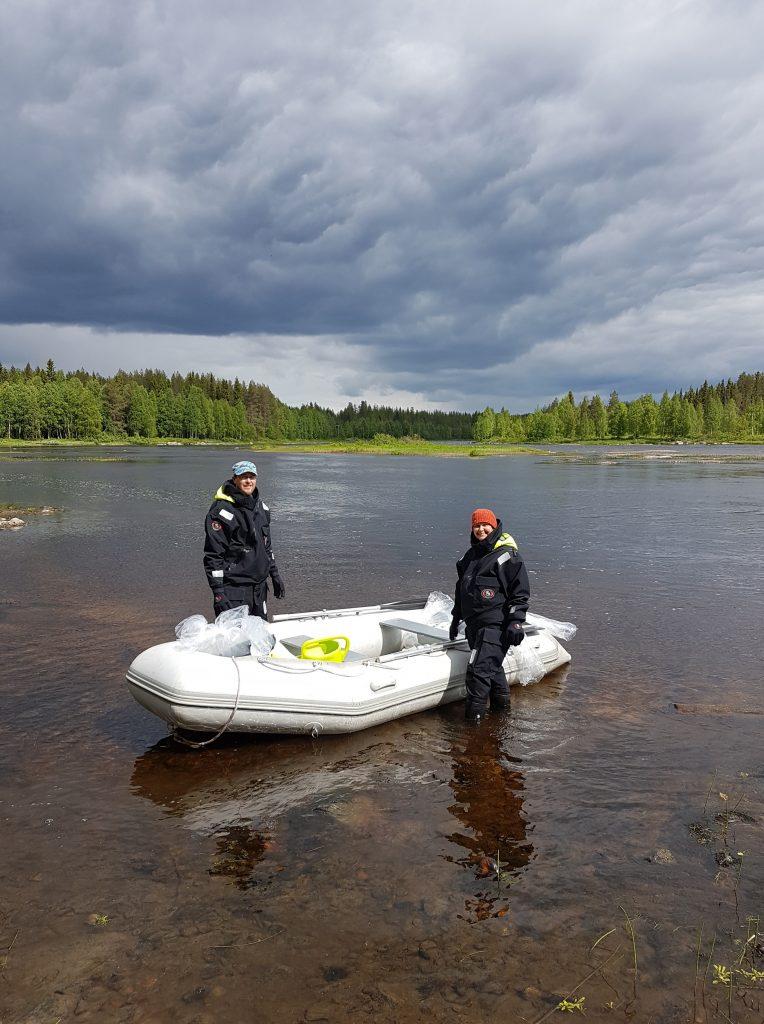
A total of about 350,000 freshly hatched chicks of salmon and 200,000 sea trout were planted in the river Iijoki and its tributaries last week. The restocking was carried out as part of the Iijoki migratory fish tip project. The fish were sourced from the Natural Resources Institute Finland and planted by Metsähallitus.
The restocking supports the creation of salmonid stocks stigmatised in the river and explores potential juvenile areas. When fish start to migrate towards the sea, they can also be used in research related to downward migration. The small-scale nurseries are part of the restoration of the natural cycle of salmon and sea trout in the Iijoki River.
“The plantings were successful. At the end of the summer, we will monitor planting sites by electro-experimental fishing”, says the batch planner Kari Sarajärvi About the forest management.
The Iijoki migratory fish tip project is funded by the Ministry of Agriculture and Forestry, PVO-Vesivoima Oy, Ii, Oulu, Pudasjärvi, Taivalkoski, Kuusamo, Metsähallitus, the Regional Assembly of Oulu Region and the Iijoki river basin fishing area. The project is managed by the Regional Assembly of Oulu Region. The total budget of the project is over EUR 4 million.
More information about the Iijoki hiking fish tip project:
Mirko Laakkonen, Project Manager, Regional Assembly of Oulu Region, tel. +358 40 685 4036, mirko.laakkonen(at)pohjois-pohjanmaa.fi
More information about the key project's small-child furnishings:
Kari Sarajärvi, wilderness planner, Metsähallitus, tel. +358 20 639 6569, kari.sarajarvi(at)metsa.fi