A total of 17 press releases were published in the Iijoki Otva project. The releases are compiled on this page in chronological order.
11.10.2018 Confidence was found by working together
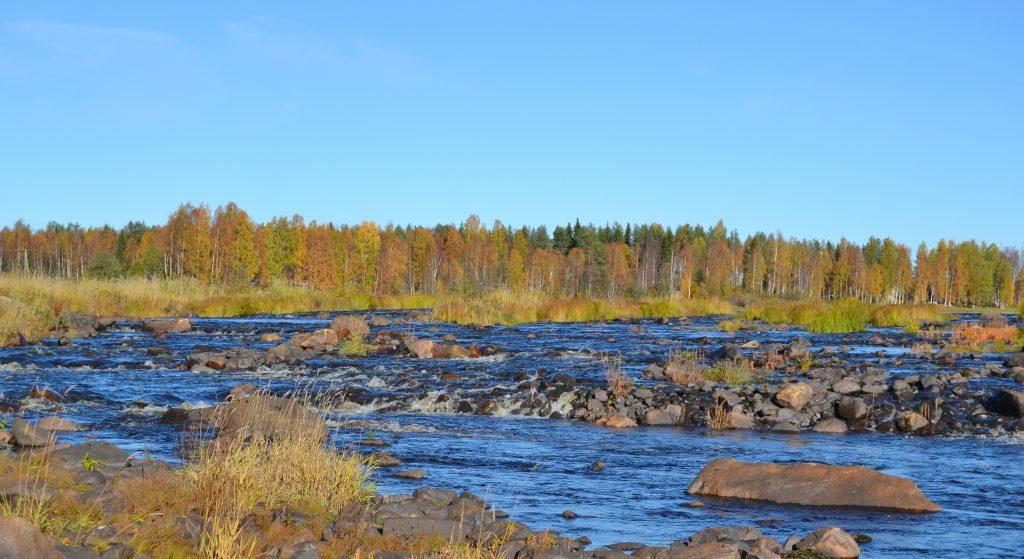
Iijoki's water vision work has ended, but the work to raise the value of Iijoki continues. We are moving forward in a good spirit and in cooperation in cooperation with a new kind of discussion culture.
When the advisory board of the Iijoki Otva project met for the first time in May 2016, the atmosphere was sceptical. Will the project lead to concrete actions for the benefit of the Iijoki River? How do we manage to keep the discussion relevant when the stakeholders have different interests? In the drafting of the Iijoki water vision, we started in cooperation in cooperation with drawing up common rules and listening exercises. The rules of the game were meant to ensure the power of all parties to Influencing the solutions and the responsibility to look for them together in cooperation in cooperation with others. Concrete measures to increase the value of the Iijoki River were set as one of the objectives already during the vision work.
“The most important thing in the vision work was finding a good spirit, listening to others and interacting”, summarizes the member of the Advisory Board Riina Rahkila The Vyyhti II project.
Two and a half years later, in September 2018, at the tenth and last meeting of the Advisory Board, the atmosphere was very hopeful and the faith in the future of Iijoki was high. During the vision process, it was finally possible to discuss even difficult issues in cooperation in cooperation with respect for others, and a lot was achieved when building trust. A jointly agreed water vision for 2030 was drawn up for Iijoki and a programme of measures aimed at its implementation, which includes measures and projects that have been identified as important to increase the value of Iijoki. in cooperation in cooperation with the help of the Advisory Board, the Iijoki migratory fish tip project was launched.
‘The Water Vision was a successful pilot project that the Ministry of Agriculture and Forestry set out to pursue. It succeeded in bringing together different stakeholders from different perspectives and in reconciling issues such as fisheries and water management in a new way.”, declares that: Jouni Tammi Ministry of Agriculture and Forestry.
The Water Vision Advisory Board acted as a central arena for vision work and also played a crucial role in ensuring the continuity of cooperation after the project. The Advisory Board brought together a wide range of stakeholders in the region: all municipalities, businesses, officials, organisations and Regional Assemblys along the river. The Advisory Board will also continue its activities after the end of the Otva project.
The Iijoki water vision was part of the three-year EU-funded Otva project. The main objectives of the Otva project were to develop a water vision and promote the restoration of migratory fish stocks and other measures that increase the value of the river. The project is managed by the Regional Assembly of Oulu Region and co-implemented by the Natural Resources Institute Finland. Pöyry Finland Oy, Akordi Oy and Mapita Oy were responsible for the Water Vision part of the project.
For more information on drafting a Water Vision:
Lasse Peltonen, Akordi Oy, tel. +358 40 192 0053, lasse.peltonen(at)akordi.fi
Kalle Reinikainen, Pöyry Finland Oy, tel. 050 590 7640, kalle.reinikainen(at)pöyry.com
More information about the Iijoki Otva project:
Mirko Laakkonen, Project Manager, Iijoki Otva project, Regional Assembly of Oulu Region, tel. +358 40 685 4036, mirko.laakkonen(at)pohjois-pohjanmaa.fi
____________________
11.10.2018 Luke's pilot plan for downhill migration solutions for salmon juveniles for Iijoki hydropower plants completed
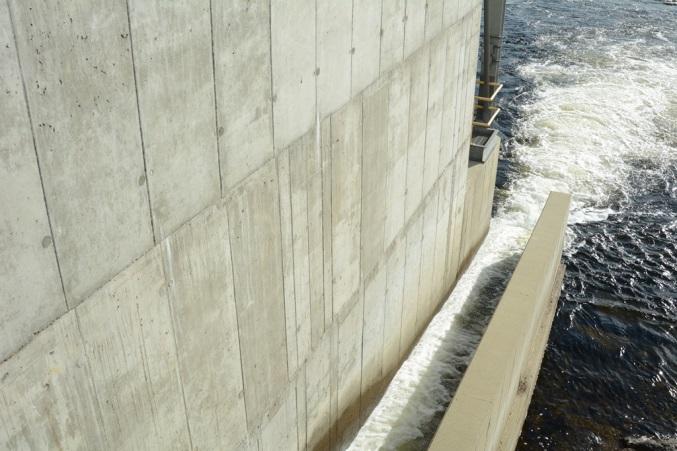
The Natural Resources Institute Finland (Luke) has drawn up a general plan for downhill migration routes for salmon juveniles for the Iijoki hydropower plants. The plan is a significant pilot, on the basis of which salmon chicks migrating towards the sea can be steered safely and quickly past power plants. The downhill trekking route consists of two parts: a control fence in the upper channel and a downward migration channel in connection in cooperation in cooperation with the power plant.
Iijoki's recommendations are based on researched data on the behaviour of salmon juveniles
A floating control fence in cooperation in cooperation with a height of 2-3 metres is recommended as the control solution for the upper canals of the Iijoki hydropower plants. Pipeline solutions have been outlined as downhill migration paths, the beginnings of which would mainly be located at the old logging holes of power plants.
To support the design of downhill migration solutions, Luke carried out a behavioural survey of salmon migrating juveniles above the Haapakoski power plant in 2017. In addition, 3D flow models were created from the upper channels of the Iijoki power plants. in cooperation in cooperation with the help of the research data, it was possible to monitor the behaviour and movement of migratory juveniles above the power plants in different flow conditions and to design the guidance solutions for migratory juveniles in the upper channels on the basis of these data.
In built-up areas where the downward migration of salmonids poses significant problems
Power plants slow down and even stop the migration of juveniles, exposing them to intense predation. In addition, when swimming through turbines, some migrating chicks become disabled or die. Therefore, the migration routes built for power plants play an important role in restoring the natural cycle of migratory fish.
The master plan for the downhill migration routes of Iijoki was implemented as part of the three-year, EU-funded, Iijoki Otva project. The main objectives of the Otva project are to draw up a water vision and to promote the restoration of migratory fish stocks and other measures that increase the value of the river. The project is managed by the Regional Assembly of Oulu Region. The Natural Resources Institute Finland is a co-executor of the project. The Otva project ends on 14 October 2018.
More information on the general plan for downhill migration routes:
Researcher Riina Huusko, Natural Resources Institute Finland, tel. +358 29 532 2192, rina.huusko(at)luke.fi
Researcher Panu Orell, Natural Resources Institute Finland, tel. +358 29 532 8757, panu.orell(at)luke.fi
More information about the Iijoki Otva project:
Mirko Laakkonen, Project Manager, Regional Assembly of Oulu Region, tel. +358 40 685 4036, mirko.laakkonen(at)pohjois-pohjanmaa.fi
____________________
8.10.2018 Construction planning of Raasaka Fish Road completed
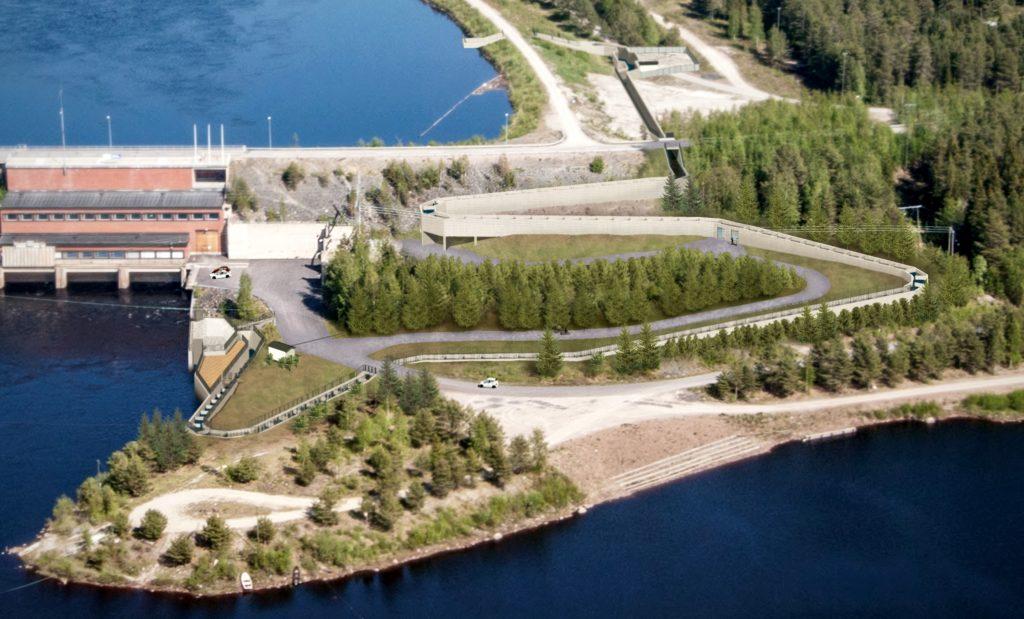
A construction plan has been drawn up for the Raasaka power plant dam fishway. On the basis of the construction plan, tenders for the construction of a fish road may be requested. Raasaka power plant dam is located about eight kilometres from the mouth of the river Iijoki.
Construction planning began in autumn 2017 in cooperation in cooperation with measurements and ground studies, followed by an update of the master plan. Subsequently, more detailed planning was started for concrete structures, hatches, pumps and other equipment, as well as earthworks.
The design also included hydraulic dimensioning, the preparation of a quantity list and cost estimate, structural calculations, a reinforcement plan, structural design of steel structures and modelling.
‘As a whole, design was a major and structurally demanding task. In addition, three bridge sites across the fishway had to be taken into account in the planning, and especially the lower and upper basins of the fishway require careful planning work.", says Structural Design Project Manager Kari Kuusela About Ponvia Oy.
The earlier smart fish road design in the Iijoki Otva project was taken into account in the building design. Kalatie utilises new monitoring and automation solutions enabled by modern technology. In addition to basic structures, a monitoring window and a fish catching device were designed for the Kalatie.
In addition to the Otva project, the Northern Ostrobothnia Centre for Economic Development, Transport and the Environment (ELY Centre) and the Iijoki migratory fish tip project were responsible for financing the building design. The building design was prepared by Maveplan Oy as a purchasing service. Ponvia Oy acted as a sub-consultant. The planning was followed by a separate steering group. The Kalatie water permit application is being processed by the Regional State Administrative Agency for Northern Finland.
Iijoki Otva is a three-year EU-funded project. The main objectives of the project are to develop a water vision and to promote the restoration of migratory fish stocks and other measures that increase the value of the river. The project is managed by the Regional Assembly of Oulu Region. The Otva project ends on 14 October 2018.
More information about the Iijoki Otva project:
Mirko Laakkonen, Project Manager, Iijoki Otva project, Regional Assembly of Oulu Region, tel. +358 40 685 4036, mirko.laakkonen(at)pohjois-pohjanmaa.fi
More information on the technical details of the building design:
Kari Kuusela, Structural Design Project Manager, Ponvia Oy, tel. 040 507 0072, kari.kuusela(at)ponvia.fi
________________
25.9.2018 Results of the Iijoki Otva project on display at the Iijoki Forum
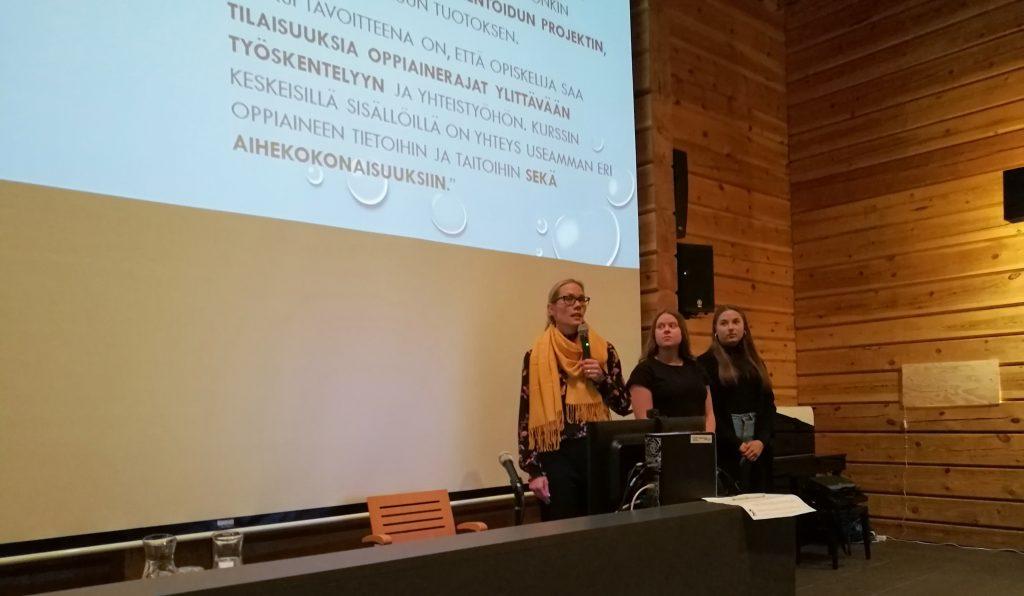
The second Iijoki Forum was organized on 19 September 2018 at the Kierikkikeskus in Yli-Ii. About 70 people had arrived to discuss the results of the Otva project and the next steps in the development of the Iijoki river basin.
The forum discussed, among other things, successful cooperation at the local level, the downward migration of salmon chicks, the development of other river areas and the experiences of upper secondary school students in environmental projects.
“The Otva project has provided support and materials for studying environmental issues. In addition, the development project of one's own nearby river has inspired upper secondary school students to familiarise themselves in cooperation in cooperation with the protection work related to migratory fish in particular.“, explains the teacher who appeared together in cooperation in cooperation with the students at the event Henna Anunti Ii from high school.
The event also heard about the formation of a water vision, where, as a result of the coordination of different views and constructive discussion, the stakeholders in the region have found a common will to raise the value of the Iijoki river. It was hoped that the new operating culture would continue in the future.
The Otva project has launched several new projects, such as the Iijoki migratory fish tip project, the Raasaka old channel cooperation project, the Iijoki trout genetic survey and the Tyräjärvi rehabilitation project.
“in cooperation in cooperation with the help of the Otva project, we got a new turnaround in promoting the rehabilitation of Tyräjärvi“, declares the project manager: Olavi Kammonen The fishing village of Jokijärvi.
In the future, it is hoped that Iijoki Forum will become an annual event following the development of the Iijoki river basin. The Otva project ends on 14 October 2018.
Iijoki Otva is a three-year EU-funded project. The main objectives of the project are to prepare a water vision for the Iijoki catchment area and to promote and implement the restoration of migratory fish stocks and other measures that increase the value of the river. The project is managed by the Regional Assembly of Oulu Region and co-implemented by the Natural Resources Institute Finland. Pöyry Finland Oy, Akordi Oy and Mapita Oy are responsible for the Water Vision part of the project.
More information about the Iijoki Otva project:
Mirko Laakkonen, Project Manager, Iijoki Otva project, Regional Assembly of Oulu Region, tel. +358 40 685 4036, mirko.laakkonen(at)pohjois-pohjanmaa.fi
More information about the Water Vision:
Kalle Reinikainen, Pöyry Finland Oy, tel. 050 590 7640, kalle.reinikainen(at)pöyry.com
____________________
8.3.2018 New electronic map platform gathers information about the Iijoki river basin - according to citizens' observations
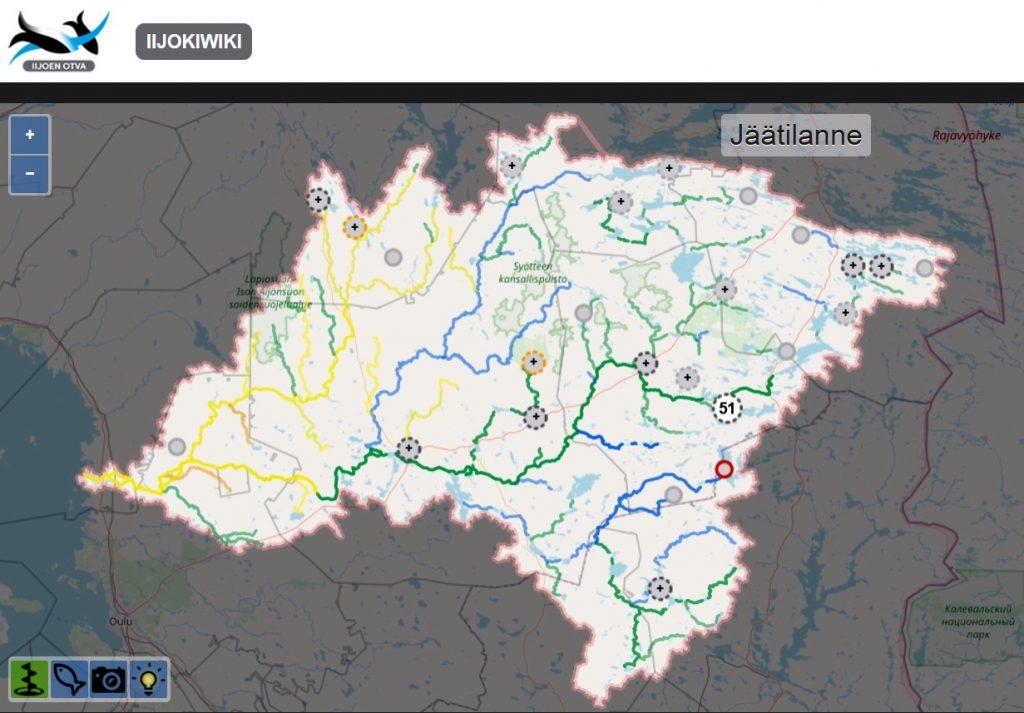
A new river wiki platform has been opened in Iijoki. Iijoki-wiki is a citizen science platform developed by the Finnish Environment Institute and based on Lake Meriwiki.
The Iijoki wiki contains information maintained by the environmental administration on the lakes and rivers of the Iijoki river basin. In addition, anyone can save observations, photos and placeholders on the platform. The website also has the opportunity to leave views on the further development of the new service.
“This is the basic idea of wikis. Co-creating great content while respecting and developing the work of others”, says the platform drafted by Matti Lindholm The Finnish Environment Institute.
The Iijoki wiki has been implemented as part of the three-year EU-funded Iijoki Otva project. The project is managed by the Regional Assembly of Oulu Region and co-implemented by the Natural Resources Institute Finland. Pöyry Finland Oy, Akordi Oy and Mapita Oy are responsible for the Water Vision part of the project. The Iijoki wiki is maintained as part of the Lake Seawiki at the Finnish Environment Institute. It is used as a data platform for Iijoki and as a tool for monitoring the objectives of the Iijoki water vision.
For more information on creating an Iijoki wiki:
Kalle Reinikainen, Pöyry Finland Oy, tel. 050 590 7640, kalle.reinikainen(at)pöyry.com
More information about the Iijoki Otva project:
Mirko Laakkonen, Project Manager, Iijoki Otva project, Regional Assembly of Oulu Region, tel. +358 40 685 4036, mirko.laakkonen(at)pohjois-pohjanmaa.fi
____________________
27.2.2018 The water vision creates a direction for increasing the value of the Iijoki river
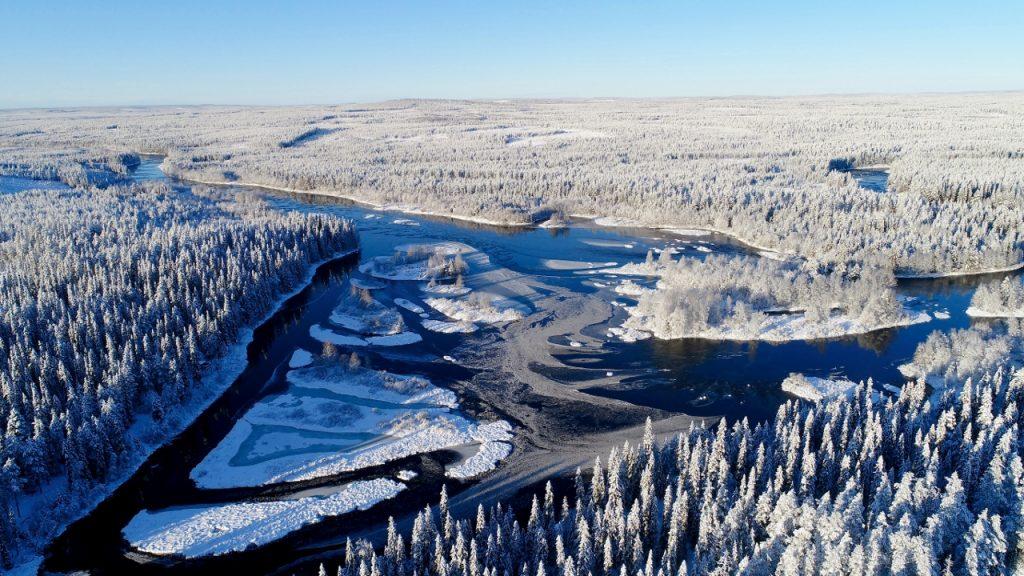
The Advisory Board of the Iijoki River Basin has been working on a common vision for waterways, and the vision has now been completed. Five areas important for increasing the value of the Iijoki River were identified in the vision work: Interaction and communication, Hiking fish, Water quality and catchment area, Attraction and livelihoods, Recreational use and living comfort.
“The Five V Vision is a good direction for the River Iijoki, found by the parties together. I believe that we will continue towards it”, declares the expert Ismo Bear Regional Assembly of Oulu Region.
The Advisory Board includes municipal decision-makers in Iijoki, land and water owners, authorities, representatives of village Regional Assemblys and organisations, and researchers. The views of local residents and tourists were gathered at local events along the Iijoki River, by interviewing people at Iijoki summer events and by conducting an open map-based survey of Iijoki's values and development targets. The Iijoki Forum, which was held in spring 2017, discussed the development of the attraction of the Iijoki River. Young people's views on the future of Iijoki have also been listened to.
The vision work has focused on building trust and good interaction between the stakeholders in the area in order to agree on common goals and concrete measures. During the vision work, an extensive idea bank was compiled from development projects that support the goals of the vision.
“There is a lot going on in the river, especially in cooperation in cooperation with regard to the return of migratory fish. The Otva project has had a big impact on positive progress”, says the chairman of the Iijoki river basin fishing area Jari Jussila.
The Advisory Board will continue its work in cooperation in cooperation with the planning of the operational programme and operating model. An important and critical step towards realising the vision is still ahead; co-operation between stakeholders in Iijoki must continue even after the vision process.
"The vision process has created good conditions for continued cooperation", believes the Fisheries Inspector General Jouni Tammi Ministry of Agriculture and Forestry.
Drawing up a water vision is part of the three-year EU-funded Iijoki Otva project. The project is managed by the Regional Assembly of Oulu Region and co-implemented by the Natural Resources Institute Finland. Pöyry Finland Oy, Akordi Oy and Mapita Oy are responsible for the water vision section. The Otva project will end in October 2018.
The Visio document (PDF and Prezi version) can be viewed from the following links:
Iijoki Water Vision 2030 (PDF)
Iijoki Water Vision 2030 (Prezi)
More information about the Iijoki Otva project:
Mirko Laakkonen, Project Manager, Iijoki Otva project, Regional Assembly of Oulu Region, tel. +358 40 685 4036, mirko.laakkonen(at)pohjois-pohjanmaa.fi
For more information on drafting a Water Vision:
Kalle Reinikainen, Pöyry Finland Oy, tel. 050 590 7640, kalle.reinikainen(at)pöyry.com
Lasse Peltonen, Akordi Oy, tel. +358 40 192 0053, lasse.peltonen(at)akordi.fi
____________________
8.11.2017 Smart fish road design ready in Raasaka
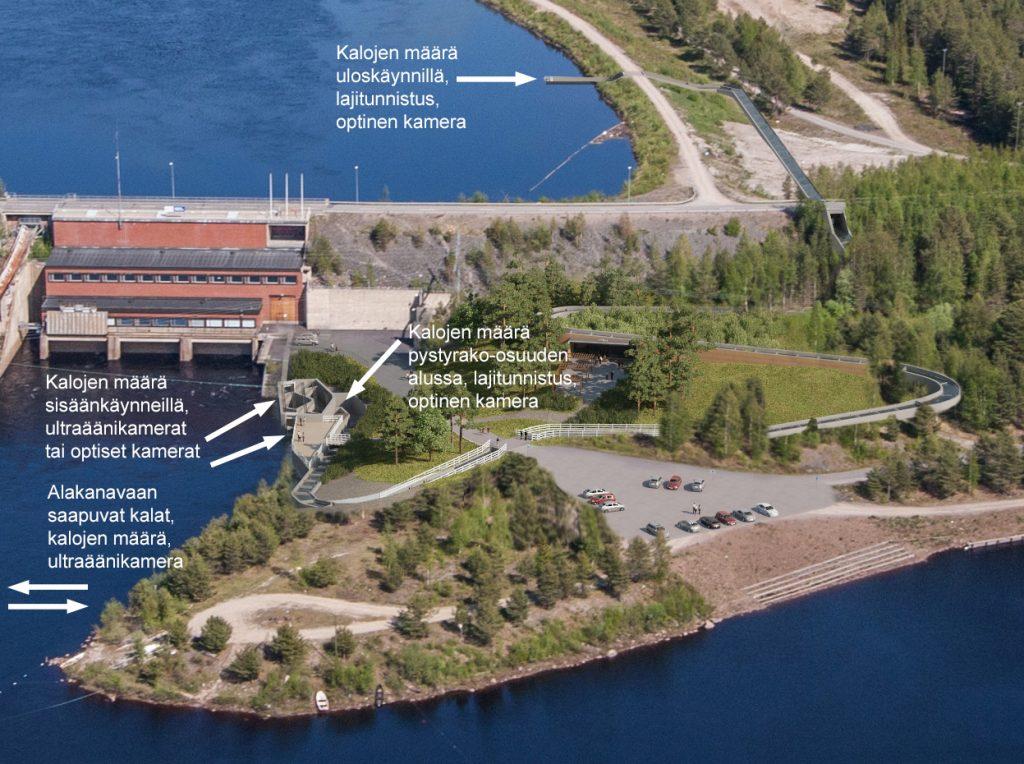
The smart fish road design for the fish road to be built in Raasakka, Iijoki, has been completed. Smart fishway design refers to fishway monitoring and automation solutions.
“The idea is to try to direct the salmon as quickly as possible to the fish road when they arrive at the Raasaka power plant dam”, According to a research professor James Erkinaro Natural Resources Institute Finland.
The monitoring and automation of the fishway will be developed based on the experience gained in cooperation in cooperation with the use of the fishway. The functionality of the fishway is Influencingd by several fstakeholders, such as the flow of the river, the turbines used, the temptation flow from the fishway, the season, the time of day and the timing of the fish uphill migration.
“The monitoring of fish paths and fish will be exceptionally accurate. Optical cameras and ultrasonic cameras are used in the monitoring. Efforts will be made to optimise the use of the turbines and fishway attraction flow of the power plant in such a way that the fishway is as efficient as possible.’, specify Sales Director Pertti Paakkolanvaara Samsonar Ltd.
Smart fish road planning has been carried out by the innovation group of the Iijoki Otva project, in which the Regional Assembly of Oulu Region, the Natural Resources Institute Finland, Metsähallitus, the Centre for Economic Development, Transport and the Environment of Northern Ostrobothnia, PVO-Vesivoima Oy, Maveplan Oy and Simsonar Oy have been represented.
Smart fish road planning is part of the three-year EU-funded Iijoki Otva project. The main objectives of the project are to prepare a water vision for the Iijoki catchment area and to promote and implement the restoration of migratory fish stocks and other measures that increase the value of the river. The project is managed by the Regional Assembly of Oulu Region and co-implemented by the Natural Resources Institute Finland.
More information about the Iijoki Otva project:
Mirko Laakkonen, Project Manager, Iijoki Otva project, Regional Assembly of Oulu Region, tel. +358 40 685 4036, mirko.laakkonen(at)pohjois-pohjanmaa.fi
For more information on monitoring and automation solutions designed for the fish lane:
Hannu Alatalo, Maveplan Oy, tel. +358 40 516 1504, hannu.alatalo(at)maveplan.fi
Pertti Paakkolanvaara, Simsonar Oy, tel. 050 559 9717, pertti.paakkolanvaara(at)simsonar.com
Tommi Hansen-Haug, PVO-Vesivoima Oy, tel. 050 303 8629, tommi.hansen-haug(at)pvo.fi
____________________
17.10.2017 Construction planning of Raasaka Fish Road has begun
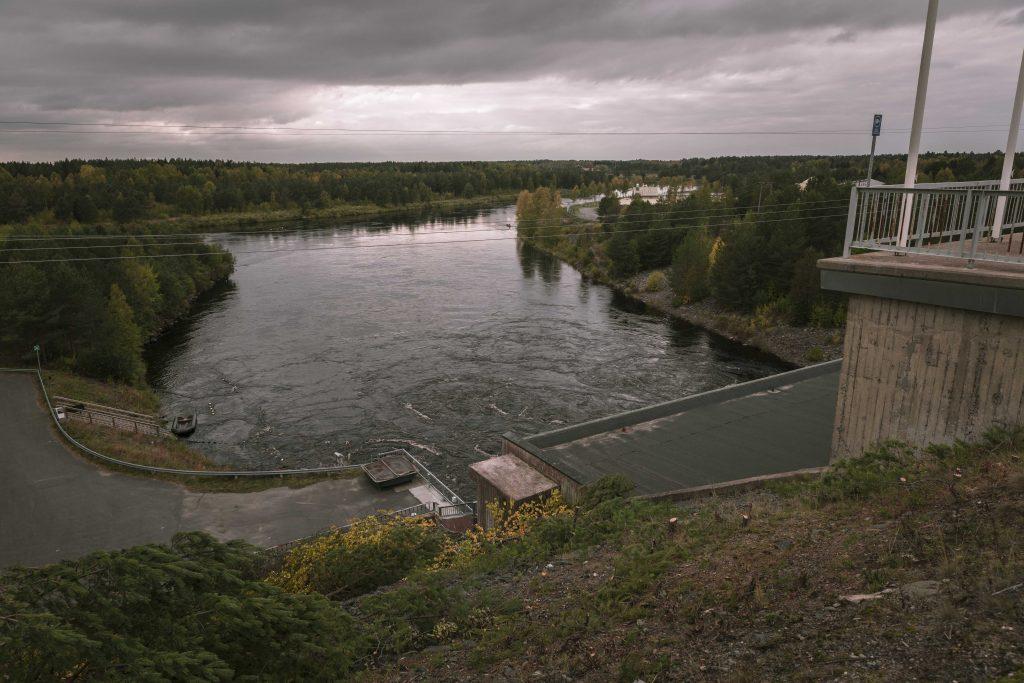
Construction planning of the Raasaka power plant dam fishway has started in mid-October. The planning will be completed in early 2018 and the construction of the fish road is planned to start in spring 2018. Raasaka power plant dam is located about 9 kilometres from the mouth of the river Iijoki.
The building design takes into account the smart fish road design developed in the Iijoki Otva project. Kalatie utilises new monitoring and automation solutions enabled by modern technology. In addition to basic structures, a monitoring window and a fish catching device will be designed for Kalatie.
‘The fish lane will become massive, especially for its sub-basin. The bottom pool is about 20 meters long and has two entrances for the fish. in cooperation in cooperation with the help of pumps and the flow from the fish road, up to 10 m can be formed3/s temptation flow. Several cameras are used to monitor fish movements’, says Project Manager of the Iijoki Otva project Mirko Laakkonen Regional Assembly of Oulu Region.
The construction planning of the Raasaka power plant dam's fish road is part of the three-year EU-funded Iijoki Otva project. The main objectives of the project are to prepare a water vision for the Iijoki catchment area and to promote and implement the restoration of migratory fish stocks and other measures that increase the value of the river. The project is managed by the Regional Assembly of Oulu Region and co-implemented by the Natural Resources Institute Finland.
In addition to the Otva project, the Northern Ostrobothnia Centre for Economic Development, Transport and the Environment (ELY Centre) and the Iijoki migratory fish tip project are responsible for financing the building design. The building design is prepared by Maveplan Oy and its sub-consultants as a purchasing service.
More information about the Iijoki Otva project:
Mirko Laakkonen, Project Manager, Iijoki Otva project, Regional Assembly of Oulu Region, tel. +358 40 685 4036, mirko.laakkonen(at)pohjois-pohjanmaa.fi
For more information on technical aspects of building design:
Hannu Alatalo, Construction Design Project Manager, Maveplan Oy, tel. +358 40 516 1504, hannu.alatalo(at)maveplan.fi
____________________
13.6.2017 Finland's largest migratory fish project has started in Iijoki
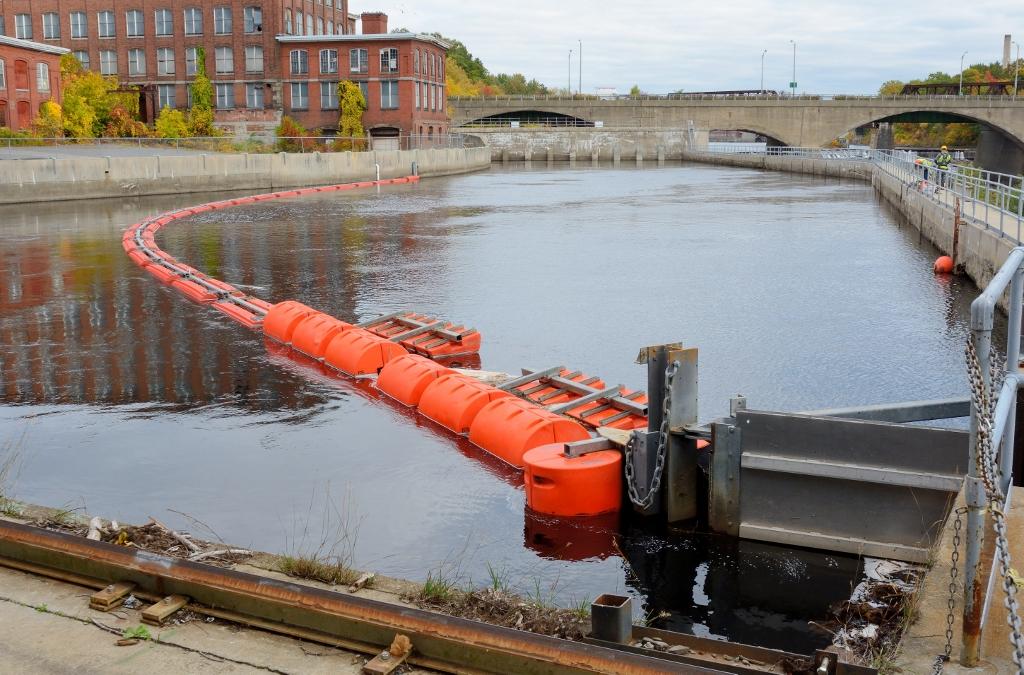
The return of migratory fish to the Iijoki River will proceed in cooperation in cooperation with a project worth more than EUR 4 million in 2017-2019. The project will produce, among other things, Finland's first smart fish road and downhill migration structure for salmon juveniles.
A large-scale migratory fish project has been launched in Iijoki, aiming at the recovery and natural life cycle of migratory fish stocks, especially salmon and sea trout. The long-term goal is the free movement of fish both upstream and downstream through fish paths and smolt control structures. The measures will also support the living conditions of hides and whitefish in the lower part of the Ii River.
“We are already moving on two measures; small juveniles are being planted in the upper and middle parts of the river and the monitoring of fish will soon begin in the old channel of Raasaka’, says Project Manager of the Iijoki migratory fish tip project Ismo Bear.
The measures of the wandering fish tip project are: Raasakka power plant dam fish path, smolt migration solutions, small juvenile planting programme, over-transfers of salmon and sea trout, and measures on the old channels of Raasakka and Maalismaa. Raasakka's fish road is implemented as a smart fish road, where the flow of fish is optimised by adjusting the flow conditions based on fish observation.
‘The Iijoki migratory fish tip project was prepared as part of the Iijoki Otva project. The key project will bring continuity and concreteness to the return of migratory fish to the Iijoki River. For the first time in Finland, structures to ensure the downward migration of smolts are being tested, and the construction of fish roads is also being started’, says Project Manager of the Iijoki Otva project Mirko Laakkonen.
Iijoki is the sixth largest river system in Finland. The largest tributaries of Iijoki are Siuruanjoki, Livojoki, Korpijoki and Kostonjoki. Iijoki is partly built, but still has great migratory fish potential.
The Iijoki migratory fish tip project is funded by the Ministry of Agriculture and Forestry, PVO-Vesivoima Oy, Ii, Oulu, Pudasjärvi, Taivalkoski, Kuusamo, Metsähallitus, the Regional Assembly of Oulu Region and the Iijoki river basin fishing area. The project will be managed by the Regional Assembly of Oulu Region during 2017. The total budget of the project is approximately EUR 4.3 million. The project will be implemented as part of the Government's nature policy spearhead project.
More information about the Iijoki hiking fish tip project:
Ismo Karhu, Project Manager, Regional Assembly of Oulu Region, tel. 050 592 1915, ismo.karhu(at)pohjois-pohjanmaa.fi
News of the key project's small-child furnishings:
Eero Moilanen, wilderness planner, Metsähallitus, tel. +358 40 531 4969, eero.t.moilanen(at)metsa.fi
More information on the Government's nature policy spearhead project (recovery of migratory and endangered fish stocks):
Jouni Tammi, Senior Fisheries Inspector, Ministry of Agriculture and Forestry, tel. 0295 162 313, jouni.tammi(at)mmm.fi
More information about the Iijoki Otva project:
Mirko Laakkonen, Project Manager, Regional Assembly of Oulu Region, tel. +358 40 685 4036, mirko.laakkonen(at)pohjois-pohjanmaa.fi
____________________
12.6.2017 Smolts in monitoring in Iijoki
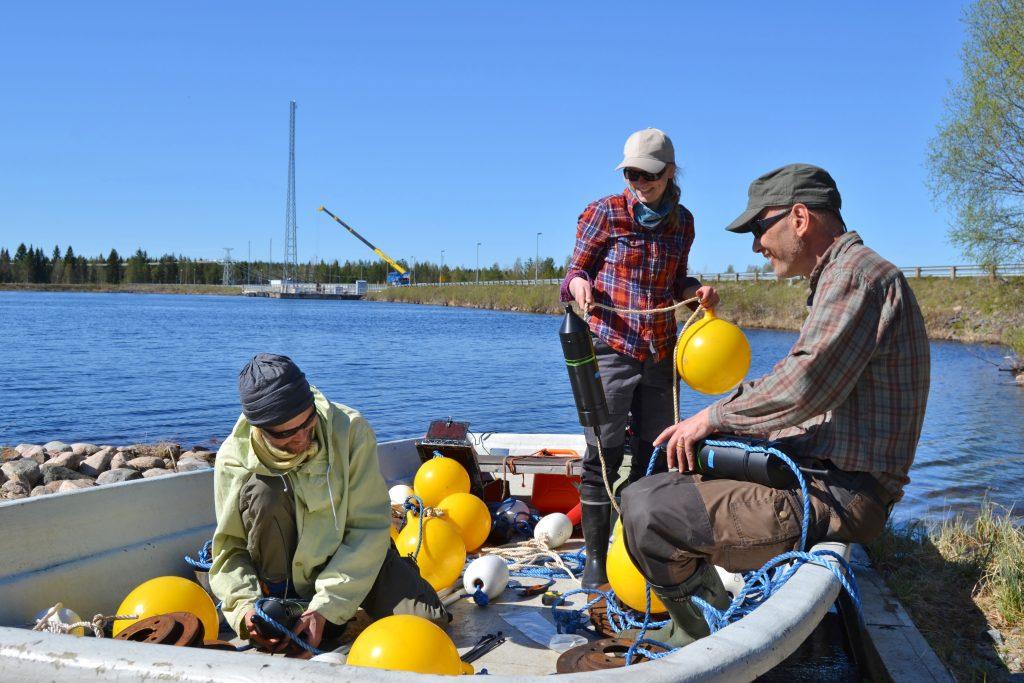
The Natural Resources Institute Finland (Luke) monitors the movements of smolts in Haapakoski, Iijoki, in June-July. The purpose of the study is to find out how smolts move in the upper channel of the Haapakoski power plant. The study provides a basis for planning the downhill migration routes of smolts.
Smolts of about 15-20 cm in size migrate to the sea in early summer after a flood peak. In Iijoki, five power plants pose challenges for the migration of smolts. The migration slows down in the dam basins, and turbine mortality also occurs. In Iijoki, solutions are sought to secure both uphill and downhill migrations.
‘Study is a necessary step to enable the downward migration of smolts. The goal for the future is that every dam has a downward migration route to bypass the dam”, says Project Manager of the Iijoki Otva project Mirko Laakkonen.
The research is carried out using acoustic telemetry. The research method provides accurate individual data on fish movements. When planning the downward migration route, the observations from fish movements are combined in cooperation in cooperation with the 3D flow modelling carried out earlier in the Otva project. The field is serve asd by Riina Huusko, Vesa Rantanen, Olli van der Meer and Mikko Jaukkuri from the Natural Resources Institute Finland.
‘Transmitters shall be installed in the abdominal cavity of the fish to be examined and 15 acoustic listening devices, loggers, shall be placed underwater approximately 50-100 metres from the power plant to provide information on the movement of the fish in the area. The proximity of the power plant poses challenges for research, but we believe we will receive important information on fish behaviour”, says Researcher at Natural Resources Institute Finland Riina Huusko.
Smoltt's downward migration research is part of the three-year EU-funded Iijoki Otva project. The main objectives of Otva are to prepare a water vision for the Iijoki catchment area and to promote and implement the restoration of migratory fish stocks and other measures that increase the value of the river already during the project. The project is managed by the Regional Assembly of Oulu Region. The Natural Resources Institute Finland acts as a co-executor.
More information about the Otva project:
Mirko Laakkonen, Project Manager, Iijoki Otva project, Regional Assembly of Oulu Region, tel. +358 40 685 4036, mirko.laakkonen(at)pohjois-pohjanmaa.fi
For more information on the downhill trekking survey:
Riina Huusko, Researcher, Natural Resources Institute Finland, tel. +358 295 322 192, rina.huusko(at)luke.fi
Mikko Jaukkuri, Research Assistant, Natural Resources Institute Finland, tel. +358 295 327 414, mikko.jaukkuri(at)luke.fi
____________________
3 May 2017 Flow and attraction from the unique values of Iijoki - Welcome to the Iijoki Forum 2017!
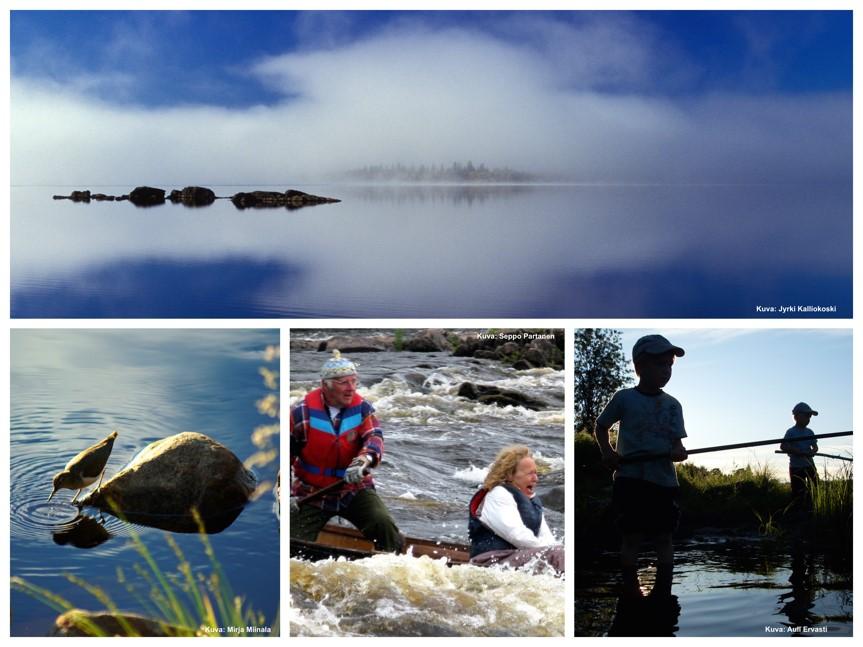
The Iijoki Otva project invites everyone interested in developing the attractiveness of Iijoki to join the Iijoki Forum. The day's event consists of presentations and information sessions related to the possibilities of Iijoki, as well as a joint discussion looking into the future. The key themes are attraction, tourism and culture, water quality as well as migratory fish and fishing in Iijoki. Municipal decision-makers invited to the forum will gather to build cooperation between municipalities along the river, and a panel discussion will explore ways to increase the attractiveness of Iijoki. NOTE: stakeholders who draw on the values of Iijoki (tourist entrepreneurs, village Regional Assemblys, etc.) are welcome to present their activities to the event.
Iijoki Otva is a project based on interaction between the Regional Assembly of Oulu Region, municipalities and stakeholders in the region. The aim of the project is to build Iijoki's shared water vision and projects that support the favourable development of migratory fish stocks, water quality and the region's attractiveness and recreational opportunities.
coffee will be served at the event.
Time: Thursday 18 May 2017, 12-18:30
Place: Pikku-Syöte, Syötekeskustie 126, 93280 Feed
Additional information: Sanna Rönkkönen, sanna(at)akordi.fi, tel. 050 339 3347
Programme of the event: Program Iijoki Forum 2017
____________________
2.3.2017 Pohjolan Voima and Metsähallitus apply for a permit to build Raasaka fish roads
PVO-Vesivoima Oy, Pohjolan Voima's hydropower company, and Metsähallitus have jointly submitted an application for a water management permit for the construction of the Raasaka power plant and the fish roads of the rationing dam.
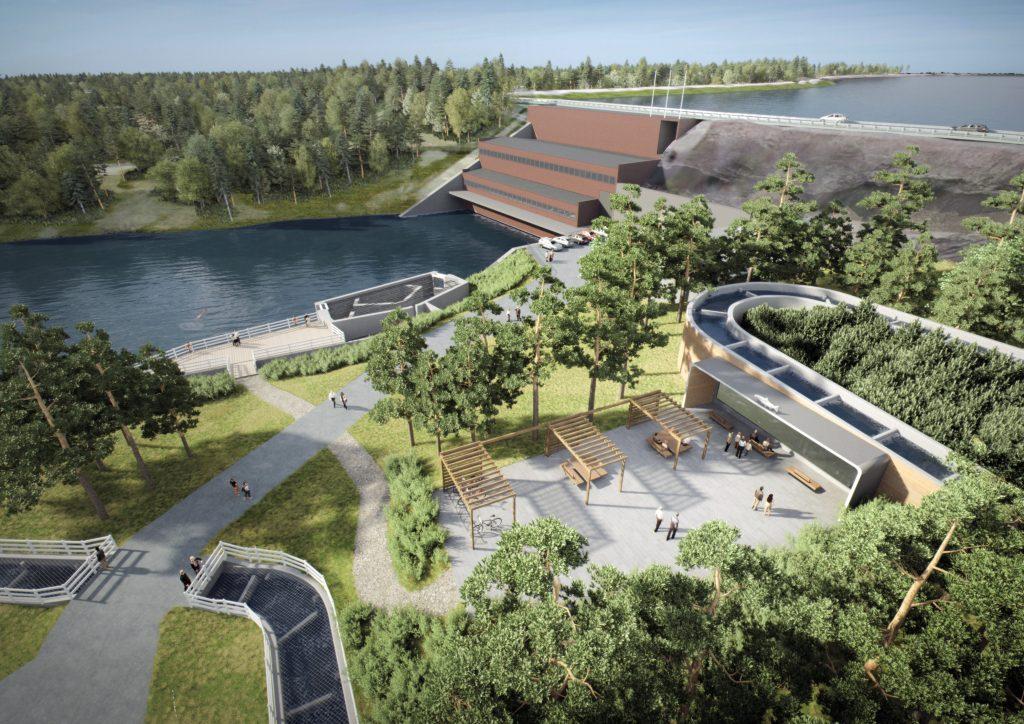
“We are delighted that this cooperation has borne fruit. The Raasakka Fish Road is a concrete step towards restoring the natural reproductive cycle of migratory fish in Iijoki. The best results will be achieved through broad, long-term and voluntary cooperation", says CEO of PVO-Vesivoima Oy Pertti Pietinen.
The Regional State Administrative Agency for Northern Finland processes the application for a permit for water management, which is a prerequisite for the construction of fish roads. The aim is that the construction of fish roads could begin after the permit has been granted in 2018. The construction planning of the fish roads will be carried out as part of the otva project in Iijoki during the current year.
‘Fish road plans at the permit application level have been in place for several years and the region has a broad will to implement fish roads. in cooperation in cooperation with the result guidance of the state owner and negotiations between the parties applying for a permit, the applicants for a water management permit have now been found’, explains Metsähallitus's Wilderness Management Manager for the Ostrobothnian region Erkki Turtinen.
The first fish road in the lower part of Iijoki would be built in connection in cooperation in cooperation with the Raasaka power plant as part of the Iijoki migratory fish tip project. The Raasakka fish road would open a hiking connection to the Maalismaa power plant and, for example, to the Martimojoki river. The catching equipment to be built in connection in cooperation in cooperation with the Kalatie road would enable the overtransfer of salmon and sea trout to the breeding areas of the upper Iijoki river.
In addition to fish roads, other measures are needed to restore the natural cycle of migratory fish stocks. The Iijoki Otva project, coordinated by the Regional Assembly of Oulu Region, includes the construction of the Raasaka Fish Road, a planting programme for small juveniles, the promotion of smolt migration solutions, over-transfers of salmon and sea trout, and measures on the old channels of Raasaka and Maalismaa.
Additional information:
Pertti Pietinen, President and CEO, PVO-Vesivoima Oy, tel. 040 581 4726
Erkki Turtinen, Manager, Wilderness Management, Metsähallitus, tel. 0400 285 383
Mirko Laakkonen, Project Manager, Iijoki Otva project, Regional Assembly of Oulu Region, tel. 040 685 4036
____________________
21.12.2016 Iijoki migratory fish tip project in tailwind
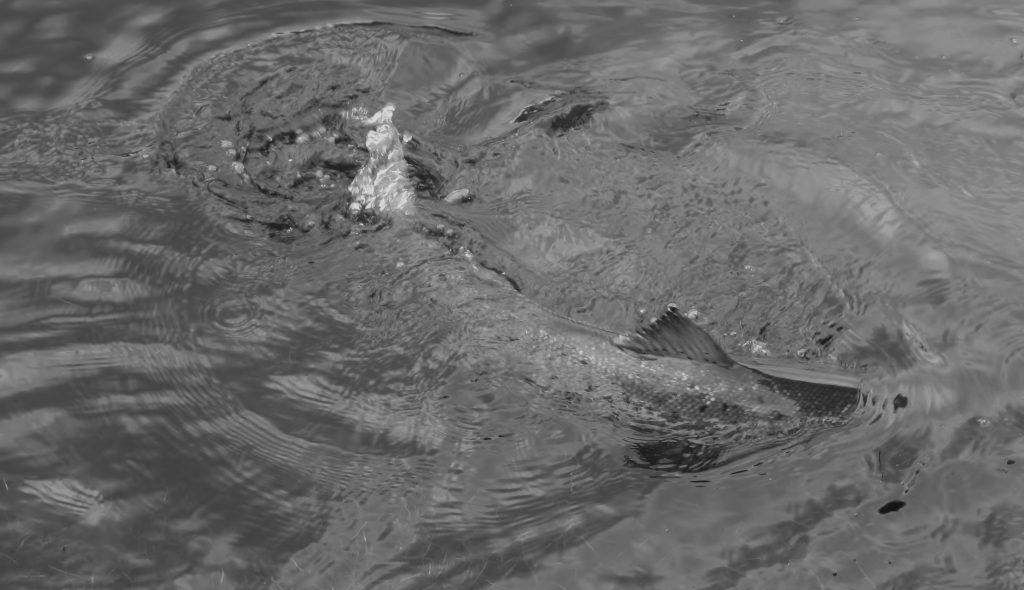
On 13 December 2016, the Advisory Board of the Iijoki Otva project approved the measures of the Iijoki migratory fish tip project in Pudasjärvi: planting programme, smolt migration solutions, over-transfers, measures on the old channels of Raasaka and Maalismaa, and the fish road of the Raasaka power plant. The preparation of the key project will continue in cooperation in cooperation with the financing negotiations and specifications of the measures. The cost estimate for the project is approximately EUR 4 million and, if realised, it will be the largest restoration measure for migratory fish in Northern Ostrobothnia to date.
"in cooperation in cooperation with the decision of the Advisory Board, we took an important step forward in the preparation of the migratory fish tip project and also in strengthening the cooperation of the Advisory Board", notes the Chairman of the Advisory Board Samuli Pohjamo.
The Advisory Board discussed the results of the Iijoki values survey and local meetings carried out in the autumn, as well as the water vision under preparation. The Advisory Board approved the structure of ´Veen´ water vision: 1) Water quality, 2) Trekking fish, 3) Recreation, 4) Attraction and livelihoods, and 5) Interaction and communication.
In addition, Pudasjärvi Upper Secondary School students presented young people's views on Iijoki to the Advisory Board.
‘A freshly oxygenated aorta in cooperation in cooperation with energy flowing to the activities of the whole region’, compacted Olga Aries - Panuma and Saana Kokko The High School Message.
Iijoki Otva is a three-year EU-funded project. The main objectives of the project are to prepare a water vision for the Iijoki catchment area and to promote and implement the restoration of migratory fish stocks and other measures that increase the value of the river already during the project. The project is managed by the Regional Assembly of Oulu Region and co-implemented by the Natural Resources Institute Finland. Pöyry Finland Oy, Akordi Oy and Mapita Oy are responsible for the water vision section.
For further information, please contact:
Mirko Laakkonen, Project Manager, Iijoki Otva project, Regional Assembly of Oulu Region, Tel: +358 40 685 4036, mirko.laakkonen(at)pohjois-pohjanmaa.fi
Timo Karjalainen, Project Manager, Pöyry Finland Oy, Tel: 040 621 6962, timo.karjalainen(at)pöyry.com
____________________
6.10.2016 Iijoki values on the map
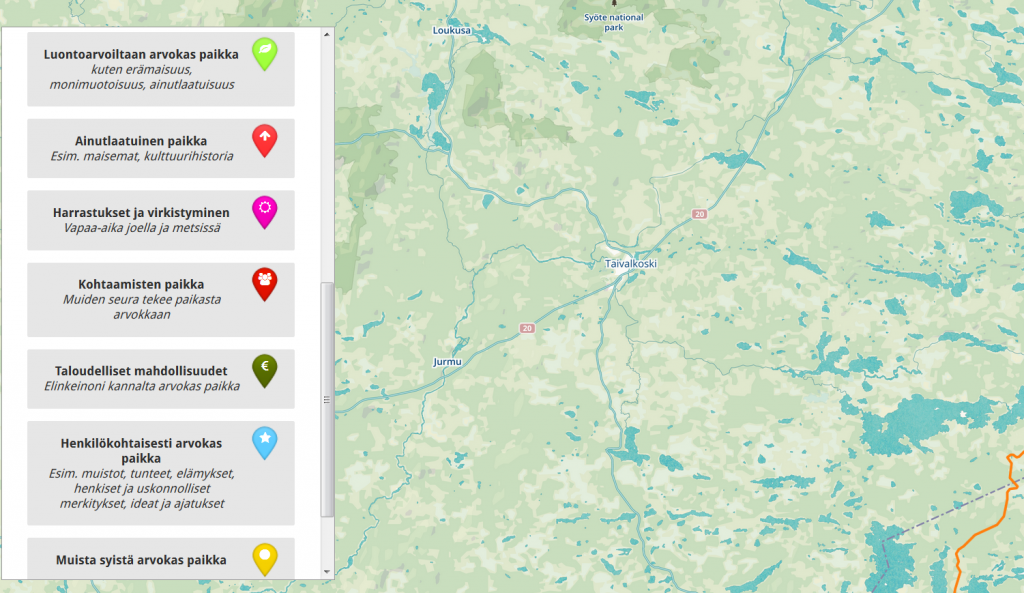
Iijoki's values and development targets will be mapped in cooperation in cooperation with an extensive citizen survey in October. Views from residents, travellers and different user groups will be gathered throughout the Ii River catchment area: Ii, Oulu, Pudasjärvi, Taivalkoski and Kuusamo.
The survey charts the current state, uses and values related to the river and its environment in the Iijoki area. At the same time, we ask about the wishes of the future and identify concrete areas for development. All those interested in the future of Iijoki are invited to respond to the survey.
The map data resulting from the survey can be used directly, for example, in municipal land use planning. The survey is part of the water vision work of the Otva project of the Regional Assembly of Oulu Region. The geospatial data-based Iijoki Values survey is carried out by Mapita Oy.
The survey will open on 6 October 2016 and can be answered until the end of October.
As part of the water vision work, local workshops will be organised in the future, where those interested in Iijoki will be able to familiarise themselves in cooperation in cooperation with the results of the survey and discuss its conclusions.
For more information on the survey, please contact:
Anna Broberg, anna.broberg(at)mapita.fi, tel: 050 538 8809
Lauri Rantala, lauri(at)akordi.fi
For more information on the Otva project, please contact:
Mirko Laakkonen, Project Manager, mirko.laakkonen(at)pohjois-pohjanmaa.fi, tel: 040 685 4036
____________________
14.9.2016 Rehabilitation sites in the Iijoki catchment area were inspected in Taivalkoski - residents are invited to participate in the development
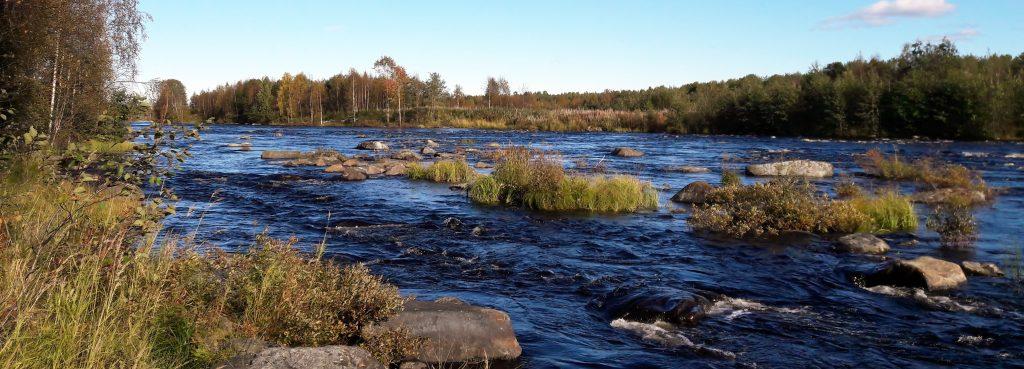
The Advisory Board of the Iijoki Otva project met on 6-7 September 2016 in Taivalkoski. The meeting focused on issues such as the condition of the Iijoki catchment area, water quality issues and migratory fish issues. The meeting participants received a video greeting from Minister of Agriculture and the Environment Kimmo Tiilikainen. The Advisory Board became acquainted in cooperation in cooperation with the Kostonjoki Fish Road, the renovated rapid areas of Kypäräkoski and Koitikoski, and the Ryysäkummunsuo restoration site.
“The Kostonjoki river has been renovated in cooperation in cooperation with fresh teachings, but many other previously implemented Iijoki restoration sites still need to be improved from the point of view of fisheries. There is also a lot of work to be done in river basin remediation’, says Leading Water Management Expert Arto Lehto Northern Ostrobothnia Centre for Economic Development, Transport and the Environment.
Local residents are also invited to participate in the development of the Iijoki catchment area. During the autumn, workshops will be launched and an extensive geospatial survey will be carried out to map the values and development targets of Iijoki. At the Taivalkoski meeting, the Advisory Board conceived the most important themes of the survey and considered how best to reach the respondents. The survey is carried out by Mapita Oy.
The rules for joint work were agreed in Taivalkoski. The decisions of the Advisory Board are made on the basis of consensus and everyone commits to a discussion that respects others. The key project application, the development of PVO-Vesivoima Oy's inland waterway obligation and the application status of Raasaka's fish roads were discussed. The next meeting of the Advisory Board will be held before the end of the year.
Iijoki Otva is a three-year EU-funded project. The main objectives of the project are to prepare a water vision for the Iijoki catchment area, to promote and implement the restoration of migratory fish stocks and other measures that increase the value of the river already during the project. The project is managed by the Regional Assembly of Oulu Region and co-implemented by the Natural Resources Institute Finland. Pöyry Finland Oy, Akordi Oy and Mapita Oy are responsible for the water vision section.
For further information, please contact:
Mirko Laakkonen, Project Manager, Iijoki Otva project, Regional Assembly of Oulu Region, Tel: +358 40 685 4036, mirko.laakkonen(at)pohjois-pohjanmaa.fi
Timo Karjalainen, Project Manager, Pöyry Finland Oy, Tel: 040 621 6962, timo.karjalainen(at)pöyry.com
____________________
13.9.2016 Measure and model - task in Iijoki
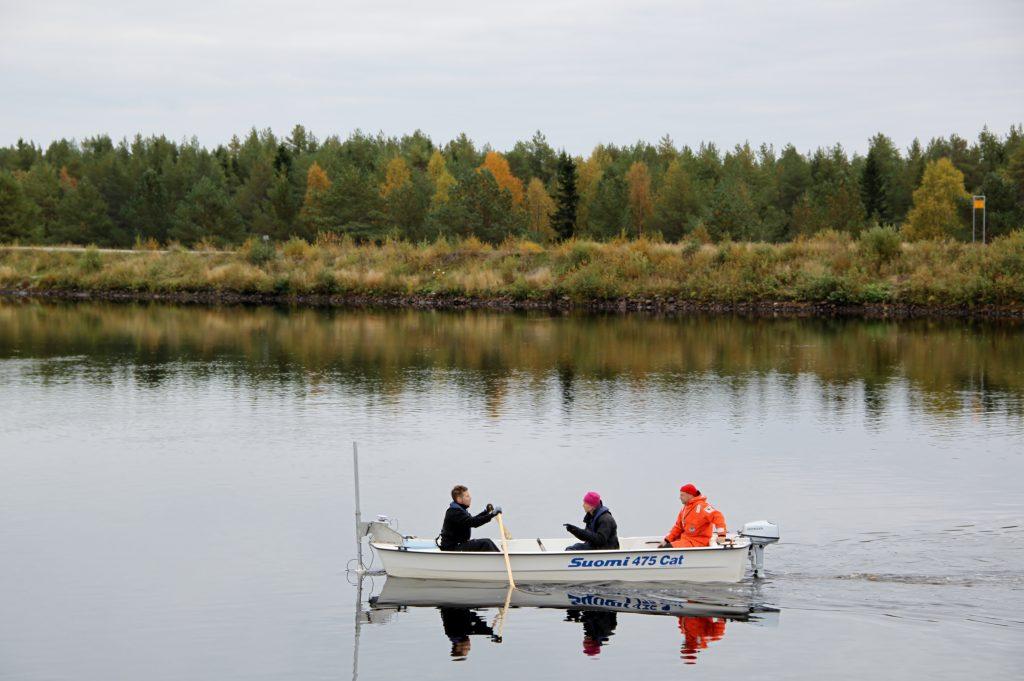
The flow conditions of the upper channels of the Iijoki power plants are studied using acoustic flow and depth measurements and modelling based on them. The research is carried out as part of the Iijoki Otva project. The data will be used in behavioural studies of salmon molluscs (a wandering offspring). The long-term goal is to reduce smolt mortality by finding suitable downhill migration routes for smolts.
The measurement was carried out by Luode Consulting Oy from 6 to 9 September. The targets were Haapakoski, Pahkakoski, Kierikki, Maalismaa and Raasakka. In practice, the measurement is carried out by driving a boat equipped in cooperation in cooperation with a measuring device above the power plants, while collecting information on flow and depth conditions. The equipment provides accurate data on how water flows in different depth areas and at different points of the channel.
“We use an acoustic doppler to measure the speed and direction of water layer by layer, while also collecting data on the profile of the channel. in cooperation in cooperation with the help of the equipment, a detailed map of the dam basin above the power plants can be drawn up. The equipment was placed in a low-traffic catamaran, the positioning of which was carried out in cooperation in cooperation with the help of a beach-based base station and GPS positioning, at best in cooperation in cooperation within a few centimetres’, tells Antti Lindfors About Luode Consulting Oy.
The measurements were made by a group of five, including Antti Lindfors, Toni Meriläinen, Olli Huttunen, Joose Mykkänen and Mattias Ryman. The next step is the analysis of the measurement results and the modelling based on the results. In the spring of 2017, the Natural Resources Institute Finland will study the movement of smolts as they approach the power plant area. Data on smolt movements and flow modelling are combined. This helps in the further stages when planning the direction of the smolts in the desired direction.
Iijoki Otva is a three-year EU-funded project. The main objectives of the project are to draw up a water vision, promote the restoration of migratory fish stocks and other measures that increase the value of the river already during the project. The project is managed by the Regional Assembly of Oulu Region and co-implemented by the Natural Resources Institute Finland. Pöyry Finland Oy, Akordi Oy and Mapita Oy are responsible for the water vision section.
For more information on the Otva project, please contact:
Mirko Laakkonen, Project Manager, Iijoki Otva project, Regional Assembly of Oulu Region, Tel: +358 40 685 4036, mirko.laakkonen(at)pohjois-pohjanmaa.fi
Tapio Sutela, Natural Resources Institute Finland, tel: +358 295 328 708, tapio.sutela(at)luke.fi
For more information on measurement technology and modelling, please contact:
Antti Lindfors, Luode Consulting Oy, Tel: 050 590 0694, antti.lindfors(at)luode.net
____________________
12.5.2016 Cooperation to return migratory fish to Iijoki proceeds
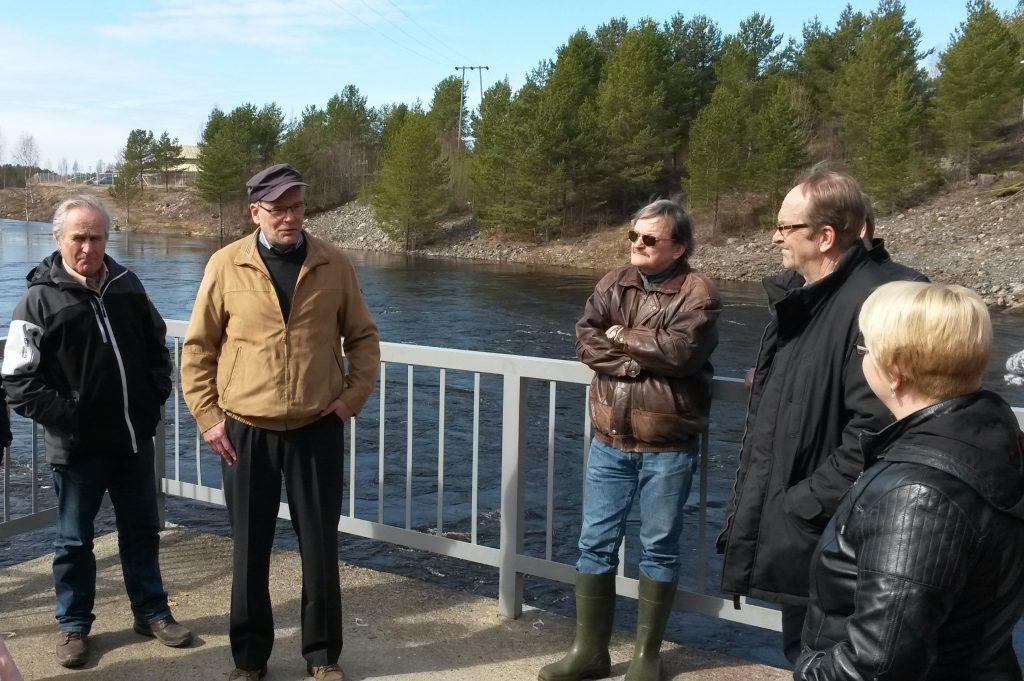
In its kick-off meeting, the Advisory Board of the Iijoki Otva project took its first steps towards building a water vision for Iijoki. The workshop organised in Kierikkikeskus on 3-4 May 2016 consisted of group and pair work, discussions, presentations and a field visit to the Raasaka power plant area and the old channel. The advisory board includes a wide range of stakeholders, from entrepreneurs to the Ministry of Agriculture and Forestry. The Advisory Board is chaired by the President of the the Board of the Regional Assembly Samuli Pohjamo.
The focus of the kick-off meeting was on migratory fish. Discussions focused on the issue of licence applicants for Iijoki's fish roads, the improvement of small-child housing and the development possibilities of Raasaka's old channel. Restoring the natural cycle of migratory fish is a complex and long process that requires extensive cooperation.
“Many measures must be taken for migratory fish at the same time and they must be seen as mutually supportive. In the lower part of the river, this could mean, for example, a fish path, in the upper part, restocking.”, stresses the chairman of the Iijoki river basin fishing area Jari Jussila.
In addition to restoring migratory fish, the Advisory Board identified the development of the attractiveness of the Iijoki area and the improvement of the condition of the catchment area and water quality as key objectives of the vision work. Building trust between the various parties was considered a priority.
“The meeting achieved a good spirit of cooperation and we got to the point. The prospects for the return of migratory fish in Iijoki, among others, have made clear progress.”, the Senior Fisheries Inspector Jouni Tammi Ministry of Agriculture and Forestry.
Iijoki Otva is a three-year EU-funded project. The main objectives of the project are to develop a water vision, promote the restoration of migratory fish stocks and promote and implement other measures that increase the value of the river already during the project. The project is managed by the Regional Assembly of Oulu Region and co-implemented by the Natural Resources Institute Finland. Pöyry Finland Oy, Akordi Oy and Mapita Oy are responsible for the water vision section.
Further information:
Mirko Laakkonen, Project Manager, Iijoki Otva Project, tel. +358 40 685 4036, e-mail mirko.laakkonen(at)pohjois-pohjanmaa.fi
Project Manager Timo Karjalainen, Pöyry Finland Oy tel. +358 40 621 6962, e-mail timo.karjalainen(at)pöyry.com