28.5.2024
In the Lohi Iijoki project, early summer is a busy time. Hundreds of thousands of small salmonid juveniles are planted in the river Iijoki and its tributaries, as many as possible rising fish are moved above the power plants, and smolts, i.e. downdrafting salmon and sea trout juveniles, are moved below the plants. In addition, the behaviour of fish on the Haapakoski downhill migration path is monitored.
‘The small-child stocking of salmon and sea trout takes place between May and June. The placentas are newly hatched, pre-summer and one-year-old. The main responsibility for the implementation of plantations lies in cooperation in cooperation with Metsähallitus’, says Fisheries Specialist Eero Hartikainen About the forest management.
Removals of bulls will take place in May-June. Transfers will continue towards the end of the summer when the waters have cooled down again. Salmon and sea trout entering the river are requested to be crossed in two ways: Commercial fishermen catch overloaded fish from the estuary of the River Iijoki, some of which are captured through the Kalasydän fish road at the Raasaka power plant. The fish are transported in a water tank by car to the waters above the power plants. The aim of small-child stocking and restocking is to gradually create stigmatised salmon and sea trout populations in the river.
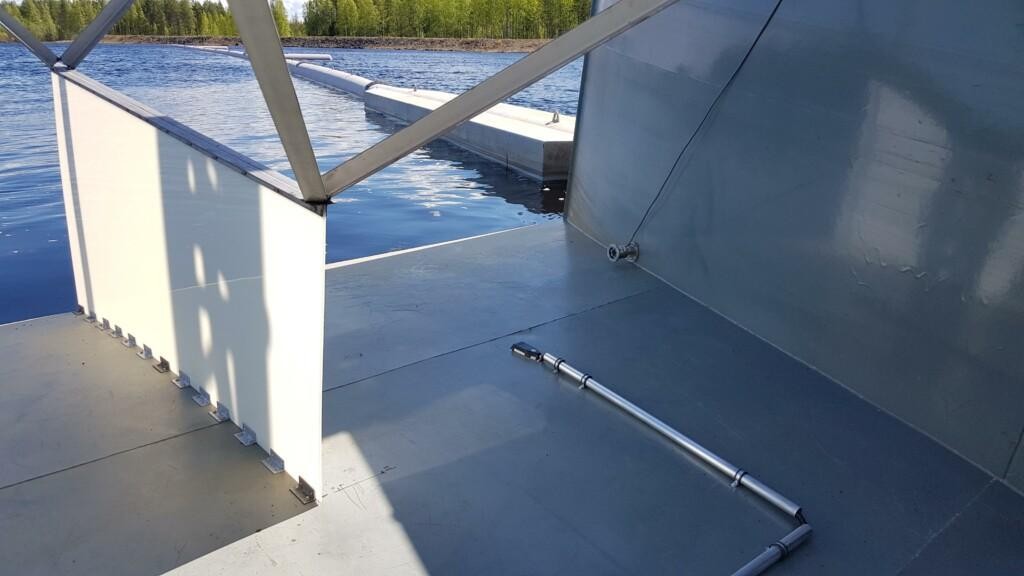
Smolt transfers, on the other hand, allow fish to safely bypass five dams downstream and access to sea migration. At the Haapakoski power plant, the smolts are guided through a control fence to the downward migration path and in the path itself to the fish catching cage. The smolts are also transported past the dams in a water tank by car. Transfers of smolts take place in early summer and end no later than July when the waters warm up. This year, the use of the downward migration route will continue well into the autumn and the movement of fish downstream will also be investigated.
The over-transfer of cranes is permitted in the Iijoki fishing area. The fishing area has authorised salmon to the river Iijoki
The project is responsible for the implementation of over-transfers. The Lohi Iijoki project has ordered the transfer of fish and smolts from Korpilaavu Oy.
The underwater camera monitoring of fish will also continue in Haapakoski. Three cameras are used – two at the mouth of the downhill path and one in the fish catching cage.
“Camera monitoring provides information on the behaviour of fish in the downward migration path and also helps in the concrete operation of the path. The cameras used in the project have been supplied by Simsonar Oy’, says Lohi Iijoki Project Manager Mirko Laakkonen Regional Assembly of Oulu Region.
The measures of the Lohi Iijoki project include telemetry monitoring of smolts in Haapakoski and Pahkakoski (Natural Resources Institute Finland), underwater camera monitoring on the Haapakoski smolt migration path, experimental use and development of the migration path, over-transfers of smolts and elevated fish, a planting programme for small juveniles and the production of a video about Iijoki.
The Lohi Iijoki project is funded by the Regional Assembly of Oulu Region, Natural Resources Institute Finland, PVO-Vesivoima Oy, Lapland ELY Centre/Ministry of Agriculture and Forestry, Ii, Oulu, Pudasjärvi, Taivalkoski, Kuusamo and the Iijoki fishing area. The project is also implemented by Metsähallitus and the Centre for Economic Development, Transport and the Environment of Northern Ostrobothnia. The project is managed by the Regional Assembly of Oulu Region and the Natural Resources Institute Finland. The total budget of the project is 902,000 euros, of which 620,000 euros is managed by the Regional Assembly of Oulu Region and 282,000 euros by the Natural Resources Institute Finland. The project will run from 1 September 2022 to 31 October 2024.
The project has received funding from the NOUSU programme of the Ministry of Agriculture and Forestry.
Additional information:
Mirko Laakkonen, Project Manager, Lohi Iijoki -project, Regional Assembly of Oulu Region, tel. +358 40 685 4036, mirko.laakkonen(at)pohjois-pohjanmaa.fi and Riina Huusko, Project Manager/Researcher, Natural Resources Institute Finland, Lohi Iijoki project, Natural Resources Institute Finland, tel. +358 29 532 2192, rina.huusko(at)luke.fi