The Northern Periphery and Arctic (NPA) Interreg programme builds vibrant, competitive and ecologically sustainable communities. NPA (Northern Periphery and Arctic) is a transnational cooperation programme whose programme area in Finland comprises eight different regions.
The Interreg Northern Periphery and Arctic (NPA) 2021-2027 programme supports cooperation projects that enable regional stakeholders to make sustainable use of the region's own opportunities and strengths and to develop solutions to common challenges in the region. NPA cooperation increases the prosperity of regions and improves their adaptability.
The managing authority for the NPA programme is Västerbotten County Administrative Board in Sweden and the Secretariat is based in Copenhagen. Each participating state has its own national contact person and Finland's contact person is Maiju Jolma-Taylor the Regional Assembly of Lapland. He or she can help you in cooperation in cooperation with questions related to the programme and funding applications. National matching funding is granted in Finland Regional Assembly of Lapland.
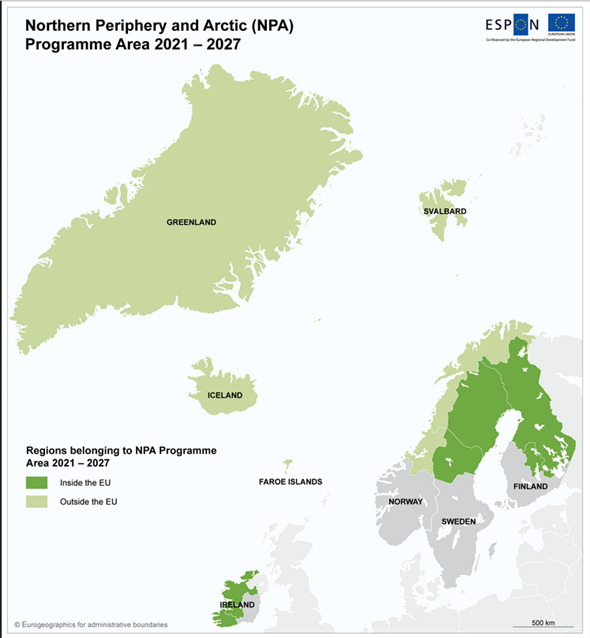
The Northern Periphery and Arctic programme area, Interreg NPA, covers Northern Finland, Northern Sweden, Northern Norway and Western Ireland, as well as Iceland, Greenland and Svalbard.
NPA 2021-2027 themes of the programme:
1.Strengthening innovation capacity:
1.1 Research and innovation capacity building and the introduction of new technologies.
1.2 Utilising digitalisation for the benefit of the stakeholders in the region.
1.3 Promoting sustainable growth and competitiveness of SMEs and creating new jobs.
2. Climate change adaptation and resource efficiency:
2.1 Promoting energy efficiency and reducing greenhouse gases
2.2 Adapting to climate change and reducing the risks posed by climate change by developing the business environment.
2.3 Transition to a circular economy and resource-efficient activities.
3. strengthen organisations' capacity to benefit from opportunities for transnational cooperation:
3.1 Developing the capacity of officials and other stakeholders to implement macro-, sea-basin and other territorial strategies